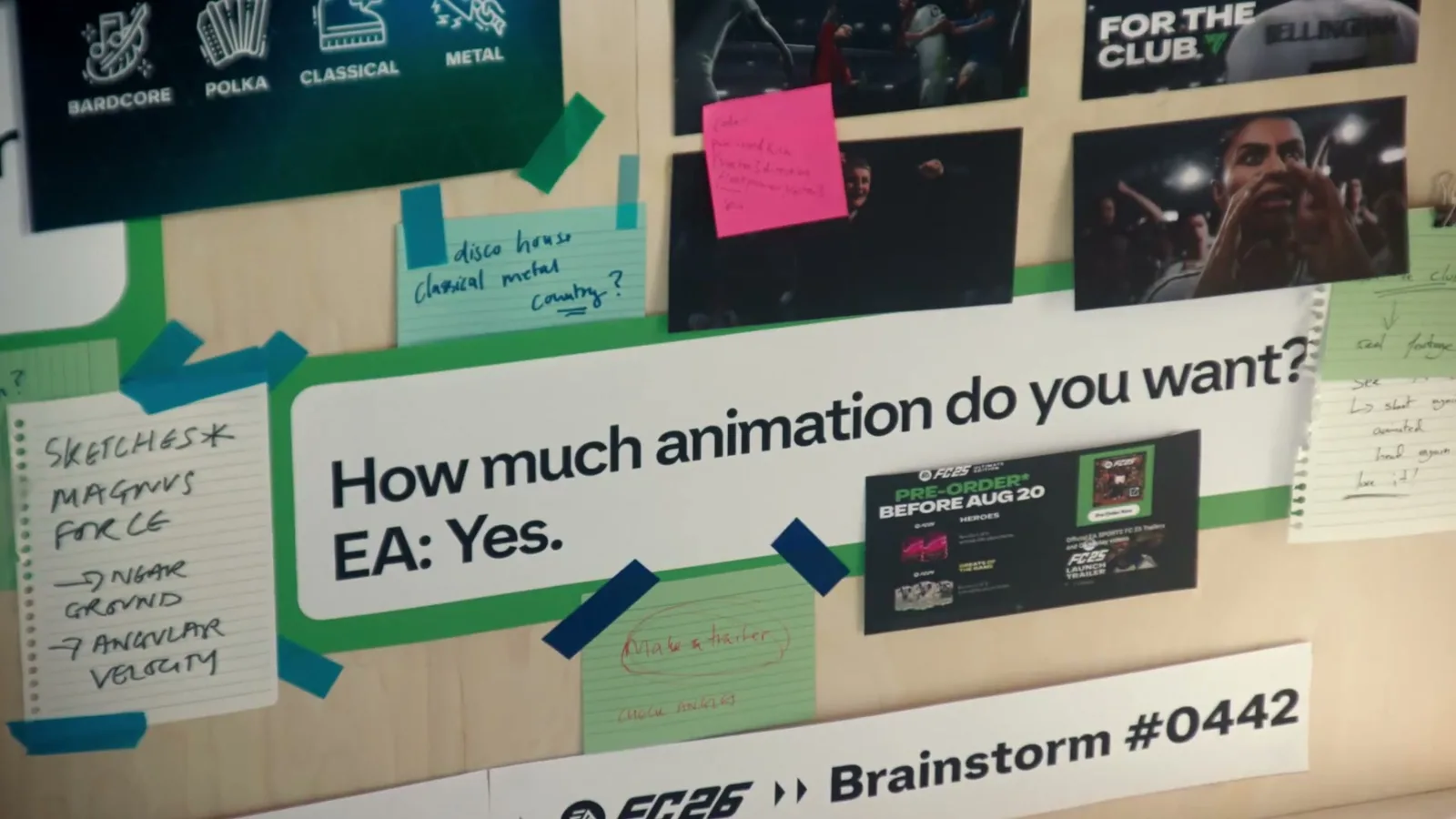
A mood board is a collection of images, colors, textures and words that shows how a project will look and feel before anyone makes it. It settles what is hard to explain out loud: a tone, a light, a way of dressing, a brand.
Here are six real examples and what each one decides. They are templates from Draftt, so keep that in mind as you read, but the ideas work in any tool. The boards are in Spanish for now, which matters less than it sounds: you are looking at how they are built.
What goes on a mood board
There is no formula, but most mood boards have these:
- Images: photos or film frames that show the light, framing, people and places you want.
- Color: a palette of five or six colors. If you already have an image with the right tone, you can get the color palette from it in seconds.
- Textures and materials: fabric, surfaces, film grain.
- Type, especially for a brand.
- Words: one sentence with the main idea, and short notes that say what to take from each image.
The words are what people forget and what helps most. Without notes, everyone reads something different in the same picture.
6 mood board examples
1. A film mood board
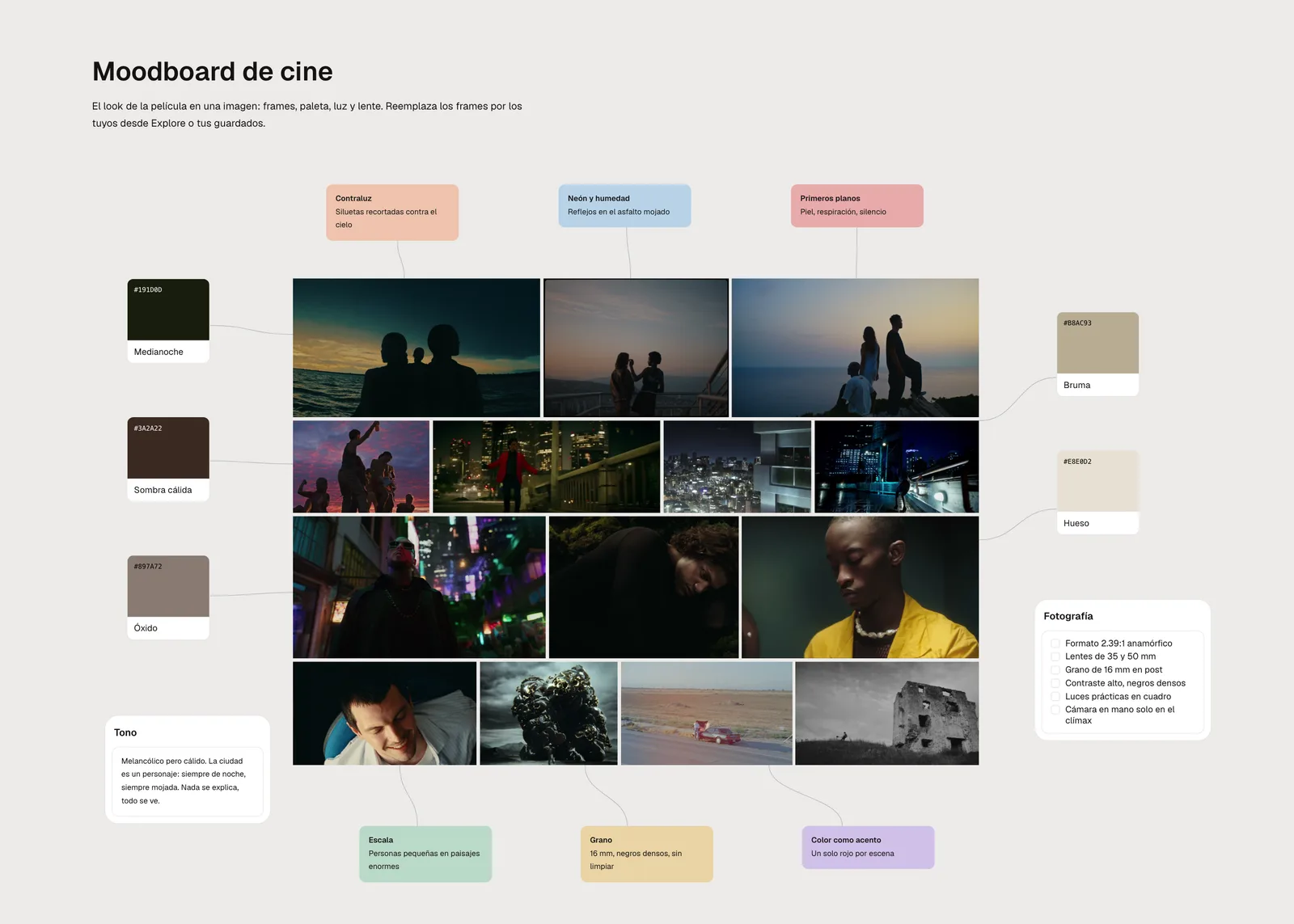
This one looks for the look of a film. The frames sit in the center, surrounded by their decisions: a palette with its own names ("Midnight", "Mist"), notes such as "backlight" or "neon and damp", and a technical list with the format, the lenses and the grain. Naming the colors makes them easier for a team to talk about. Use this template.
2. A commercial mood board
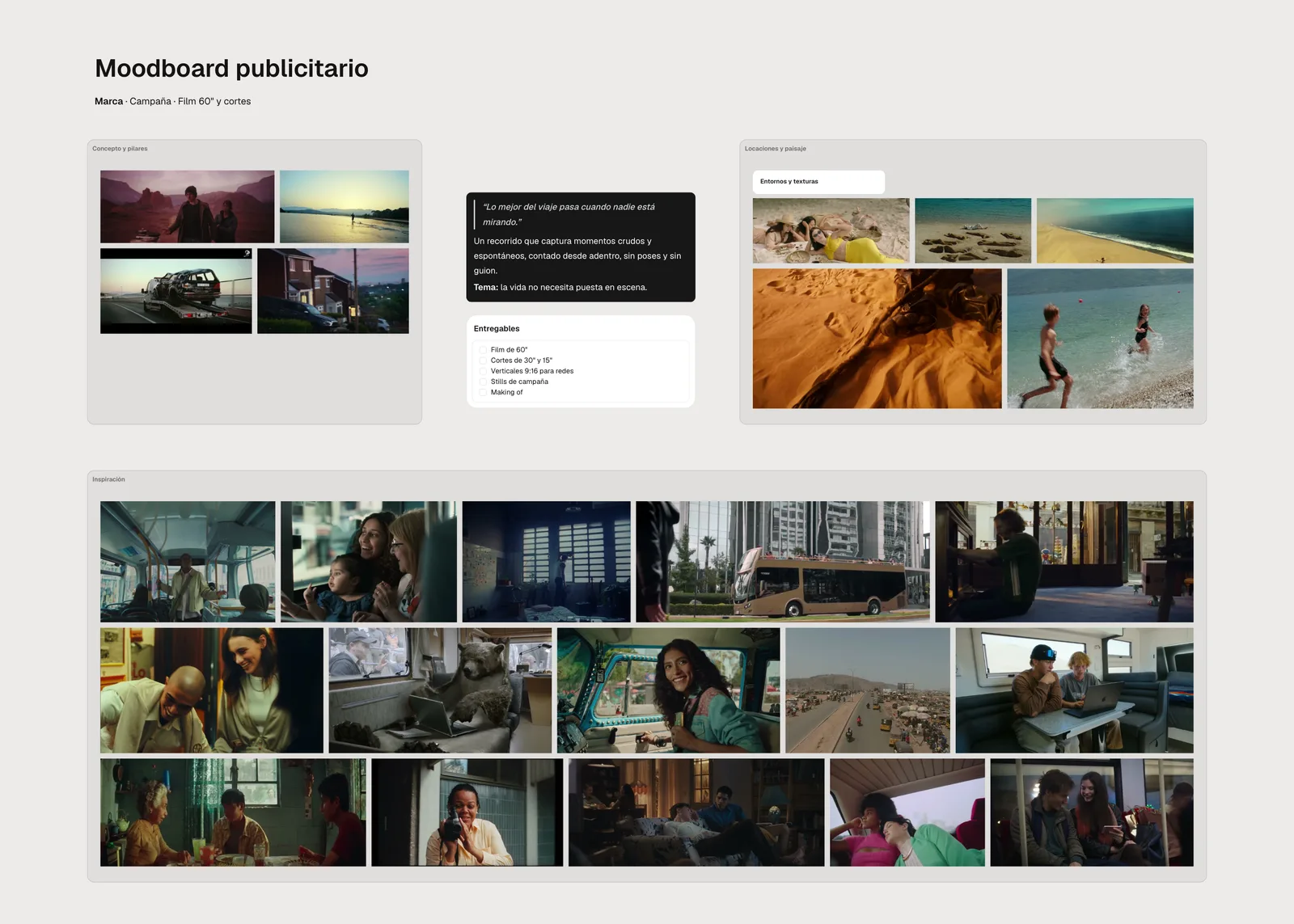
It is laid out the way a client reads it: concept and shots, locations, then a bigger wall of inspiration below. It carries the concept in one sentence and the list of deliverables, because in advertising a mood board often travels with the budget. Use this template.
3. A music video mood board
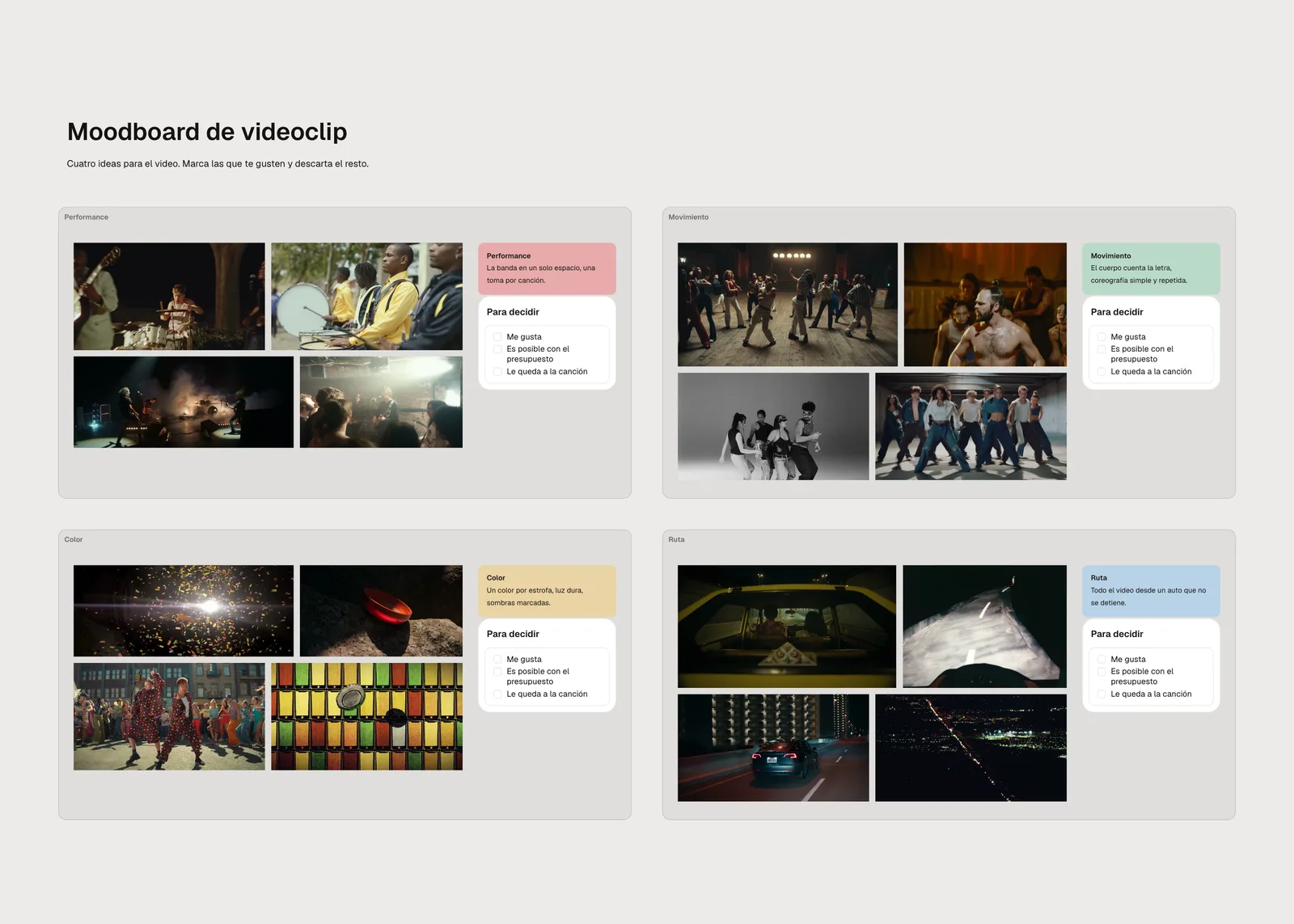
It separates four possible ideas: performance, movement, color and a road trip. Each has its own checklist: I like it, it fits the budget, it suits the song. It works when you are still choosing a direction and want the artist to compare options instead of giving an opinion on each image. Use this template.
4. A brand mood board
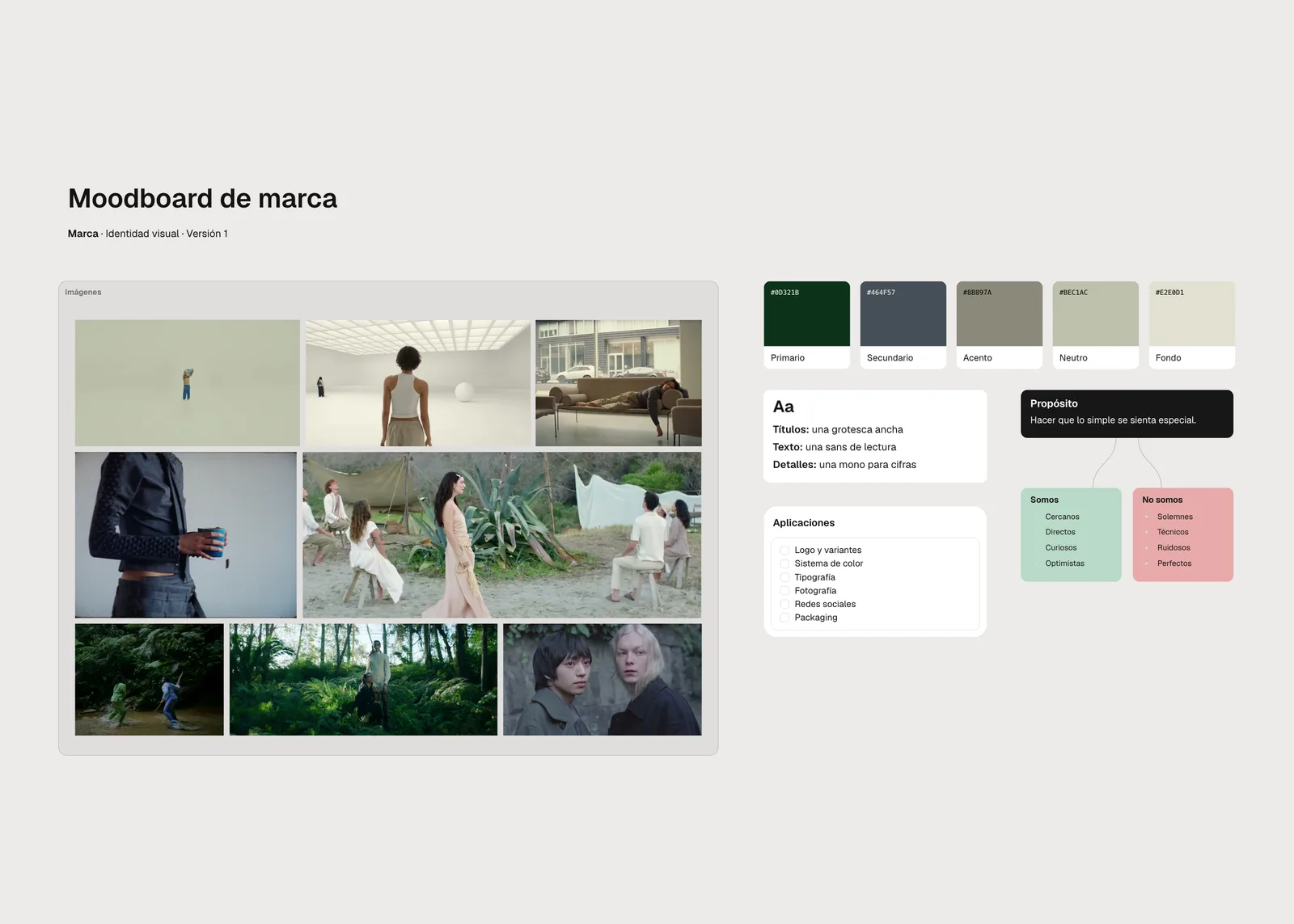
It brings together images, palette, type and purpose. The most useful part is the "we are" and "we are not" columns: saying a brand is not solemn or loud helps as much as saying what it is. Use this template.
5. A fashion mood board
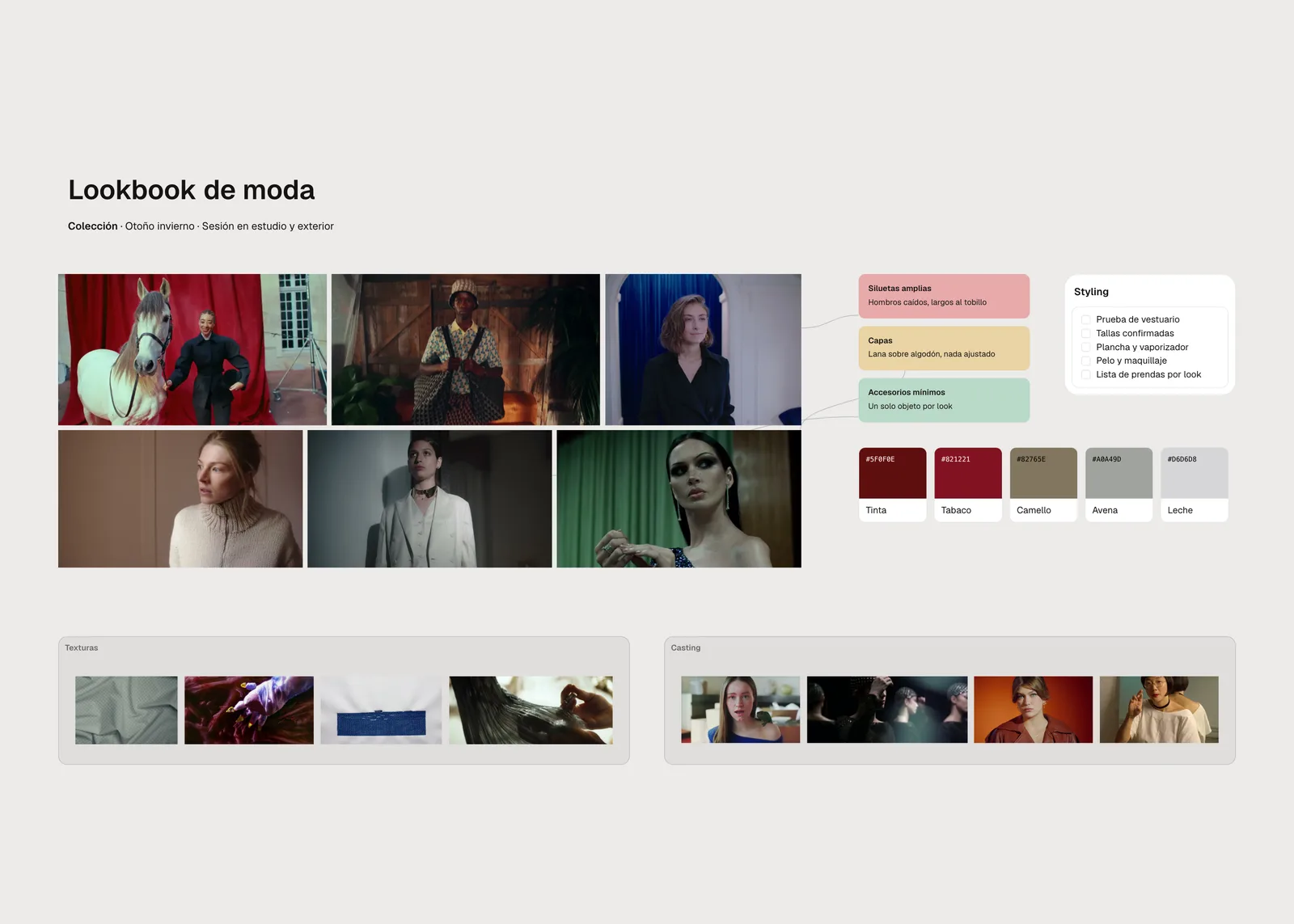
This one serves a shoot or a collection. The frames come with silhouettes ("dropped shoulders, ankle length"), a palette ("ink, tobacco, camel"), textures and casting, with a styling checklist beside them. Giving textures their own group keeps them from getting lost among the looks. Use this template.
6. A character mood board
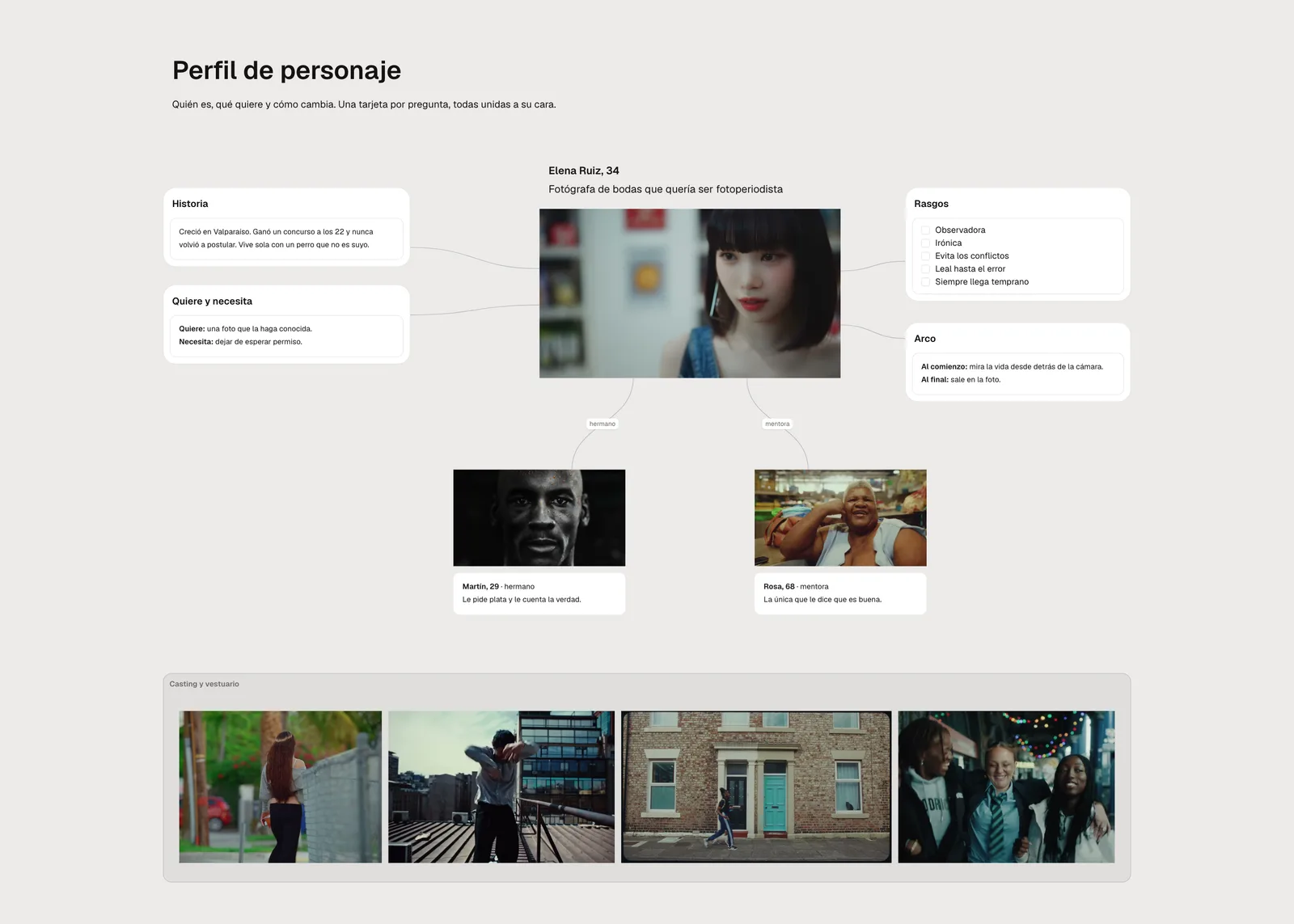
A mood board can also be about one person. Here the image sits in the center, linked to her story, what she wants, her traits and references for casting and wardrobe. It helps writers, casting directors and costume designers picture the same person. Use this template.
Mood board, collage and storyboard
They get mixed up, but they do different jobs:
- A collage is a finished piece: its value is in how it looks. A mood board is a tool: its value is in what it settles.
- A storyboard tells a story shot by shot, in order. A mood board shows how something feels, with no narrative order.
- An inspiration folder is for you and does not have to decide anything. A mood board is made for other people to read.
How to make a mood board in five steps
- Write the idea in one sentence. It filters everything that comes after.
- Collect too much. Commercials, music videos, films, photography, painting, your own photos.
- Cut. For each image, ask which decision it supports. If you cannot answer, it goes.
- Group: light, color, people, places.
- Add notes and share it. One or two lines per group, in one place where the team can comment.
Frequently asked questions
How many images should a mood board have? For a production, between ten and twenty-five is usually enough. With more, people stop looking closely.
Digital or physical? Digital is easier to share and update, which is why teams default to it. Physical is still useful for fashion and interiors, where touching the materials matters.
Can I make a mood board with AI? Yes, in two ways. One is generating the images, which is good for exploring, though the result can be hard to achieve later with a real camera and real light. The other is asking an AI to find and arrange real references: in Draftt, Claude or ChatGPT search your library and a catalog of frames and build the board with you. See how that works.
Where can I make one for free? Pinterest is free and enough for collecting images. To arrange and annotate them, we compare options such as Milanote and Miro.