Music video moodboard template
DrafttOfficial template · Free
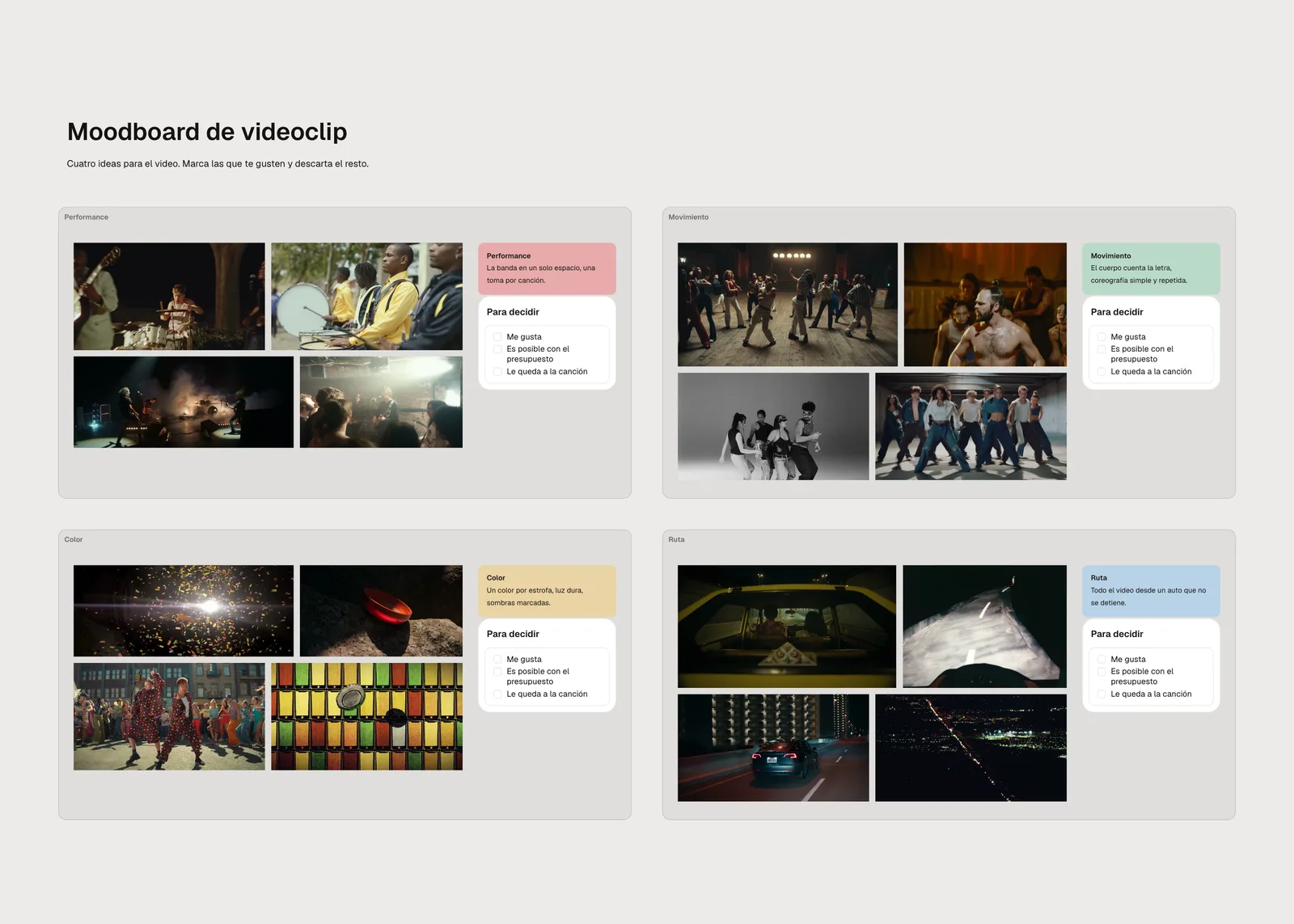
A wall of references for a music video, grouped into four possible ideas (the performance, the movement, the color, the road), each with its note and a checklist to decide. For the first conversation with the artist, before the treatment.
About this template
Before the treatment comes a conversation with the artist about what video they want to make. This moodboard is built for that conversation: instead of one idea, it puts four on the table, each in its own section, so the artist, their manager or the label can choose with the images in front of them.
Each idea has four frames and a one-line note. Performance: the band in a single space, one take for the whole song. Movement: the body tells the lyrics with simple, repeated choreography. Color: one color per verse, hard light, sharp shadows. Road: the whole video from a car that never stops.
Next to each idea is a To decide card with three questions: whether you like it, whether it's doable on the budget and whether it suits the song. It works for directors putting pitches together, for production companies that get an open brief and for artists who want to show what they have in mind.
How to make a music video moodboard
01
Bring more than one idea
In the first conversation the artist doesn't know what they want yet: they react. Three or four very different directions (one performance, one narrative, one visual) give them something to choose from, and show you what they like even if they pick none.
02
Give each idea a rule
A music video idea is a rule that holds for the whole song: a single take, one color per verse, everything from a car. Write it in one line above the frames. If you can't say it that way, it's a look and not an idea.
03
Run them past the budget before you show them
Don't present an idea you can't shoot: if the artist picks it, the next conversation is the one where you let them down. On each one, note what makes it expensive (locations, nights, extras, effects) and leave only the ones that fit on the table.
04
Decide in the meeting and take one to the treatment
Check off together what works and what doesn't, and ask the artist to comment on the frames, not in general. The idea left standing goes on to the treatment. Keep the ones you dropped: they tend to come back on the next single.
More templates for music videos
Music video treatment
Draftt
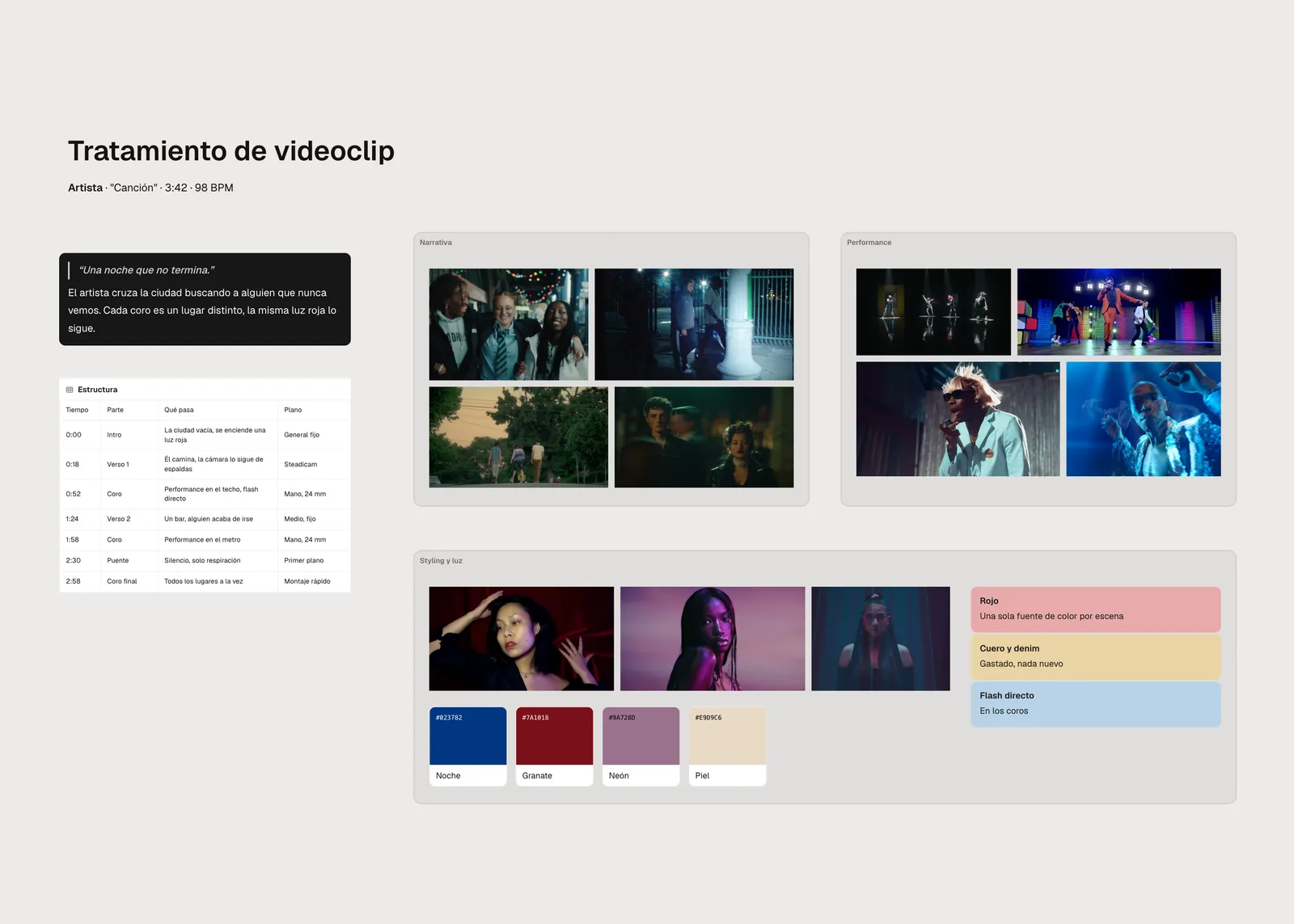
A music video's treatment: the idea in one sentence, the narrative and the performance with their references, the styling, the palette and the song's structure with what happens in each part.
Film moodboard
Draftt
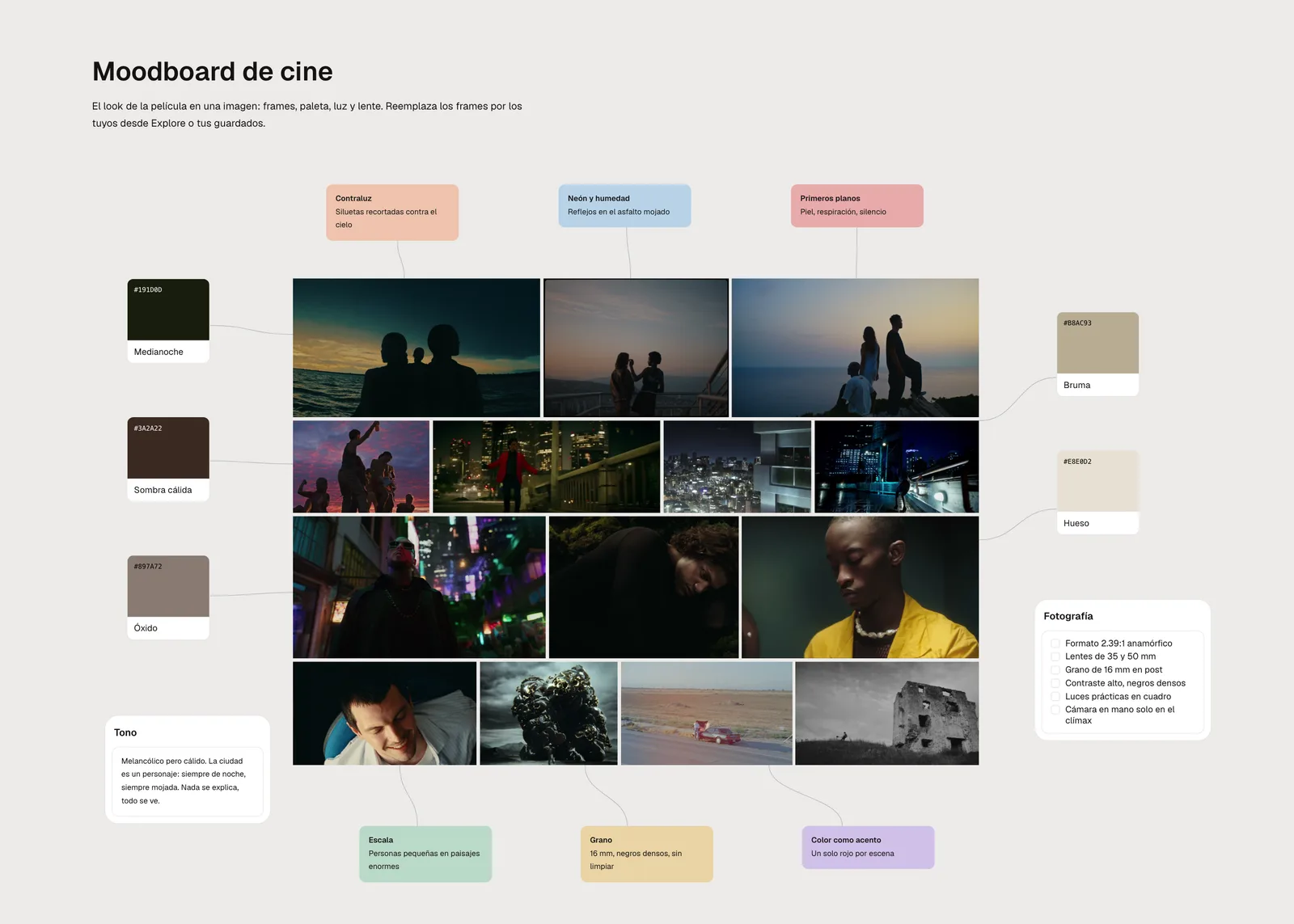
A moodboard to find a film's look before shooting it: a collage of reference frames in the middle, the palette with its names, the light and lens ideas connected to the images that show them, and the cinematography decisions on one card.
Streetwear moodboard
Draftt
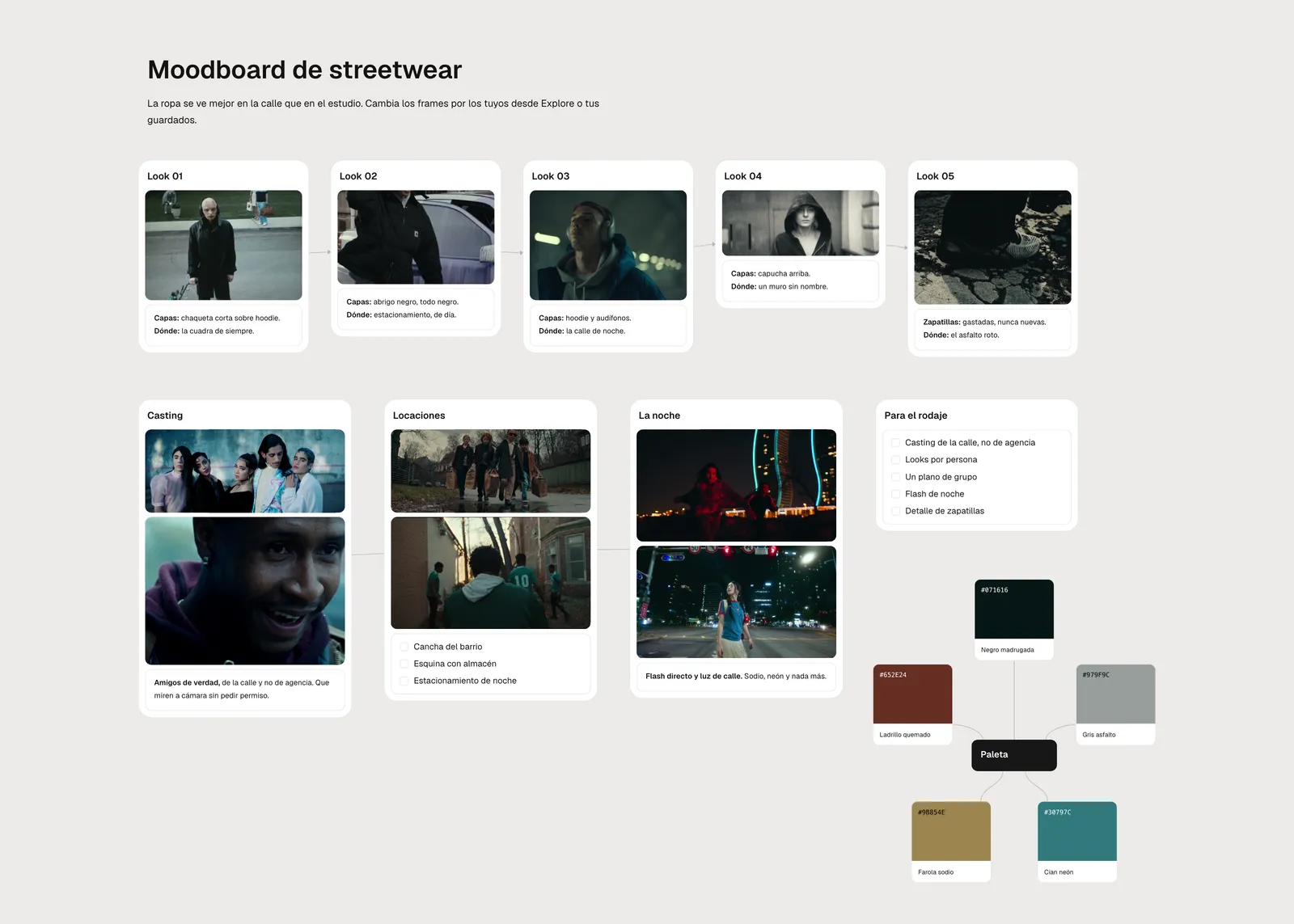
A moodboard for a streetwear brand or a fashion film: a lookbook of five looks and, below, the casting, the locations and the night.
Art direction moodboard
Draftt
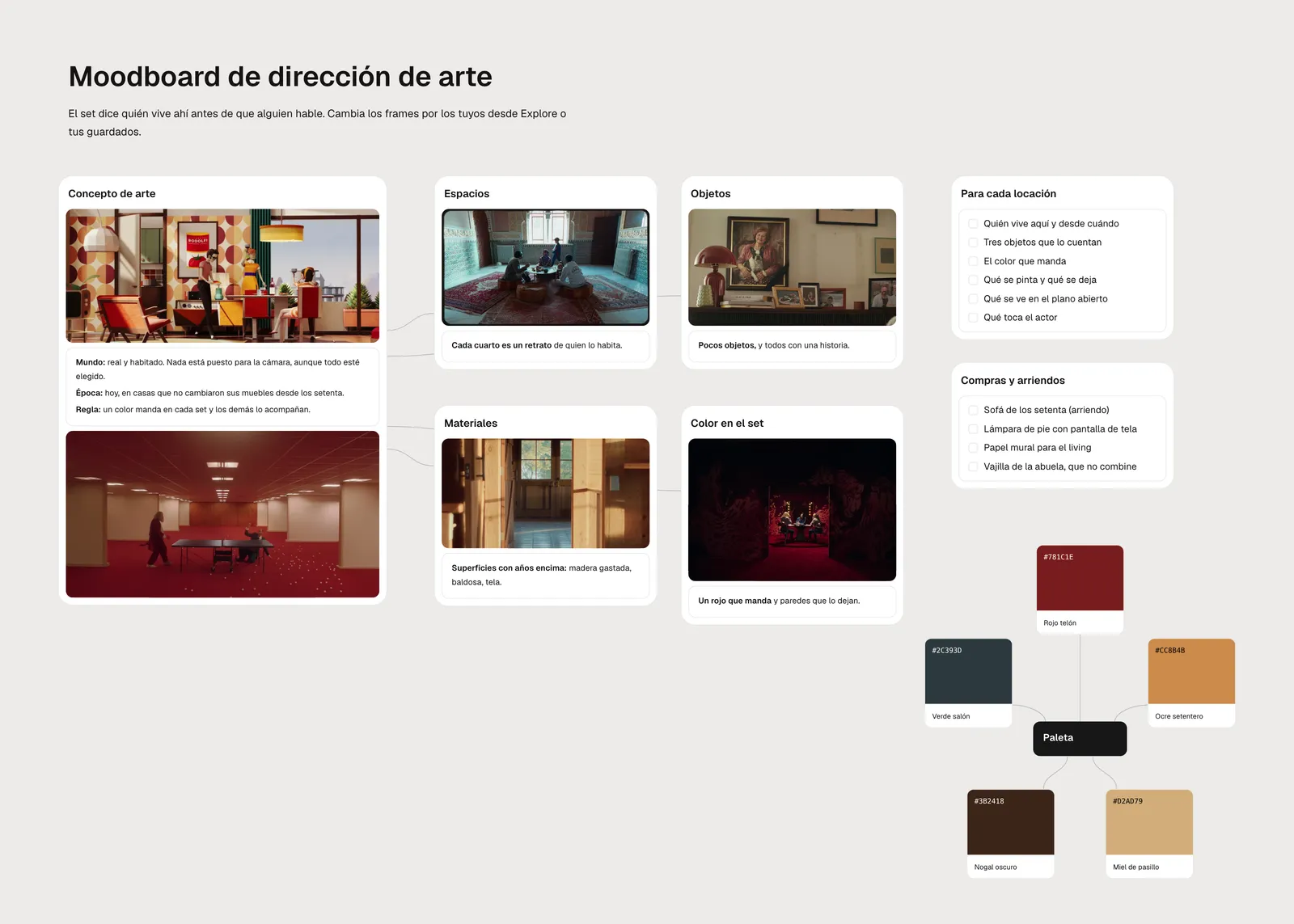
An art direction moodboard: the concept of the world and, around it, spaces, objects, materials and color, with what to ask of each location and the shopping list.
Advertising moodboard
Draftt
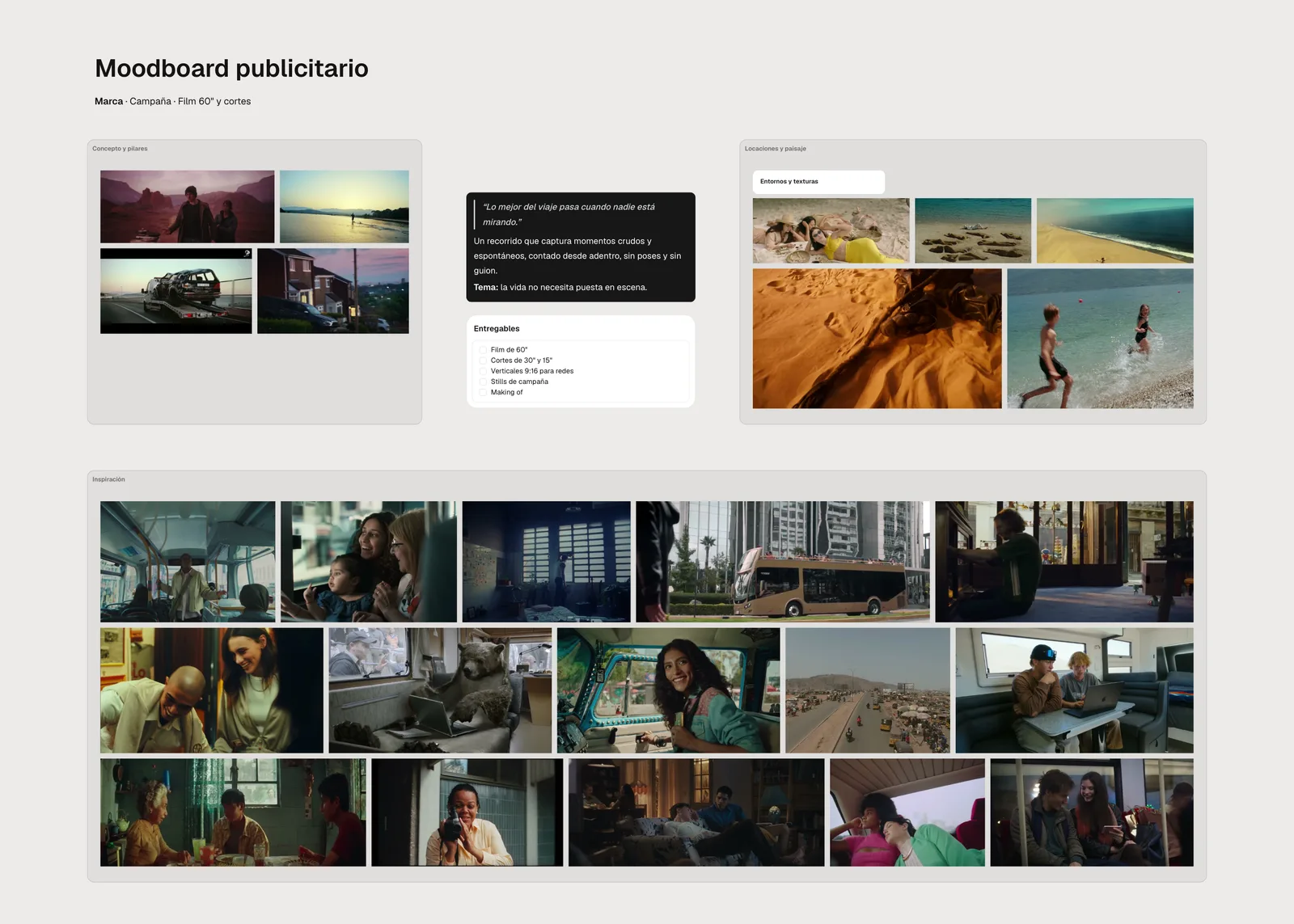
A commercial's moodboard laid out the way a production company presents it: the concept in the middle, the story's pillars, the locations and a wall of inspiration, connected.
Frequently asked questions
- What is a music video moodboard?
- It's a board of reference images that shows how a music video could look before it's written. It gathers frames from other videos, films or commercials that have the light, the movement or the color you're after, so the artist and the director are talking about the same thing without having to describe it in words.
- Why pitch four music video ideas instead of one?
- Because in the first meeting it's almost never clear what video the artist wants. Showing several directions at once lets them choose or mix, and saves you days on a treatment they don't like. The four in the template (performance, movement, color and road) cover very common routes for a music video.
- How is a moodboard different from a music video treatment?
- The moodboard opens options and the treatment closes on one. Here there are four ideas with their references and nothing else. The treatment develops the chosen one with its story, its styling, its palette and what happens in each section of the song. Draftt has a template for each step.
- What references should I use for a music video moodboard?
- Frames that show something specific: a kind of light, a piece of choreography, a palette, a camera move. They don't have to come from music videos. A commercial or a film can have exactly the framing you're after. In Explore you can search by what the image shows or by color, and every frame comes with the credits of its work.
- Is the music video moodboard template free?
- Yes. Draftt's free plan includes 2 boards, and using the template takes one. The sixteen frames come from Explore, Draftt's catalog, with the credits of each work, and you can swap them for your own or add more to each idea.
Related templates
See more mood board examples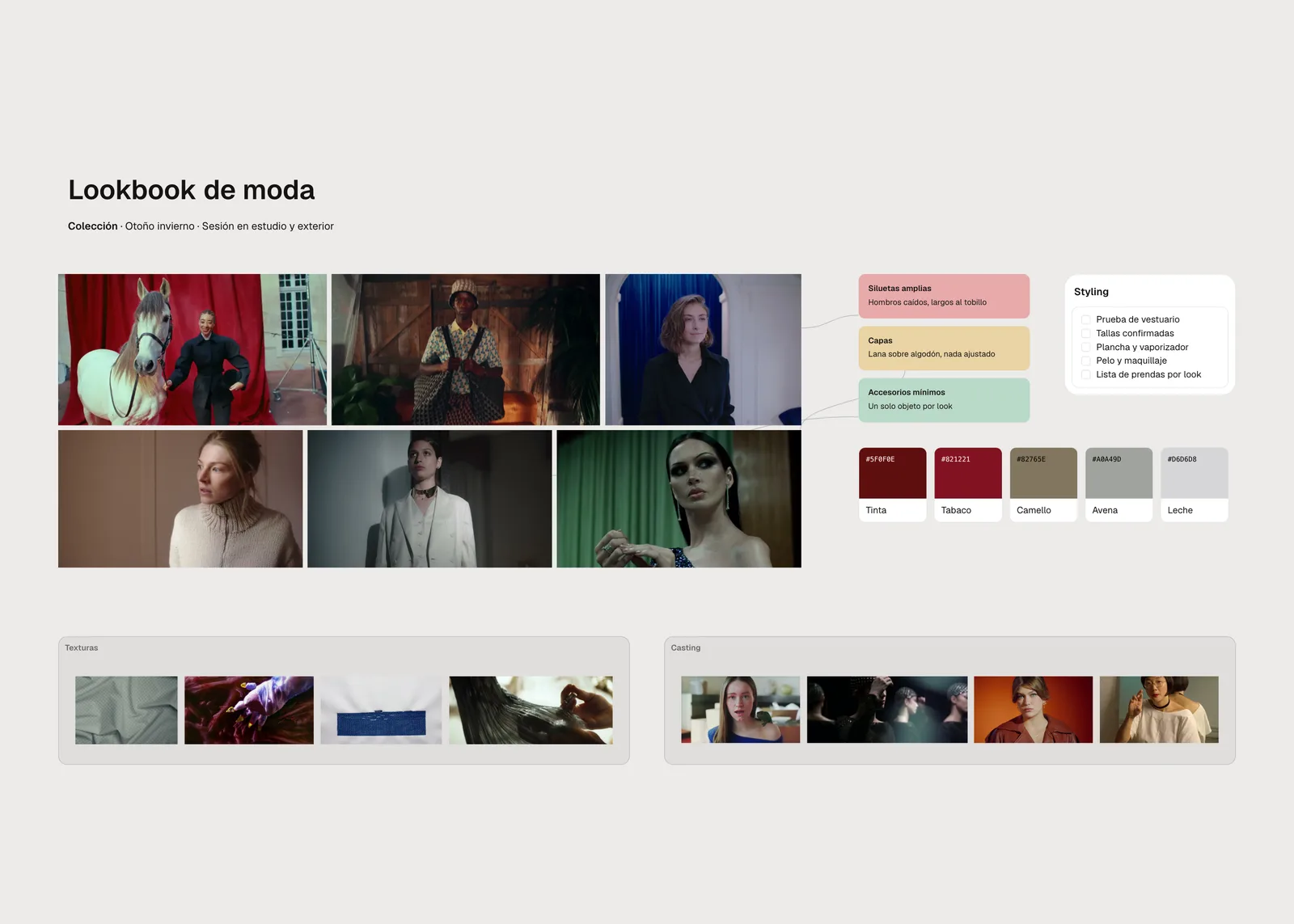
Fashion lookbook
Draftt
The moodboard of a shoot or a collection: a collage of references, the styling notes connected to each image, the palette with its names, the textures and the casting.
Brand moodboard
Draftt
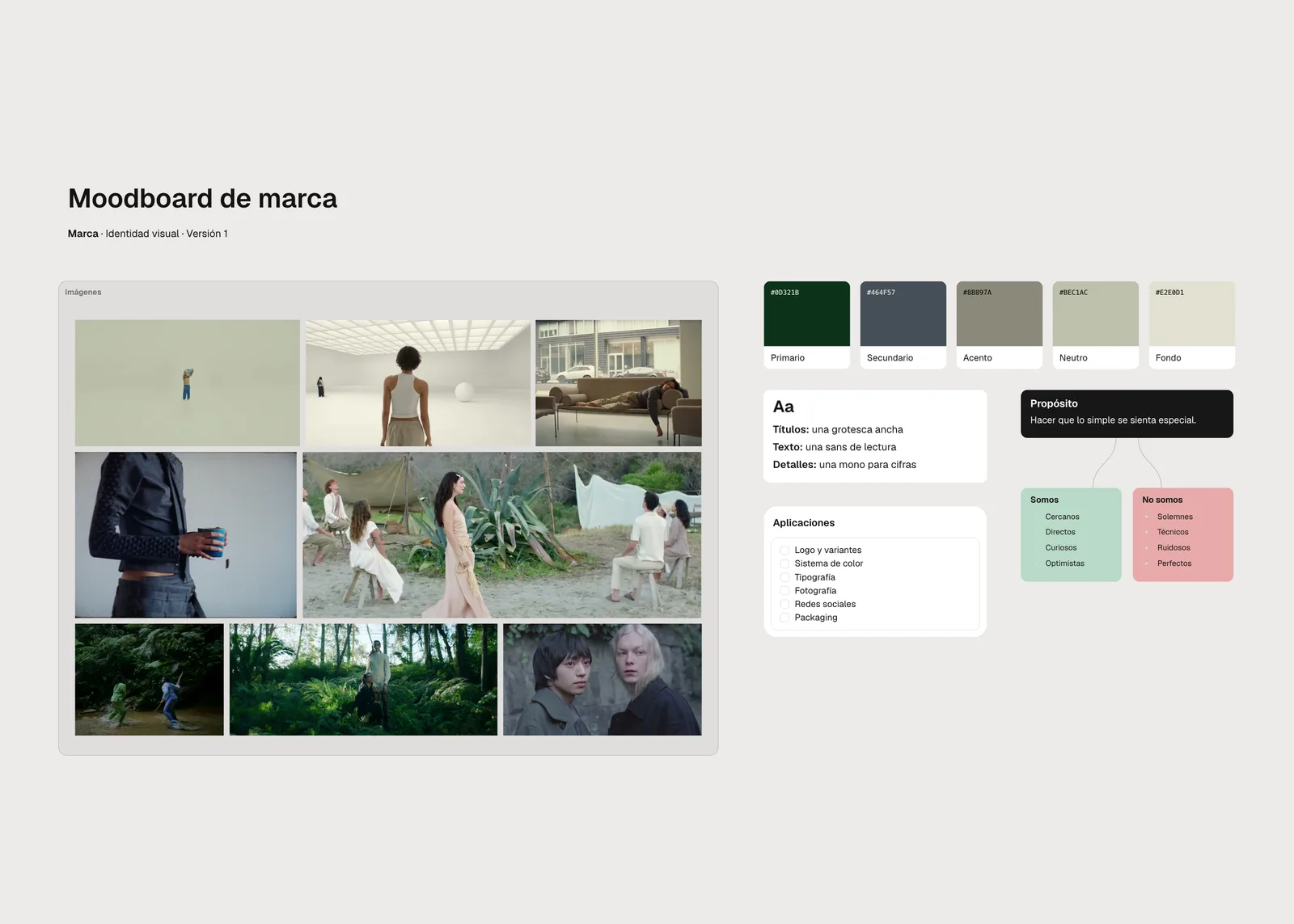
A brand's visual base on one board: images that stand for it, the palette with names and hex codes, the typography, the tone of voice (what it is and what it is not), its purpose and where it will be applied.
Horror moodboard
Draftt
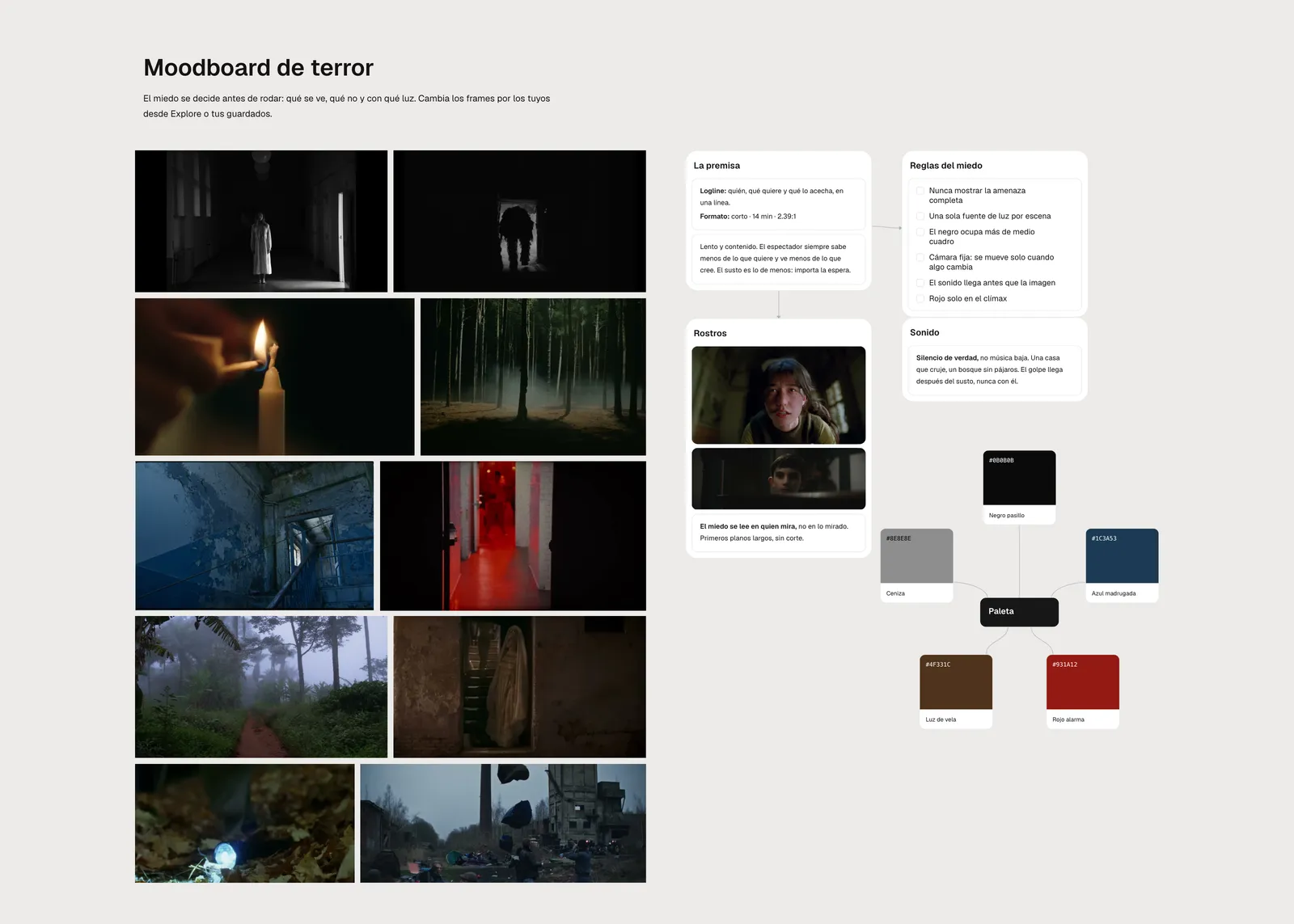
A moodboard to decide a horror film's fear: what stays in the dark, where the light comes from, the faces and the place.