Art direction moodboard template
DrafttOfficial template · Free
An art direction moodboard: the concept of the world and, around it, spaces, objects, materials and color, with what to ask of each location and the shopping list. For art directors and production designers preparing a proposal or a scout.
About this template
This moodboard decides how the world of a film or a commercial looks through its set: where each character lives, what objects surround them and which color leads. It is for art directors and production designers prepping a proposal or a scout, and for the director who has to approve it.
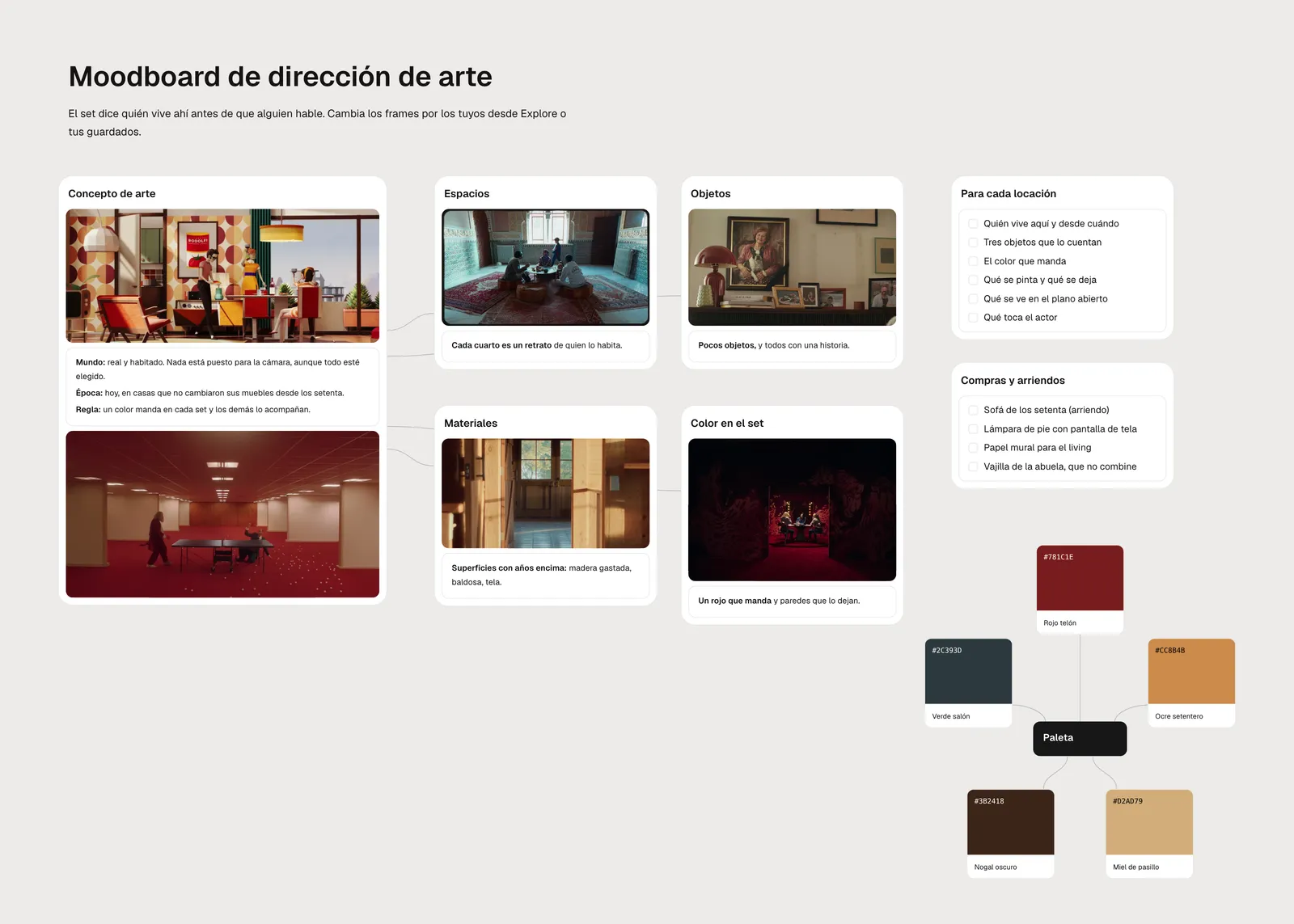
On the left is Art concept, with two frames and three definitions: the world (real and lived in), the period (today, in houses that haven't changed their furniture since the seventies) and the rule (one color leads in each set). Four cards come out of it, joined by lines, each with a frame and a sentence: Spaces, Objects, Materials and Color on set.
On the right are two checklists. For each location asks who lives there and since when, which three objects tell their story, which color leads, what gets painted and what stays, what shows in the wide shot and what the actor touches. Purchases and rentals comes with four sample items, like a seventies sofa. Below, a palette of five named colors, from Curtain red to Parlor green.
How to make an art direction moodboard
01
Start with who lives there
A set is designed from the character: who lives in that place, since when and on how much money. Answer it for each location before you look for a single piece of furniture. Three objects that tell their story are worth more than a full room.
02
Set the period and the color that leads
Decide what year that place stopped in and one dominant color per set. The palette comes from there: one that leads, one that goes with it and an accent that shows up rarely. Save them by name so paint, props and wardrobe use the same ones.
03
Separate spaces, objects and materials
They are three different searches. Spaces give you proportion and light; objects, the life; materials, how everything ages: worn wood, Formica, velvet. In Explore you search each one by what you see, and with the Draftt extension you save what you find in stores and at auctions.
04
Turn what is approved into purchases and rentals
What the director approves becomes a list with an owner and a date: what gets bought, what gets rented, what gets built and what gets painted. Make it as soon as there is approval. Period rentals and construction take the longest.
More moodboards for prepping the art
Wardrobe moodboard
Draftt
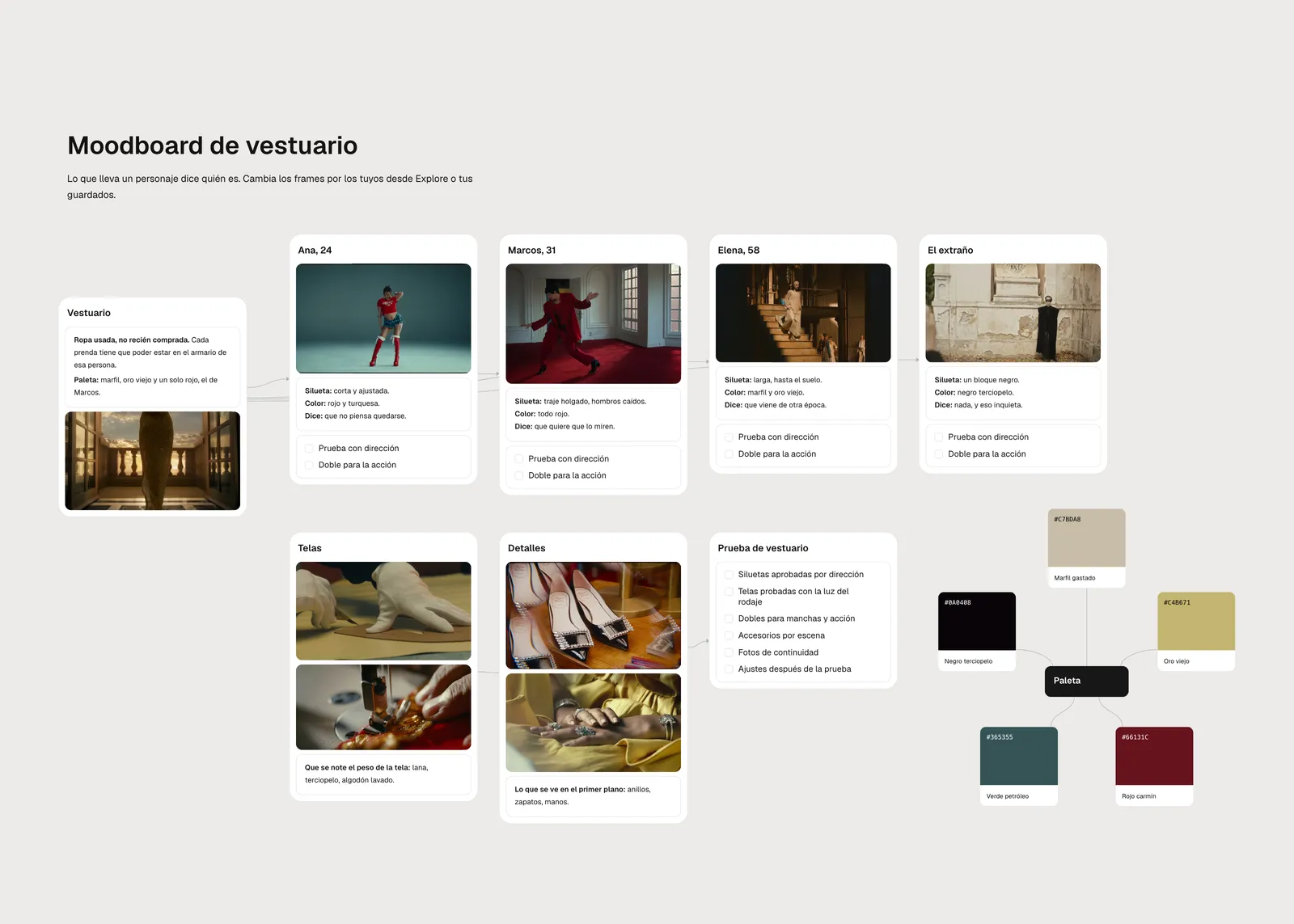
A wardrobe moodboard with a card per character: their silhouette, their color and what it says, plus the fabrics, the details and the fitting.
Film moodboard
Draftt
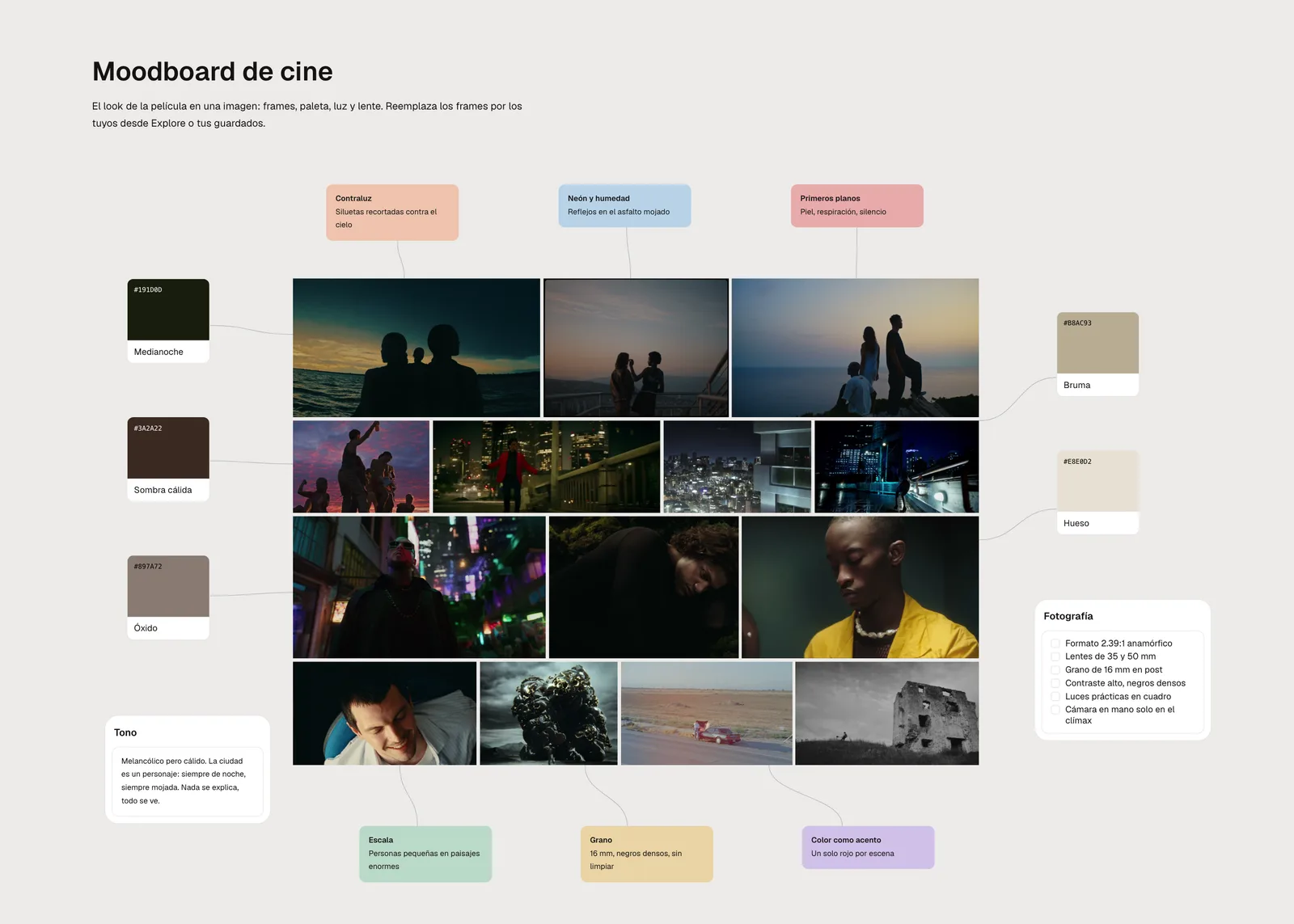
A moodboard to find a film's look before shooting it: a collage of reference frames in the middle, the palette with its names, the light and lens ideas connected to the images that show them, and the cinematography decisions on one card.
Location scouting
Draftt
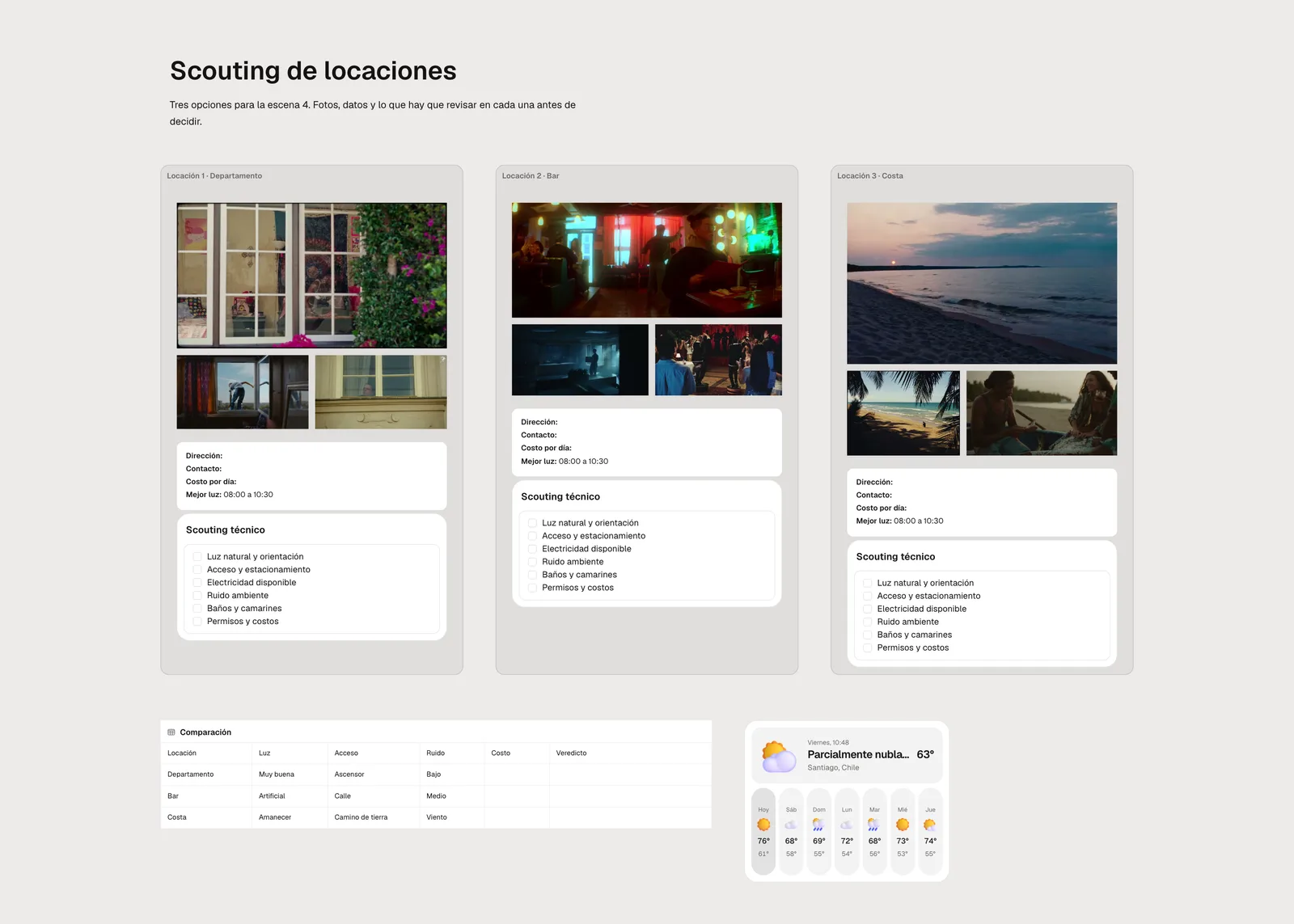
Compare locations side by side: photos of each one, its details (address, contact, cost, best hour of light), a tech scout checklist, the weather forecast and a table to decide.
Science fiction moodboard
Draftt
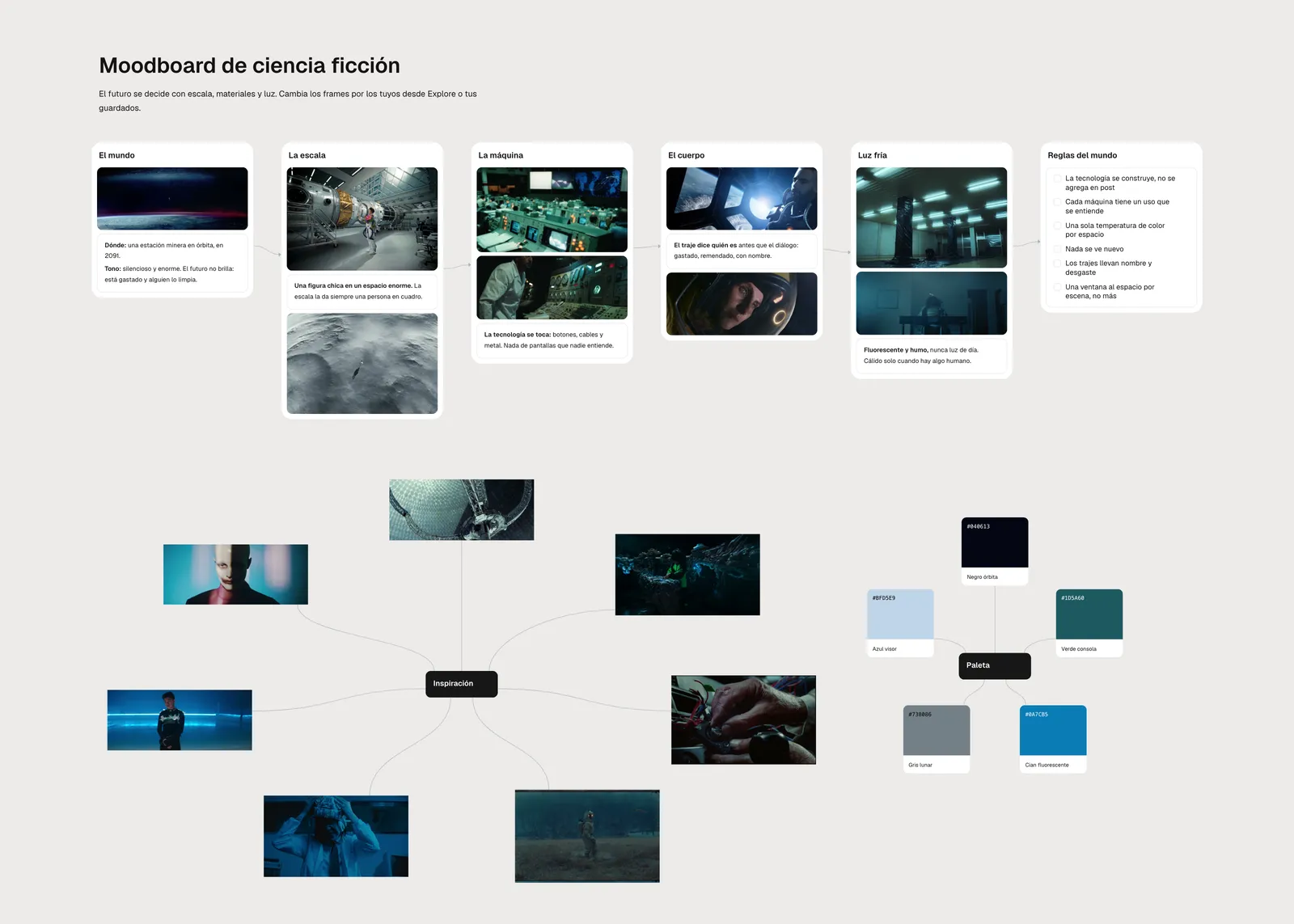
A moodboard for a science fiction film's look, told left to right: the world, the scale, the machines, the suits, the cold light and its rules.
Horror moodboard
Draftt
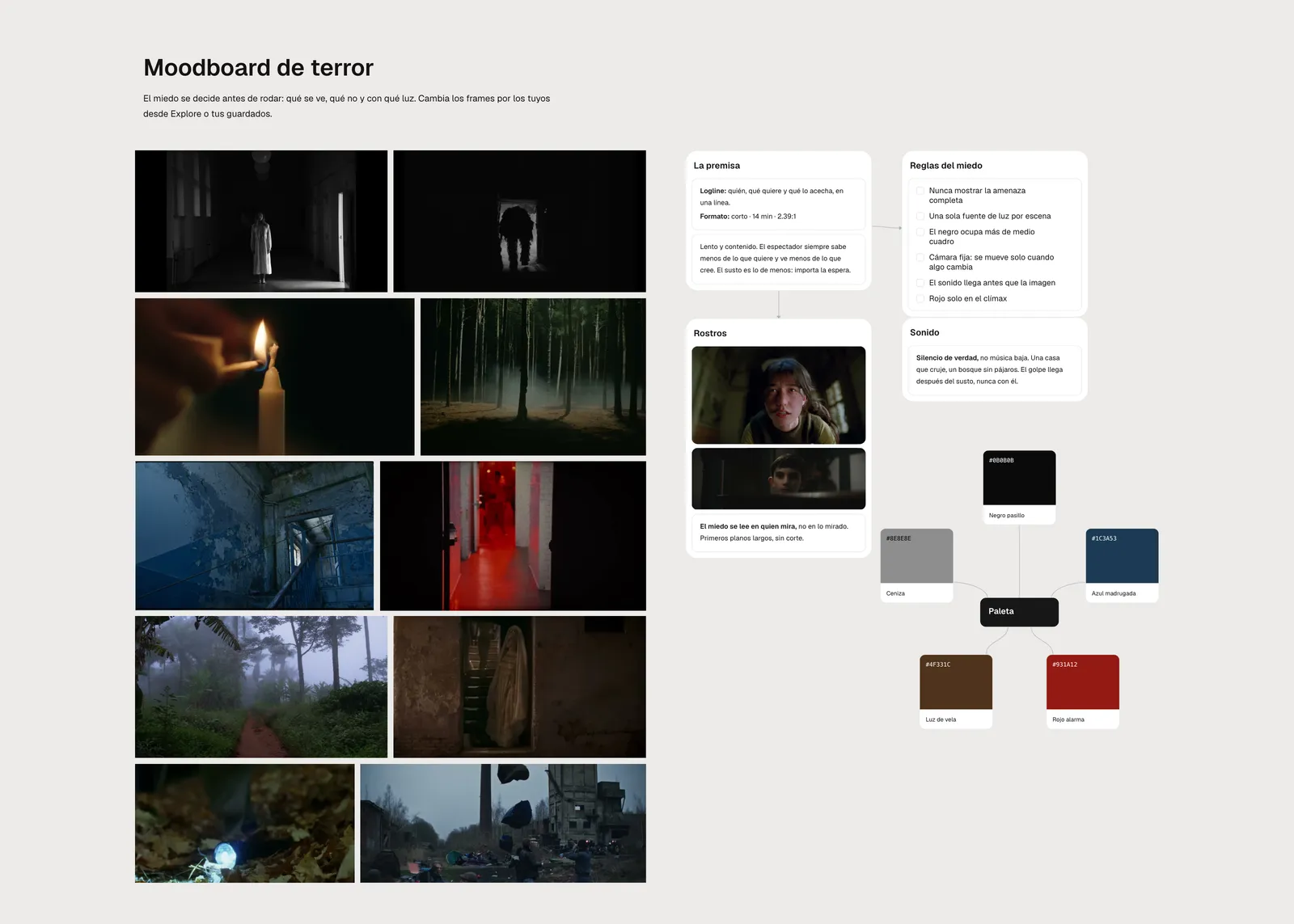
A moodboard to decide a horror film's fear: what stays in the dark, where the light comes from, the faces and the place.
Frequently asked questions
- What is an art direction moodboard?
- It is the board where the production designer shows what the film's visible world will be: the spaces, the objects, the materials and the color of each set. It lets the director approve it, lets the cinematographer know what they will be working with and lets production know what has to be bought, rented or built.
- What should the art department decide before the shoot?
- Who lives in each space and since when, which objects tell that story, which color leads in each set, what gets painted and what stays, what makes it into the wide shot and what the actor touches. The For each location card asks those six questions, to answer them place by place.
- What is the difference between an art direction moodboard and a film moodboard?
- The film moodboard defines the look of the image: light, framing, lenses, grain and color. The art direction one defines what is in front of the camera: the set, its objects and its materials. They complement each other: the cinematographer decides how the room looks, and the art department decides what is in it.
- What is the purchases and rentals list for?
- So that what was decided on the moodboard reaches production as a concrete list. Each key object is written down, with whether it is bought or rented, and gets checked off once it is on set. The template comes with four examples, like a seventies sofa or mismatched dishes.
- Is the art direction moodboard template free?
- Yes. Draftt's free plan includes 2 boards, and using the template takes one. The frames come from Explore, Draftt's catalog, with each work's credits, and you can swap them for the photos from your own scout.
Related templates
See more mood board examples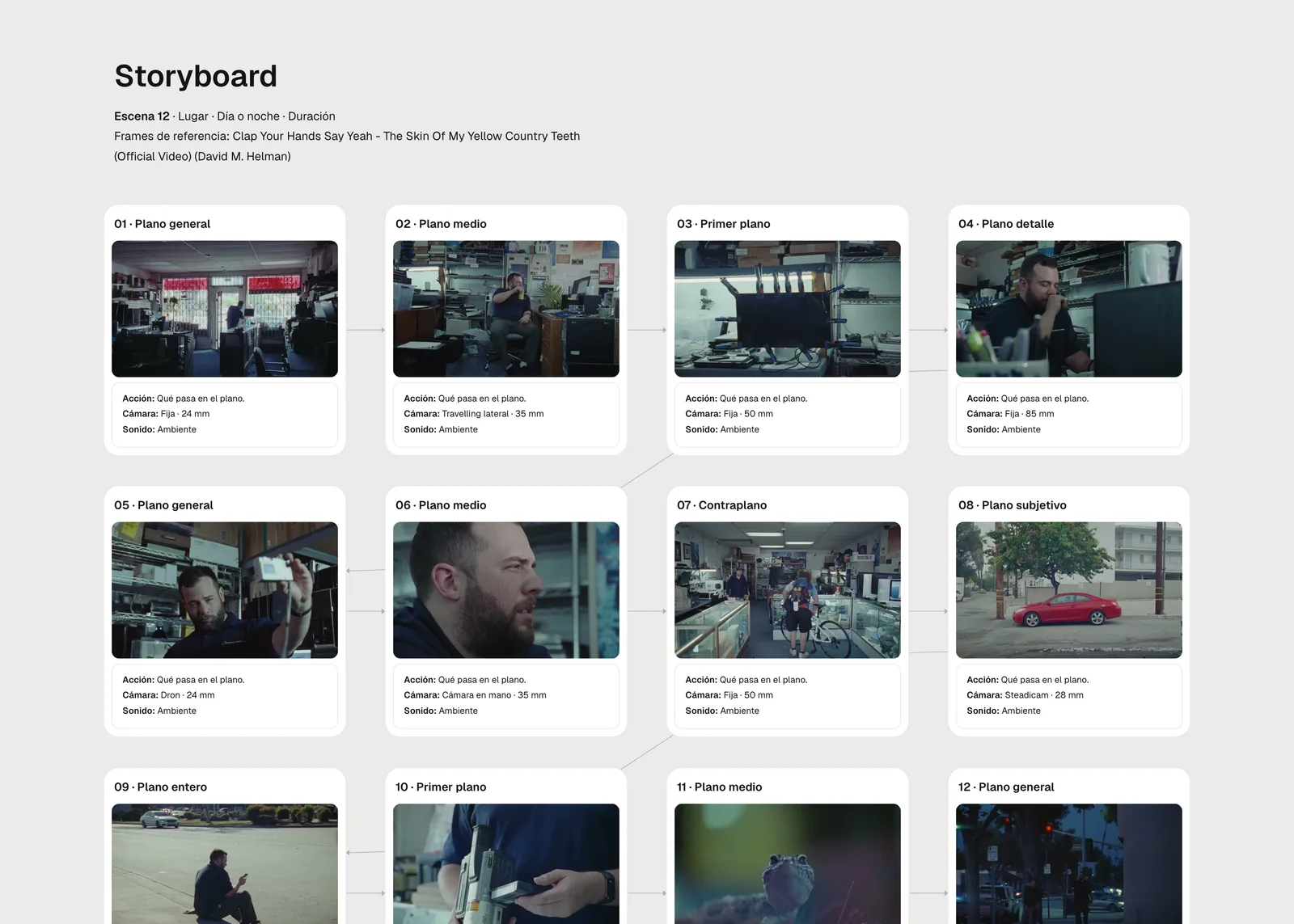
Storyboard
Draftt
A scene shot by shot: each card holds its frame, the action, the camera and the sound, in the order it will be filmed, joined by arrows.
Director's treatment
Draftt
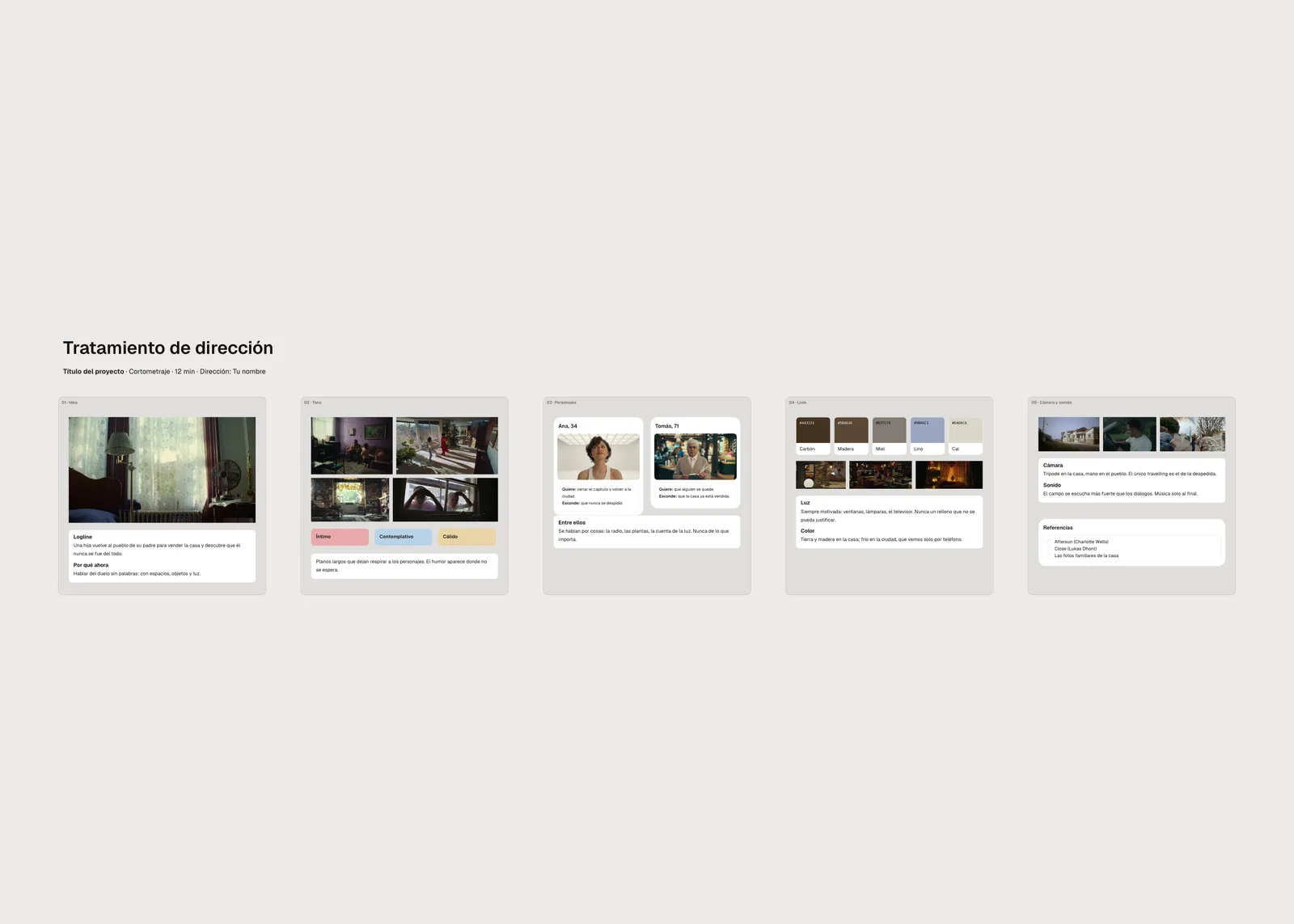
The treatment that goes with a pitch, left to right: the idea, the tone, the characters, the look and how it is shot and sounds. Each section comes with real frames and notes to fill in.
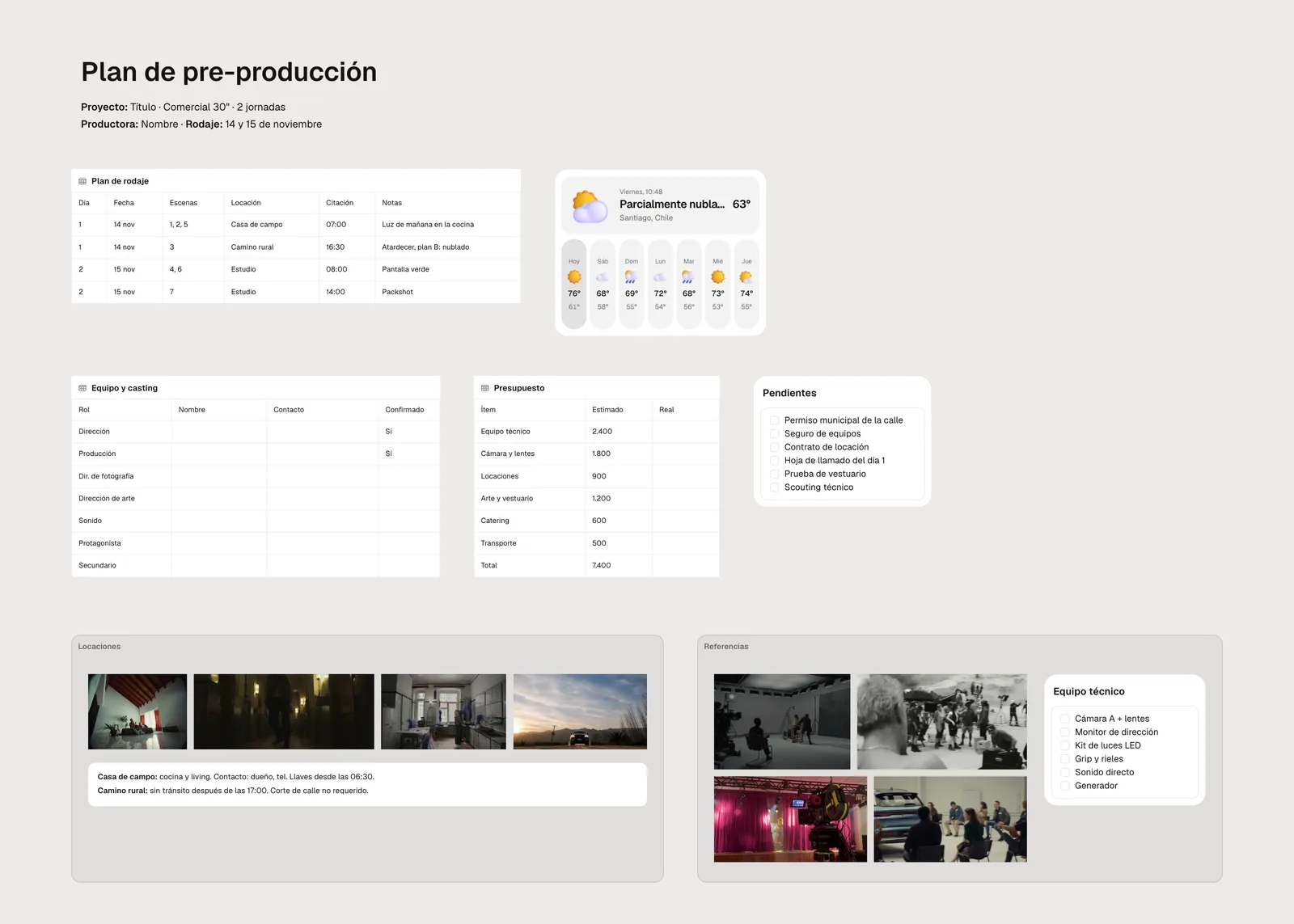
Pre-production plan
Draftt
Everything that has to be solved before the first shoot day on one board: the shooting schedule, the crew and the casting, the budget, the locations, the weather forecast, the gear and the to-dos.