Film moodboard template
DrafttOfficial template · Free
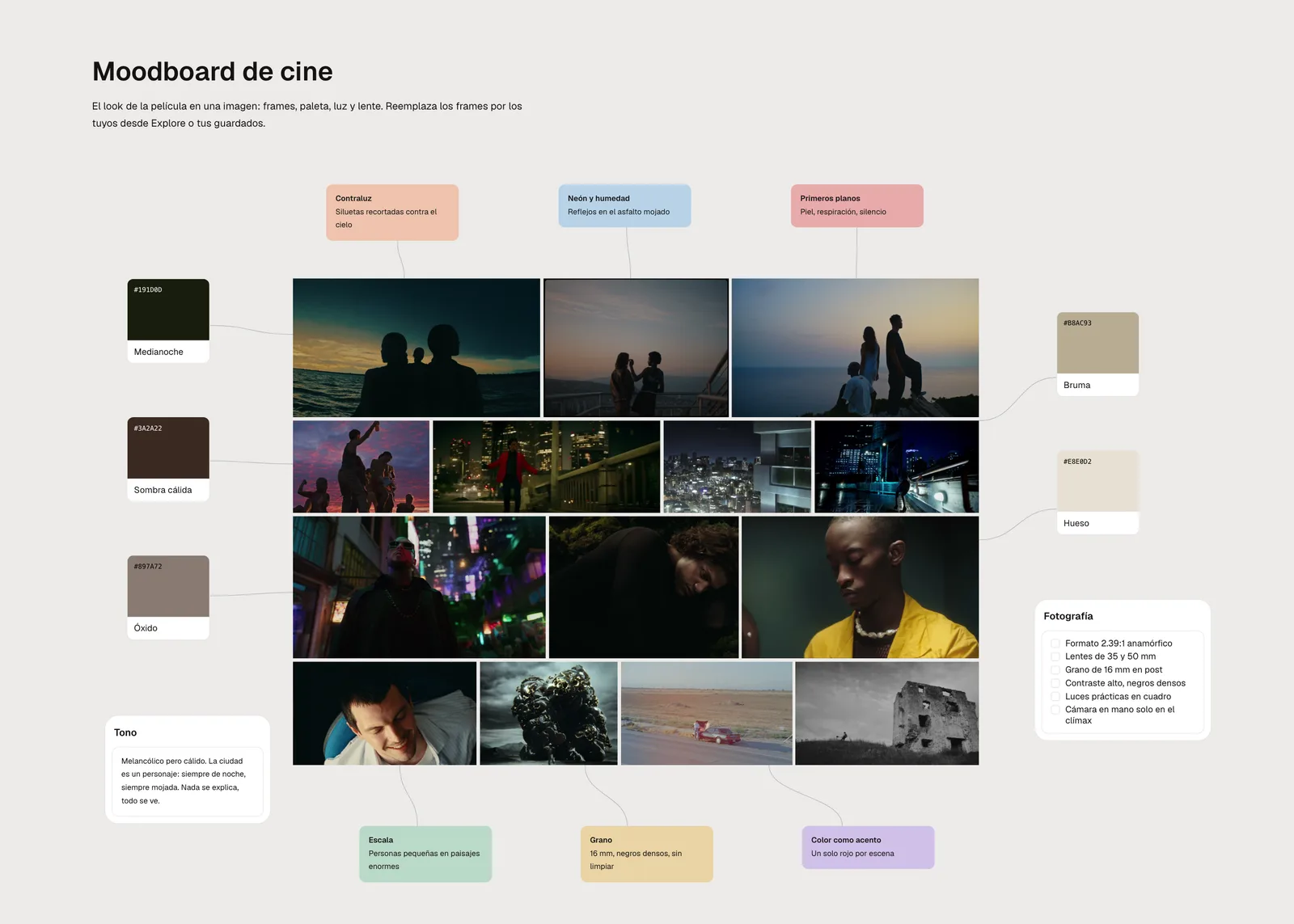
A moodboard to find a film's look before shooting it: a collage of reference frames in the middle, the palette with its names, the light and lens ideas connected to the images that show them, and the cinematography decisions on one card. For directors, cinematographers and art directors who need the crew aligned on one picture.
About this template
This moodboard decides how a film looks before you shoot it: the light, the framing, the color and the texture of the image. It gets the director, the cinematographer and the production designer looking at the same thing and calling it by the same name, on a feature, a short, a music video or a branded piece.
In the middle is a collage of 14 real frames from Draftt's catalog. Around it, six short notes (backlight, neon and wet streets, close-ups, scale, grain and color as an accent) are joined by lines to the images that show them. On the sides is the palette: five named colors, from Midnight to Bone, each joined to the frame it comes from.
Two cards close the board. Tone describes the film in three sentences. Cinematography is a checklist of decisions: 2.39:1 anamorphic format, 35 and 50 mm lenses, 16 mm grain in post, high contrast with dense blacks, practical lights in frame and handheld only at the climax.
How to make a film moodboard
01
Write the film in three words
Before you look for a single image, pick three words for the film (intimate, wet, nocturnal) and leave them at the top. They are the filter: a beautiful frame that answers none of the three stays out, however much you like it.
02
Look for decisions, not similar films
A frame is useful for one specific thing: where the light comes from, how far the camera is, how much black is in frame. In Explore, search by what you see (“backlight in a window”) or by a color. Right-click a frame that works and Find similar brings more of that same light.
03
Note what you take from each image
A reference without a note gets read ten different ways. Join each frame to a one-line note that says what you are taking from it (the backlight, not the wardrobe) and pull the palette from the same frames: five named colors, so art and wardrobe use the same words.
04
End on camera decisions
The moodboard is done when you can shoot from it: format, lenses, grain, contrast and when the camera moves. Write them as a checklist and go over them with your cinematographer. View credits, in each frame's right-click menu, tells you who shot that work, so you can look at the rest of what they have done.
More film moodboard examples
Horror moodboard
Draftt
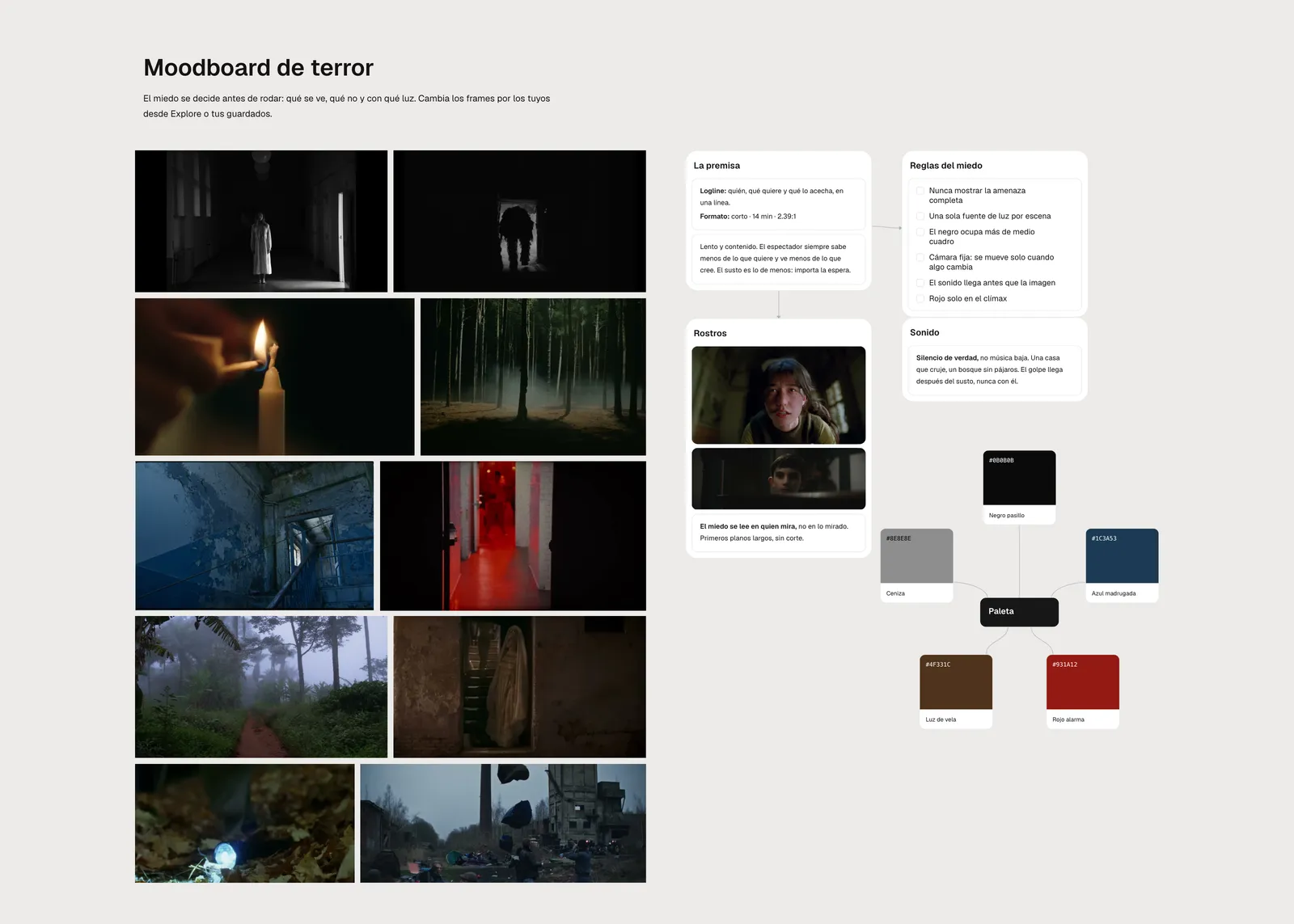
A moodboard to decide a horror film's fear: what stays in the dark, where the light comes from, the faces and the place.
Science fiction moodboard
Draftt
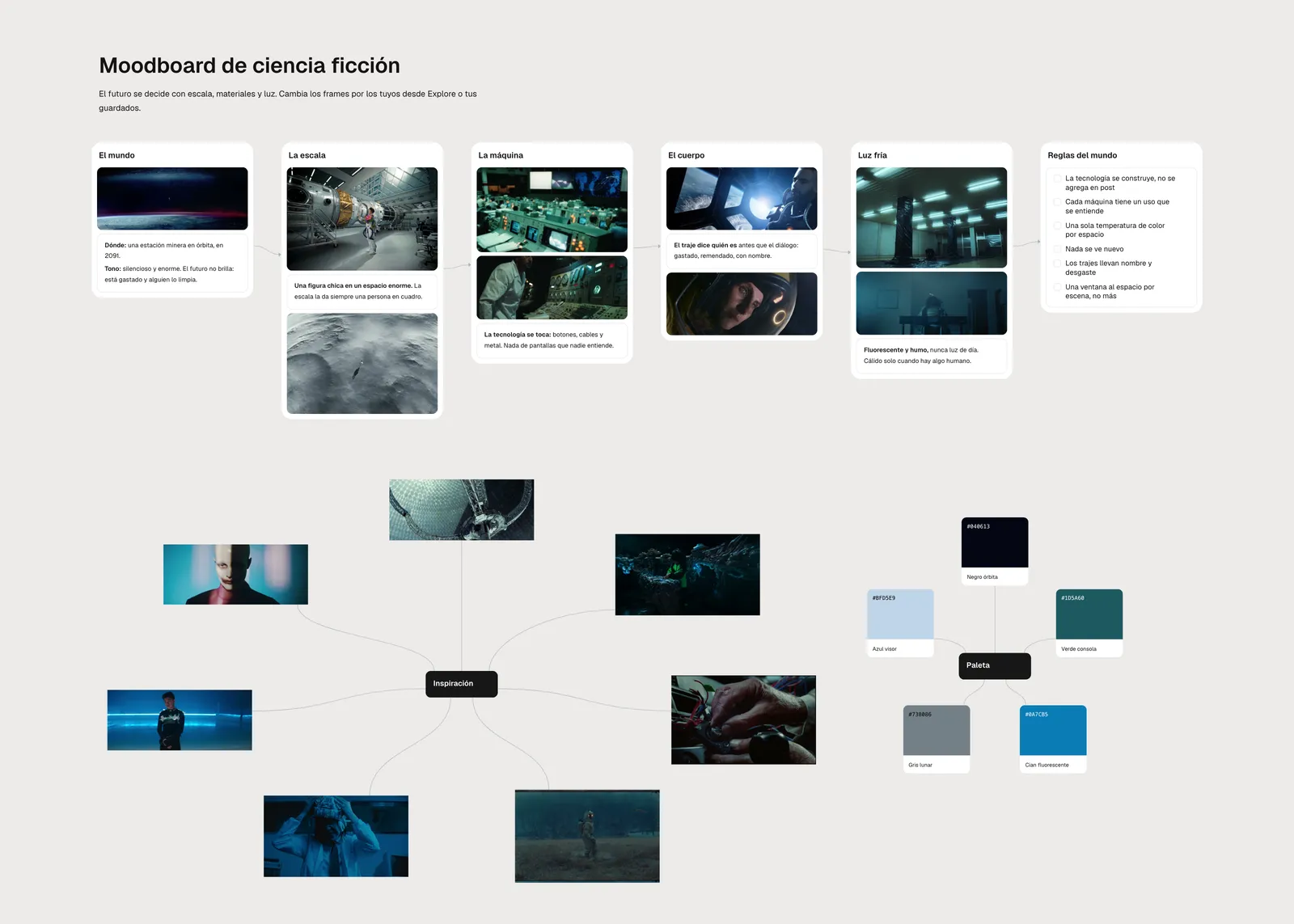
A moodboard for a science fiction film's look, told left to right: the world, the scale, the machines, the suits, the cold light and its rules.
Art direction moodboard
Draftt
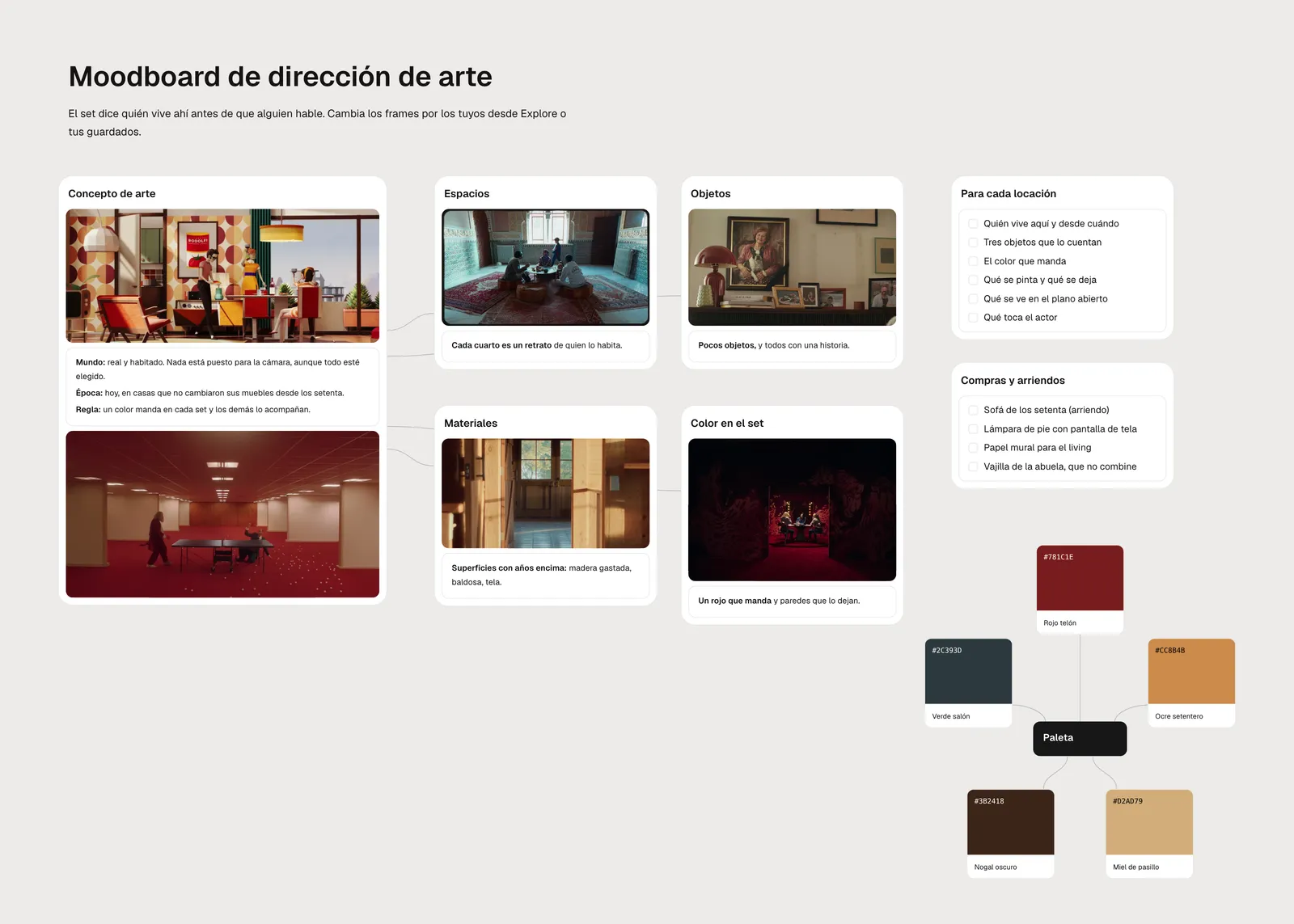
An art direction moodboard: the concept of the world and, around it, spaces, objects, materials and color, with what to ask of each location and the shopping list.
Wardrobe moodboard
Draftt
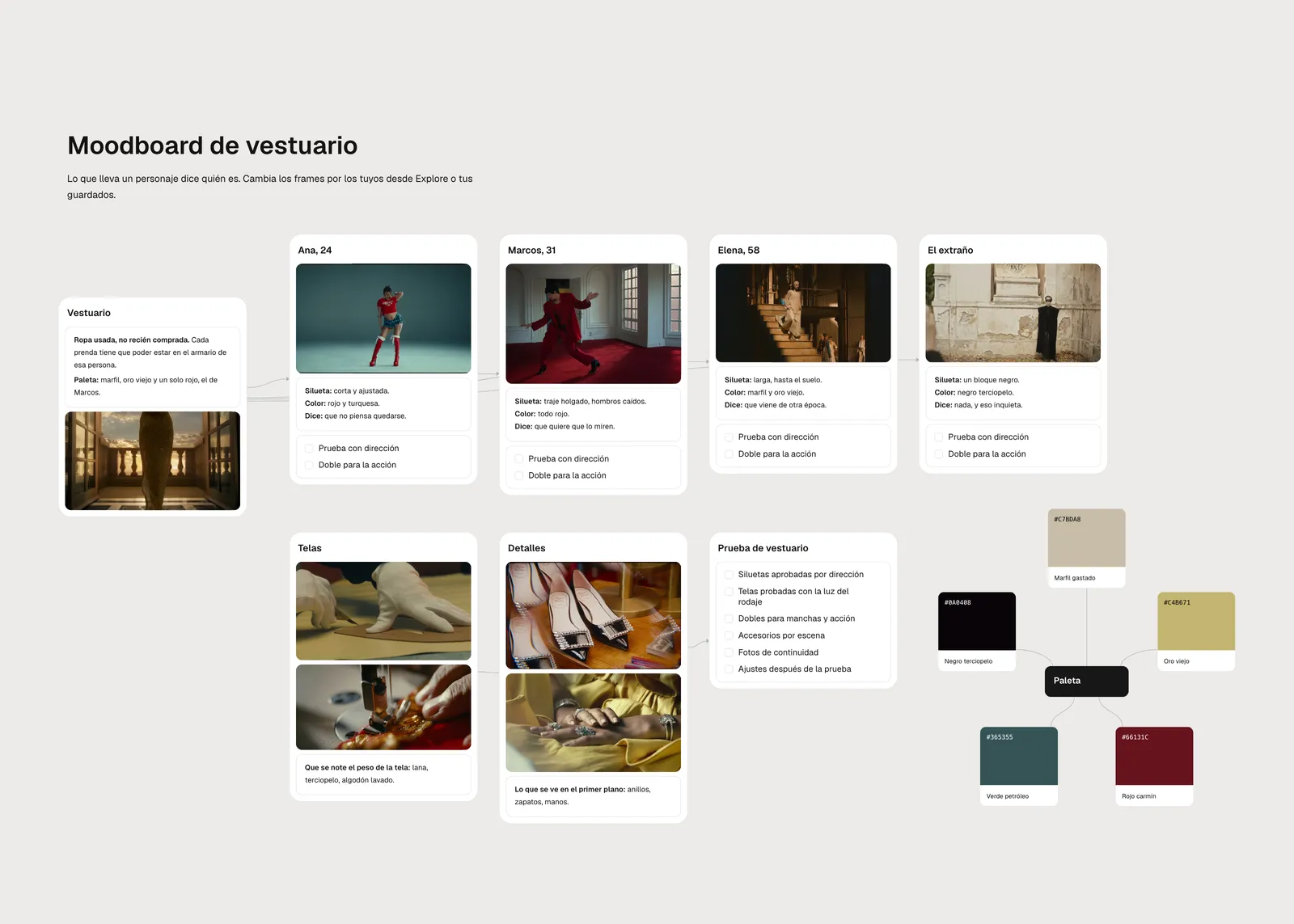
A wardrobe moodboard with a card per character: their silhouette, their color and what it says, plus the fabrics, the details and the fitting.
Director's treatment
Draftt
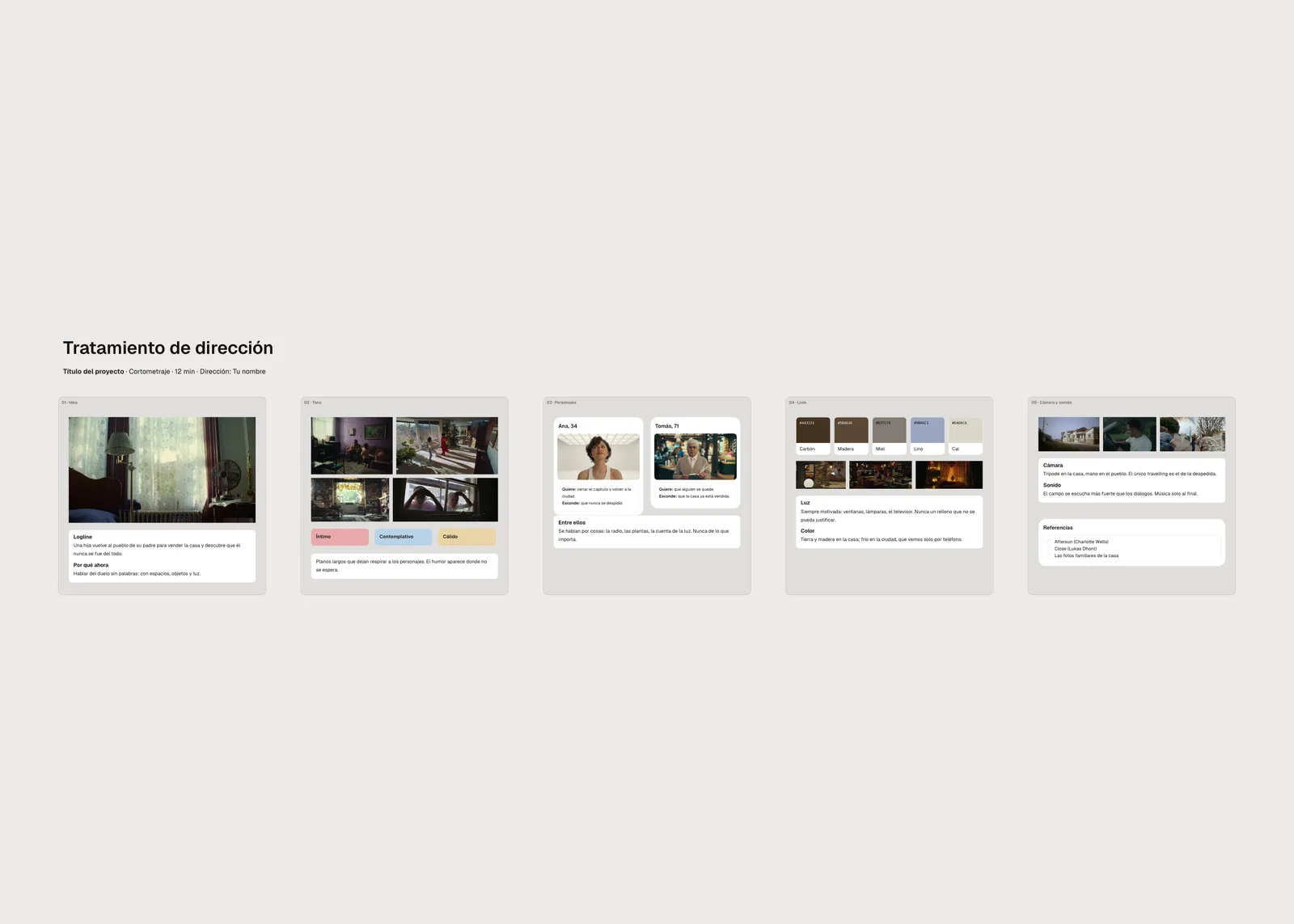
The treatment that goes with a pitch, left to right: the idea, the tone, the characters, the look and how it is shot and sounds. Each section comes with real frames and notes to fill in.
Location scouting
Draftt
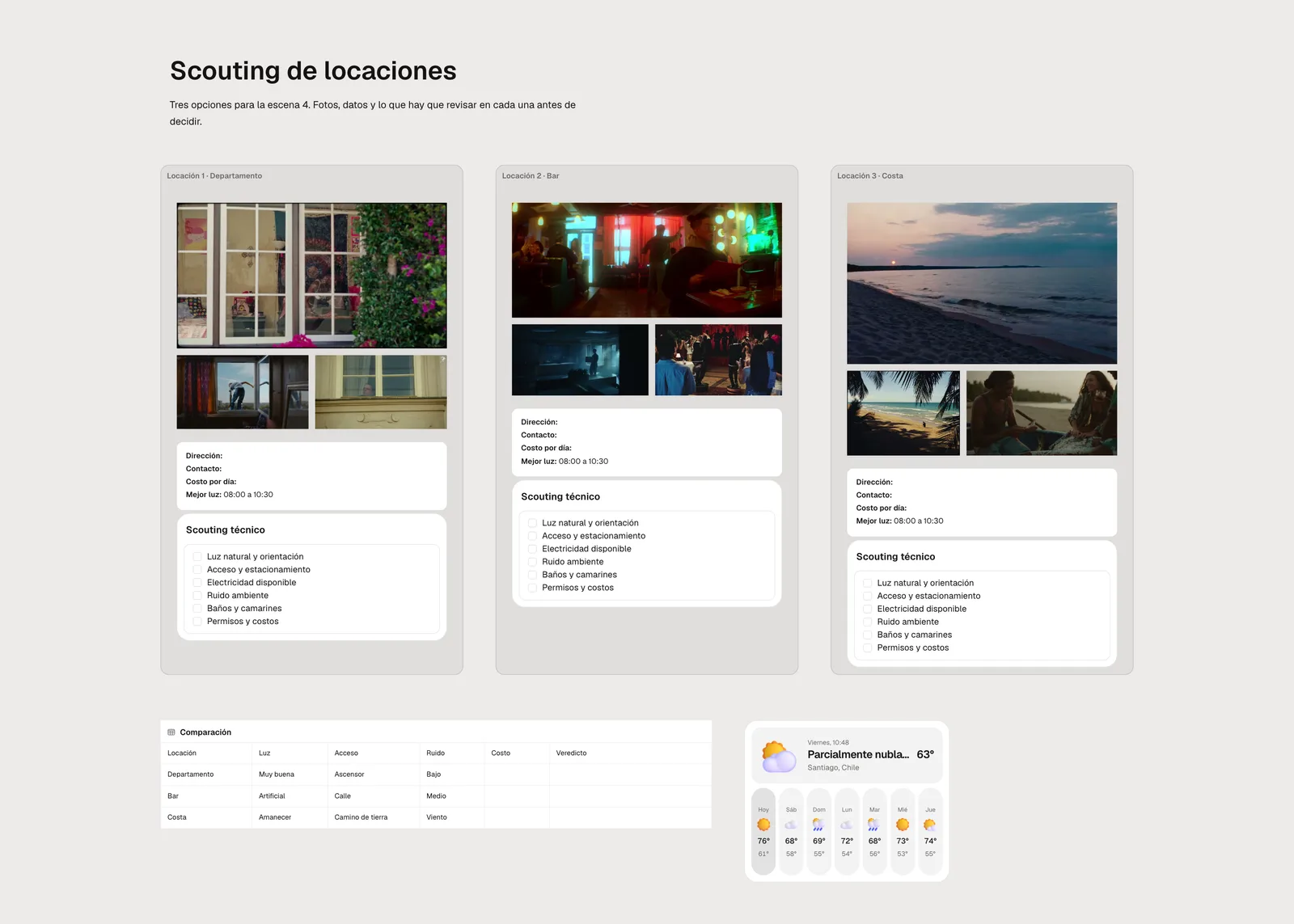
Compare locations side by side: photos of each one, its details (address, contact, cost, best hour of light), a tech scout checklist, the weather forecast and a table to decide.
Frequently asked questions
- What goes in a film moodboard?
- Reference frames that show the light, the framing and the color you are after; a palette of five or six named colors; short notes that say what to take from each image; and the cinematography decisions: format, lenses, grain and contrast. With that, the director, the cinematographer and the art department are talking about the same film.
- How many images should a film moodboard have?
- Between ten and twenty-five. With fewer you can't see a pattern; with more, people stop looking closely. This template comes with fourteen frames in the collage.
- What is the difference between a film moodboard and a director's treatment?
- The moodboard defines how the film looks in a single image. The treatment also tells the story, the tone, the characters and the plan, page by page. The usual order is to make the moodboard first and then use it inside the treatment.
- Is the film moodboard template free?
- Yes. Draftt's free plan includes 2 boards, and using the template takes one. The frames come from Explore, Draftt's catalog, with each work's credits, and you can swap them for your own.
Related templates
See more mood board examples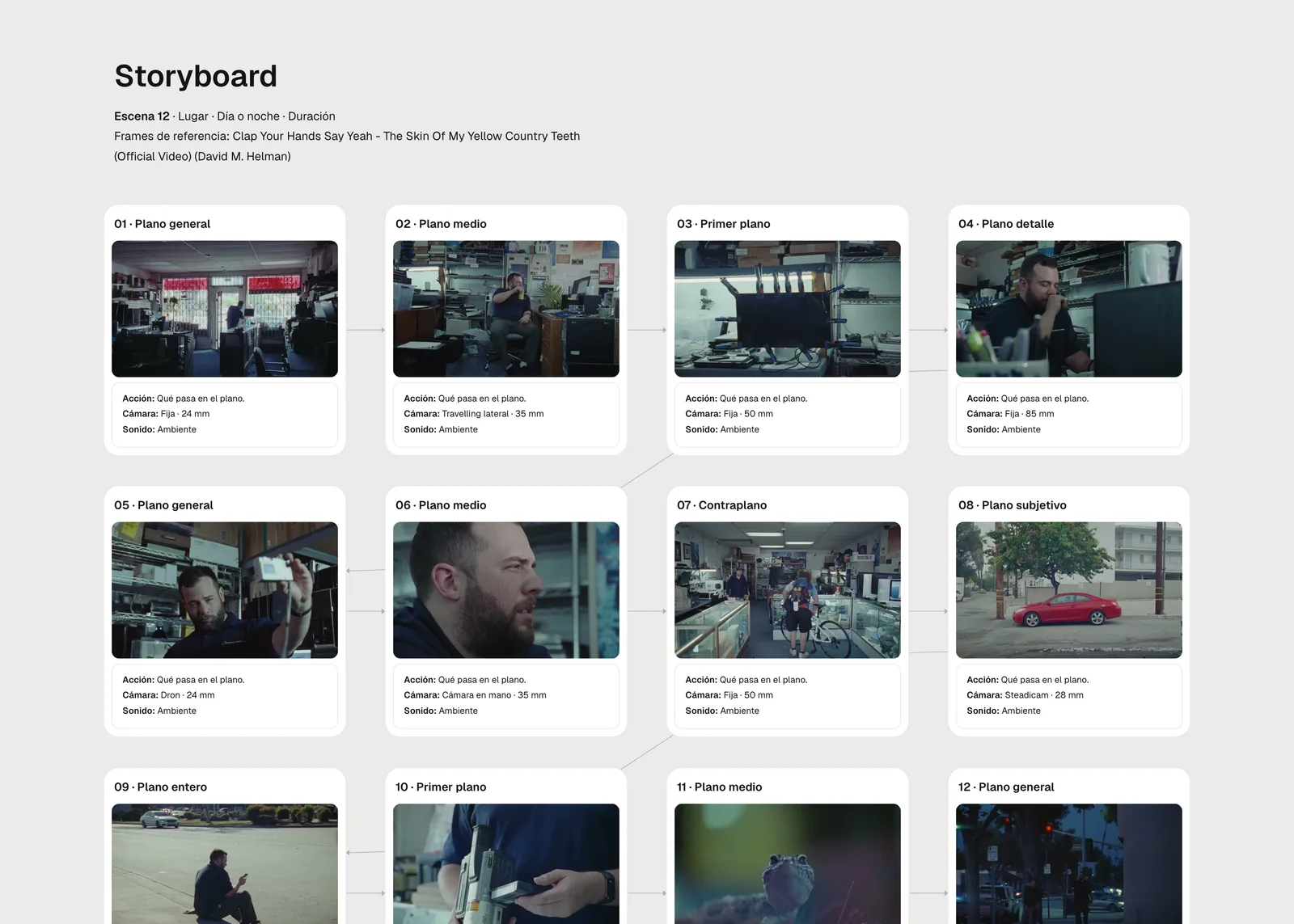
Storyboard
Draftt
A scene shot by shot: each card holds its frame, the action, the camera and the sound, in the order it will be filmed, joined by arrows.
Pre-production plan
Draftt
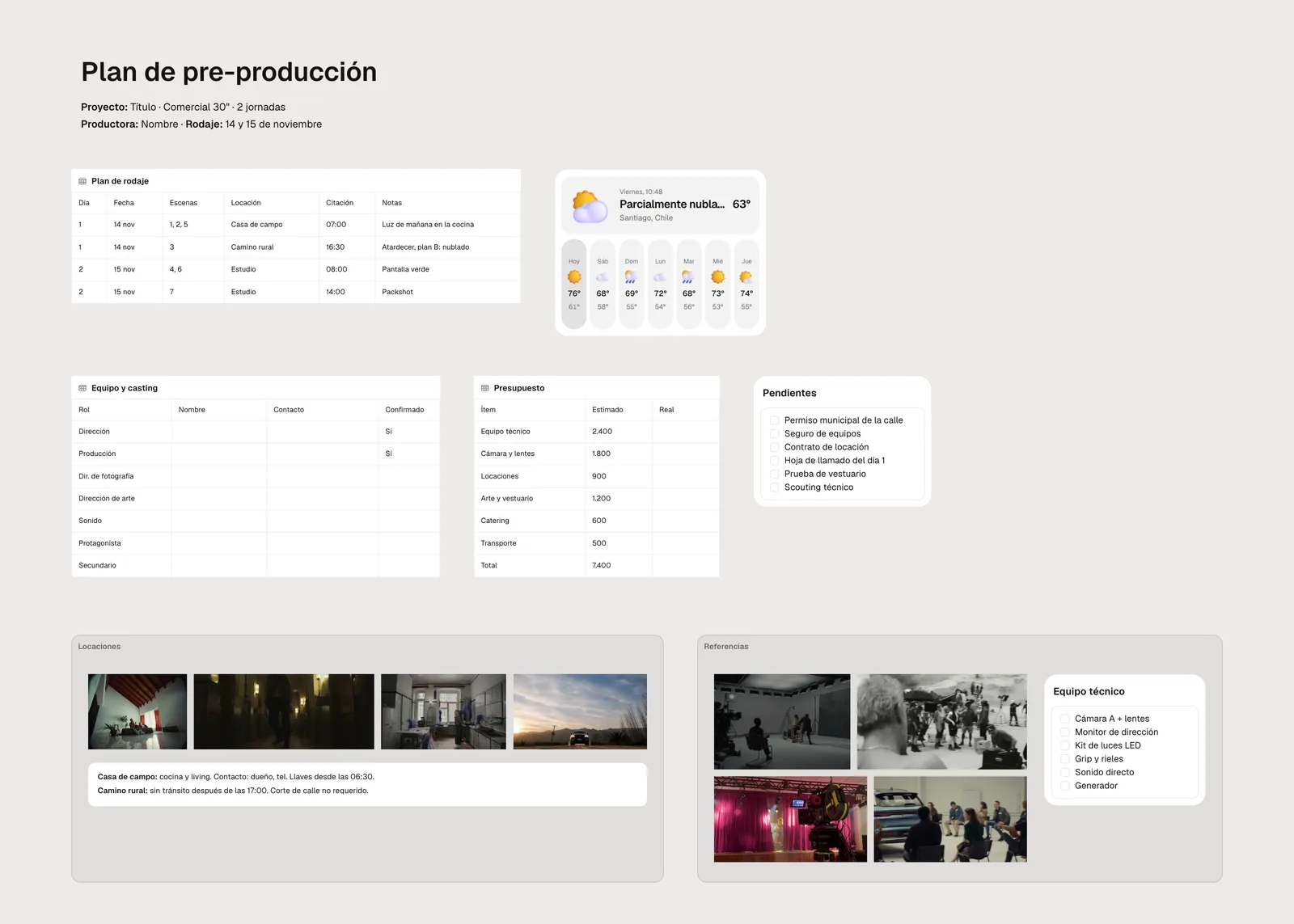
Everything that has to be solved before the first shoot day on one board: the shooting schedule, the crew and the casting, the budget, the locations, the weather forecast, the gear and the to-dos.
Advertising moodboard
Draftt
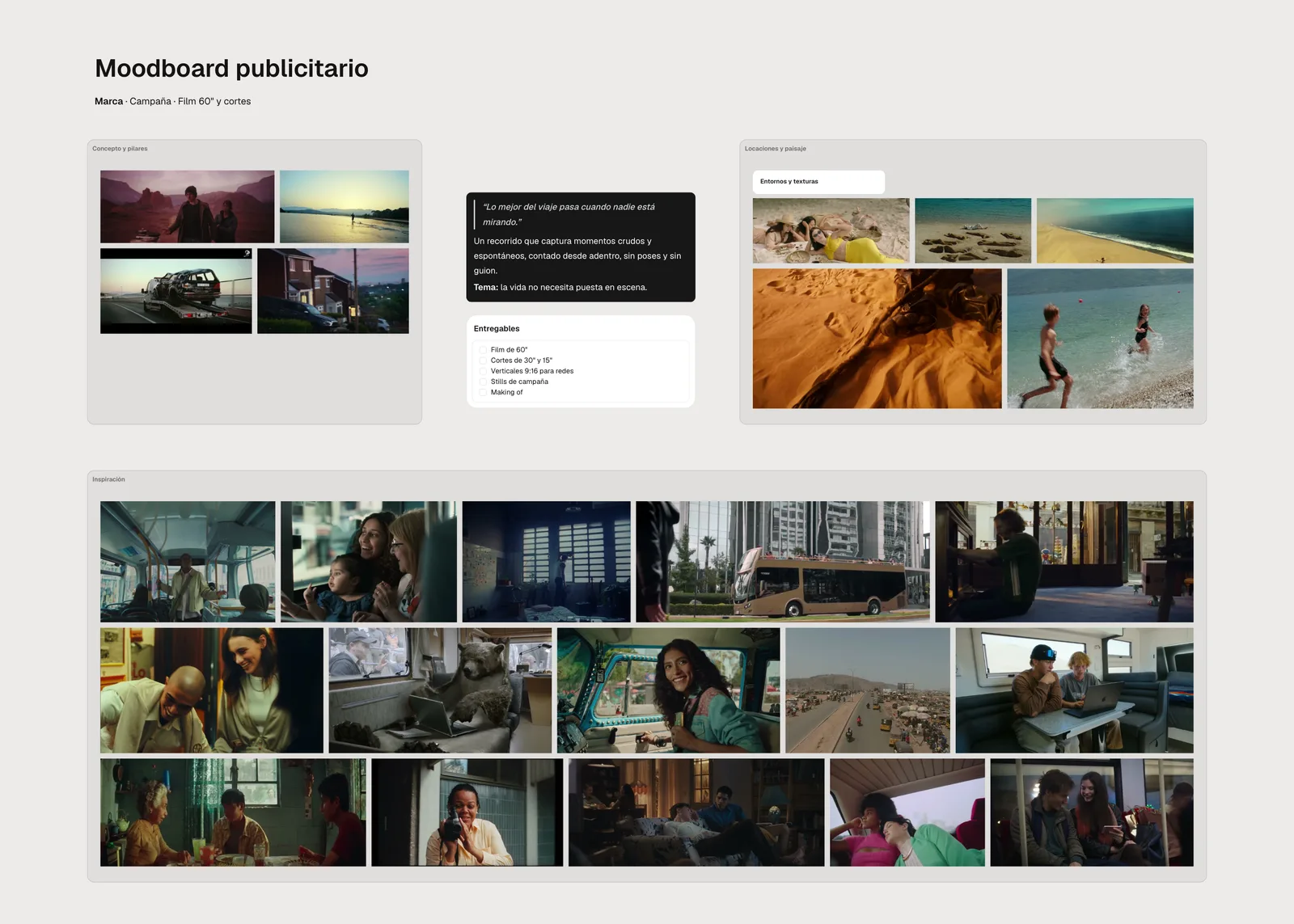
A commercial's moodboard laid out the way a production company presents it: the concept in the middle, the story's pillars, the locations and a wall of inspiration, connected.