Horror moodboard template
DrafttOfficial template · Free
A moodboard to decide a horror film's fear: what stays in the dark, where the light comes from, the faces and the place. For directors and cinematographers preparing a genre short or feature.
About this template
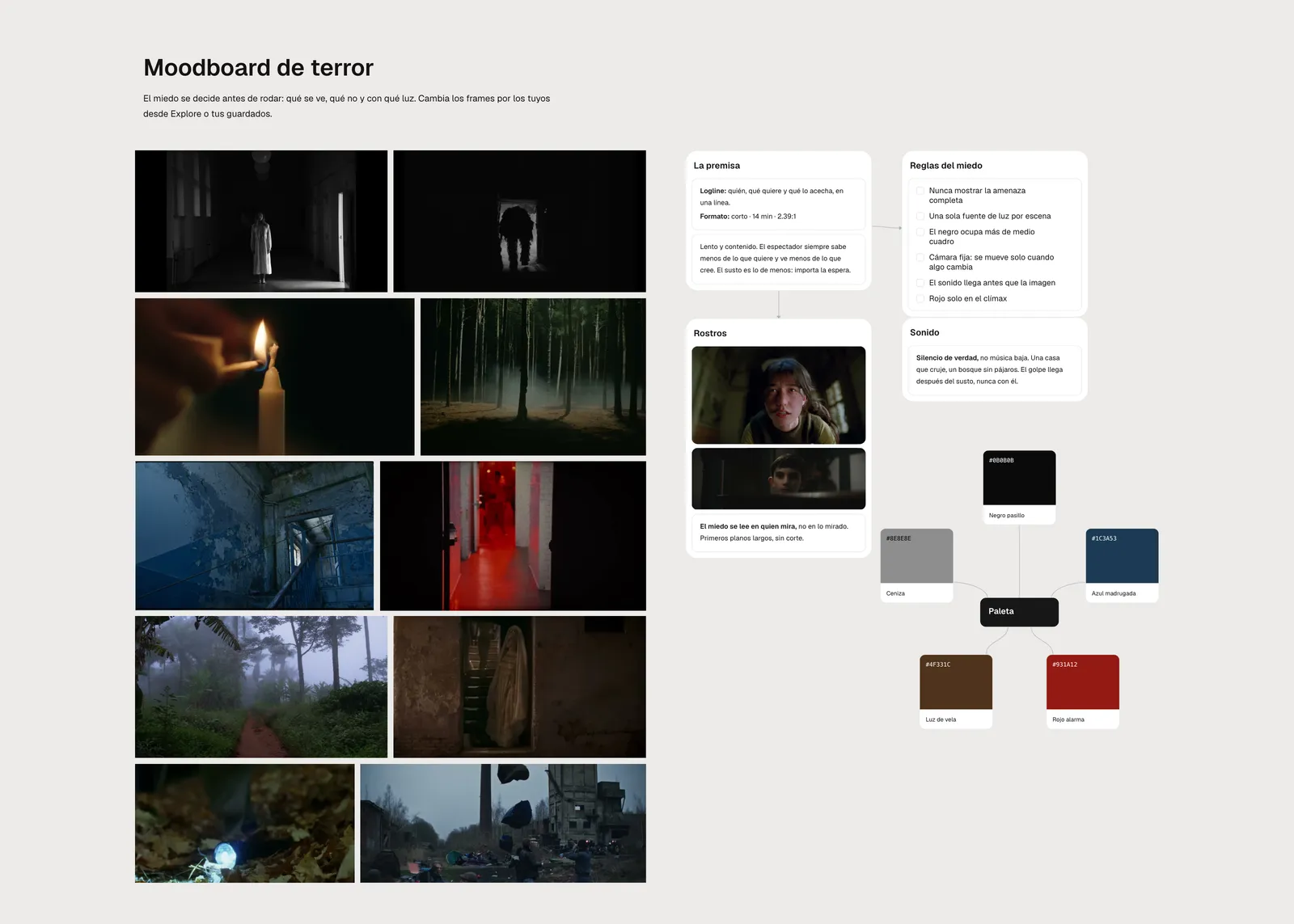
This moodboard decides the fear of a horror film before you shoot it: what stays in the dark, where the light comes from, how the faces look and how the place sounds. It is for directors and cinematographers prepping a genre short or feature, and for the art department when it has to build those spaces.
On the left is a collage of ten real frames: hallways, foggy woods, a candle, doors left ajar, a red that shows up in the dark. On the right, The premise leaves room for the logline and the format (short, 14 min, 2.39:1) and describes the tone: slow and restrained, where what matters is the wait. Faces has two close-ups and one idea: fear reads on the one who looks.
Rules of fear is a checklist: never show the whole threat, one light source per scene, black in more than half the frame, a static camera, sound before the image and red only at the climax. Sound describes the silence, and the palette joins five colors to a single node, from Hallway black to Alarm red.
How to make a horror moodboard
01
Decide what the fear is of and how much is seen
Before the images, one line: what the threat is and how much of it is shown. Horror that works usually shows little, so note from the start what stays out of frame or in the dark. That line organizes everything else.
02
Look for the darkness, not the monsters
The useful references are about light and space: a single source, black in more than half the frame, a hallway with depth. In Explore, search by what you see (“hallway at night with a light at the end”) or by a color. They don't have to come from horror films: a commercial can have that same gloom.
03
Write the rules and break them only once
Five or six rules for the whole film: how many light sources, when the camera moves, when color shows up. They work because they get broken once. If red appears only at the climax, the viewer feels it without anyone explaining it.
04
Give sound its own note
In horror, sound gets there before the image. Note how the place sounds when nothing is happening and what you hear before you see anything. Share it with whoever does the sound now, not in post.
More genre moodboards
Science fiction moodboard
Draftt
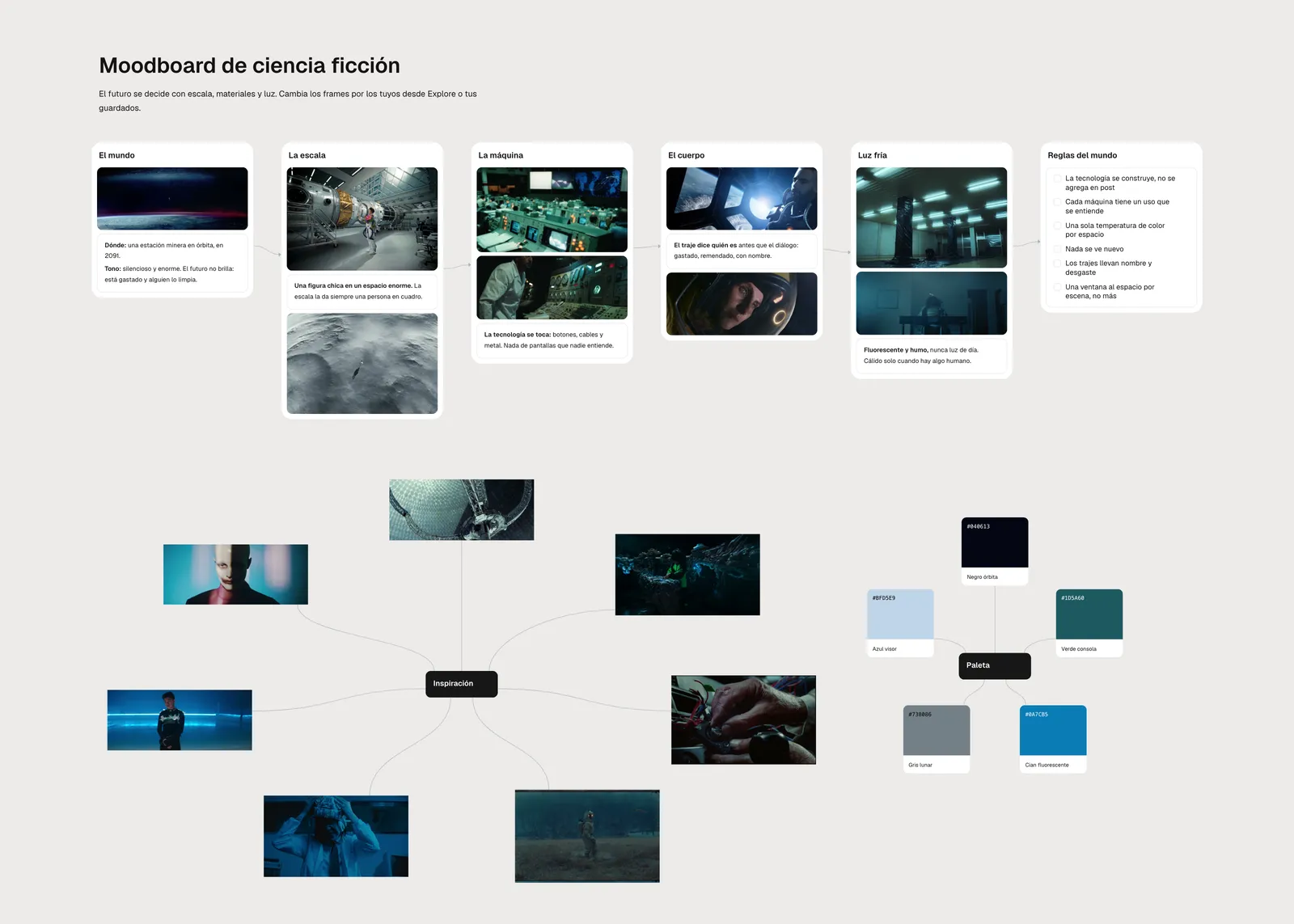
A moodboard for a science fiction film's look, told left to right: the world, the scale, the machines, the suits, the cold light and its rules.
Film moodboard
Draftt
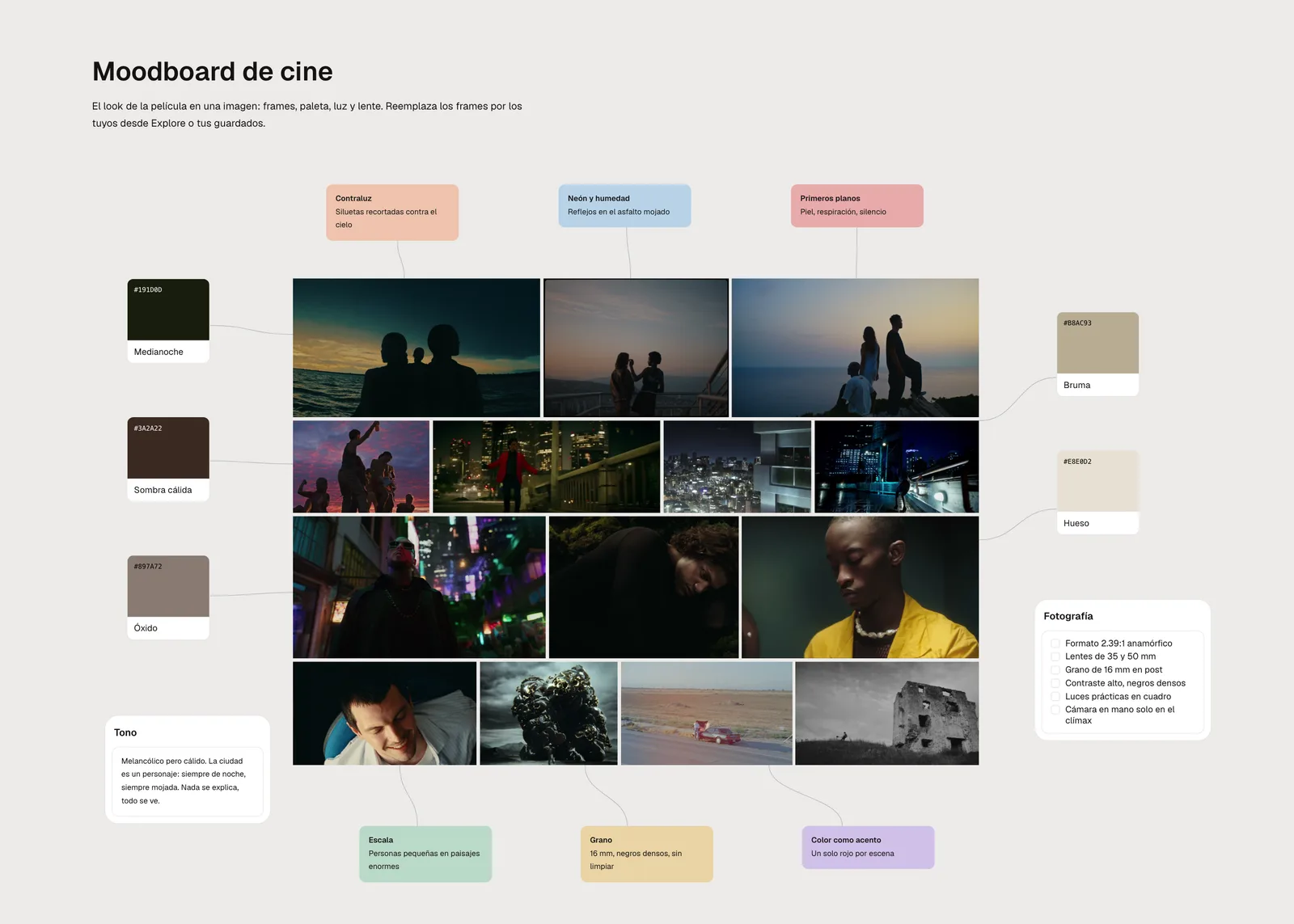
A moodboard to find a film's look before shooting it: a collage of reference frames in the middle, the palette with its names, the light and lens ideas connected to the images that show them, and the cinematography decisions on one card.
Art direction moodboard
Draftt
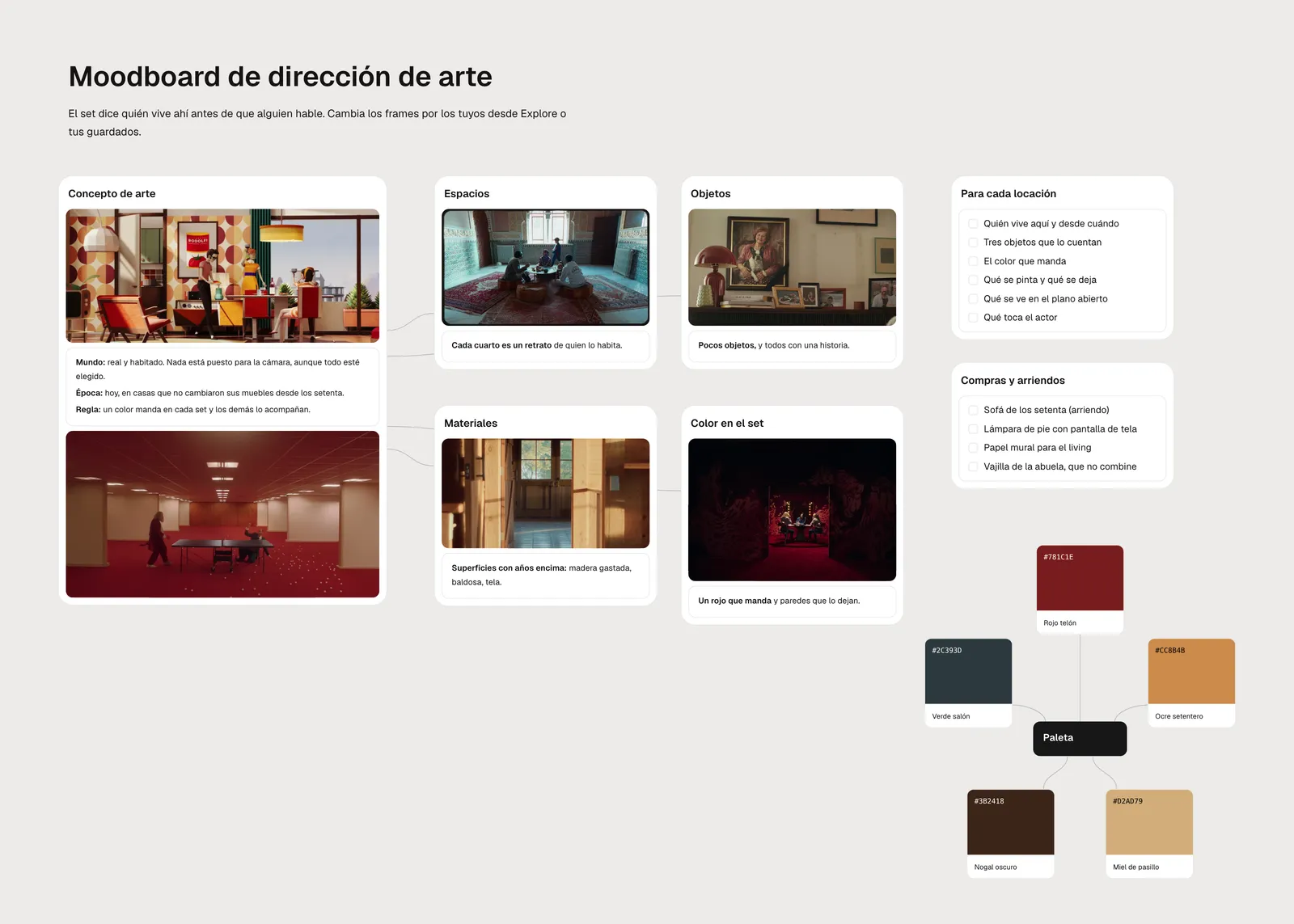
An art direction moodboard: the concept of the world and, around it, spaces, objects, materials and color, with what to ask of each location and the shopping list.
Director's treatment
Draftt
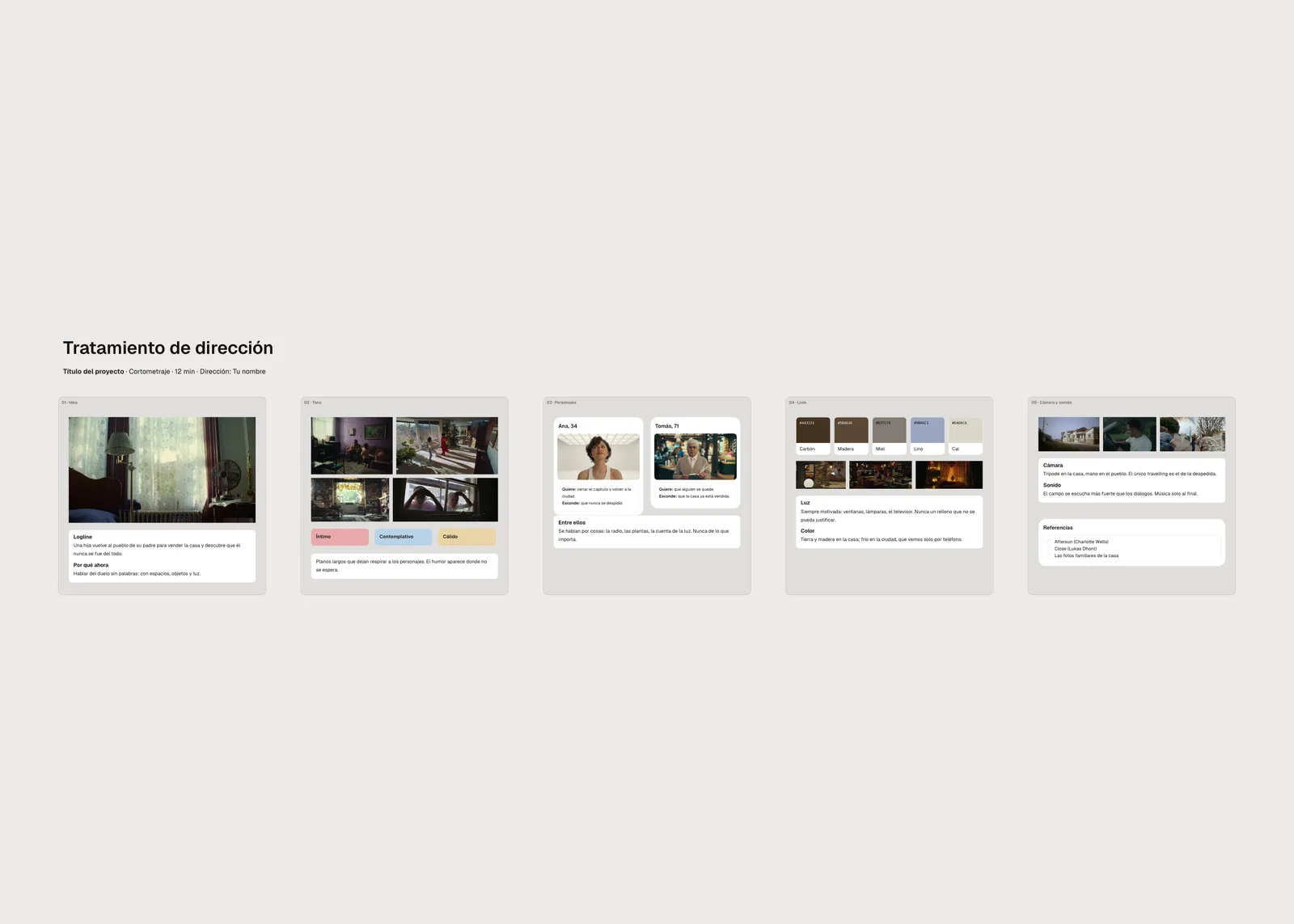
The treatment that goes with a pitch, left to right: the idea, the tone, the characters, the look and how it is shot and sounds. Each section comes with real frames and notes to fill in.
Storyboard
Draftt
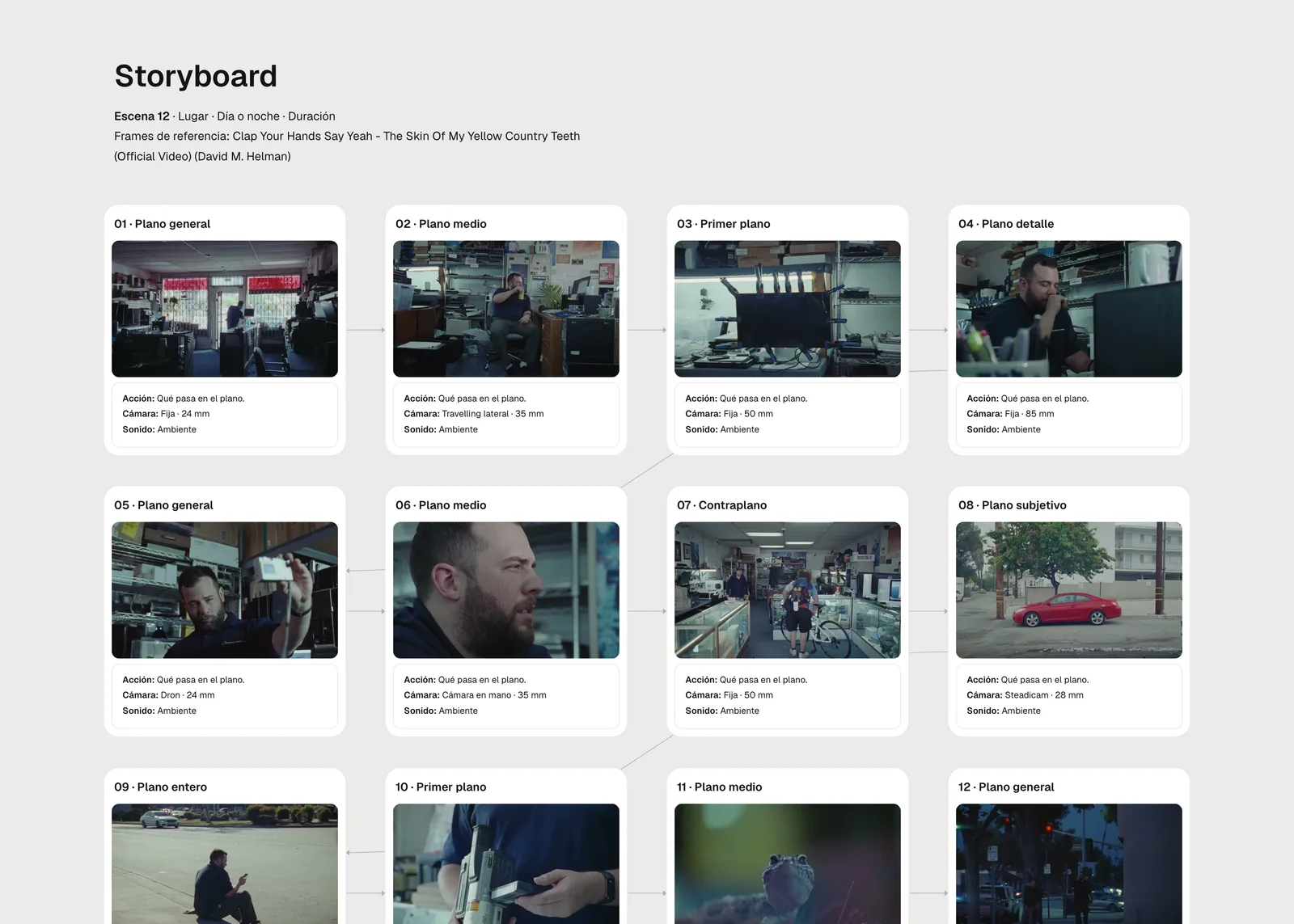
A scene shot by shot: each card holds its frame, the action, the camera and the sound, in the order it will be filmed, joined by arrows.
Frequently asked questions
- What goes in a horror moodboard?
- Frames that show how much is seen and how much stays black, where the light comes from and what the face of someone afraid looks like. Also a short palette, almost always dark with one alarm color, and the rules the film sets for itself: what is not shown, when the camera moves, how sound comes in. This template has all of that.
- Why does a horror moodboard need rules?
- Because fear is built from what is hidden, and that gets decided before the shoot. If the whole crew knows the threat is never seen whole or that there is one light source per scene, camera, art and editing make the same calls without asking each time. The template comes with six rules to check off or change.
- What is the difference between a horror moodboard and a film moodboard?
- The film moodboard works for any film and centers on the look: light, color, lenses and grain. The horror one adds what belongs to the genre: what stays out of frame, how faces are shot, sound and silence, and rules to ration the scares. If your film is horror, start with this one.
- Where can I find horror film references?
- In Explore, Draftt's catalog, which has frames from films, music videos and commercials with their credits. You can search by what you see, like foggy woods or a door left ajar, by a color like black or red, or ask for frames similar to one you already picked. You can also upload your own images.
- Is the horror moodboard template free?
- Yes. Draftt's free plan includes 2 boards, and using the template takes one. The twelve frames come from Explore with each work's credits, and you can swap them for your own whenever you want. The premise, the rules and the palette are there for you to write your own way.
Related templates
See more mood board examples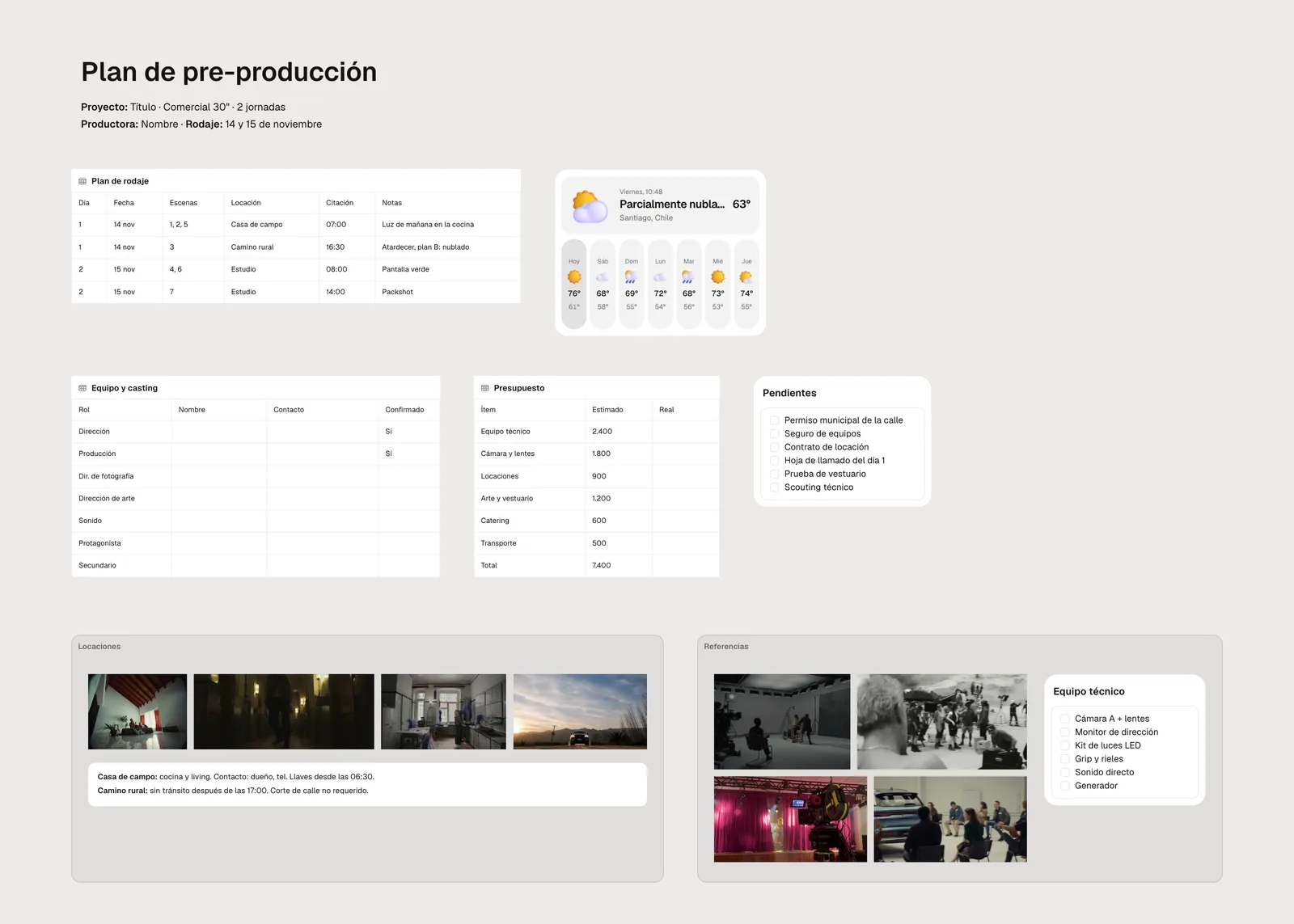
Pre-production plan
Draftt
Everything that has to be solved before the first shoot day on one board: the shooting schedule, the crew and the casting, the budget, the locations, the weather forecast, the gear and the to-dos.
Location scouting
Draftt
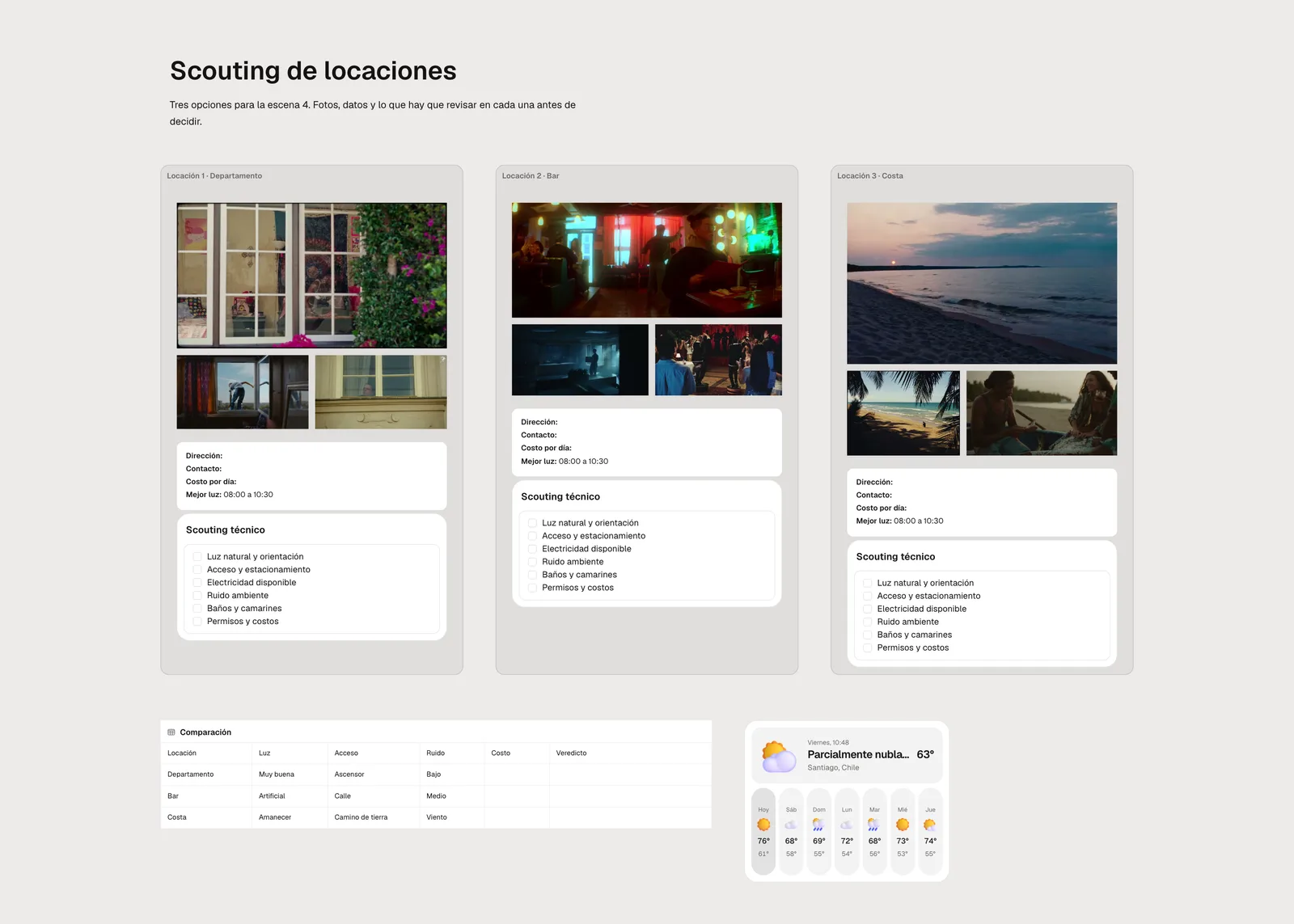
Compare locations side by side: photos of each one, its details (address, contact, cost, best hour of light), a tech scout checklist, the weather forecast and a table to decide.
Advertising moodboard
Draftt
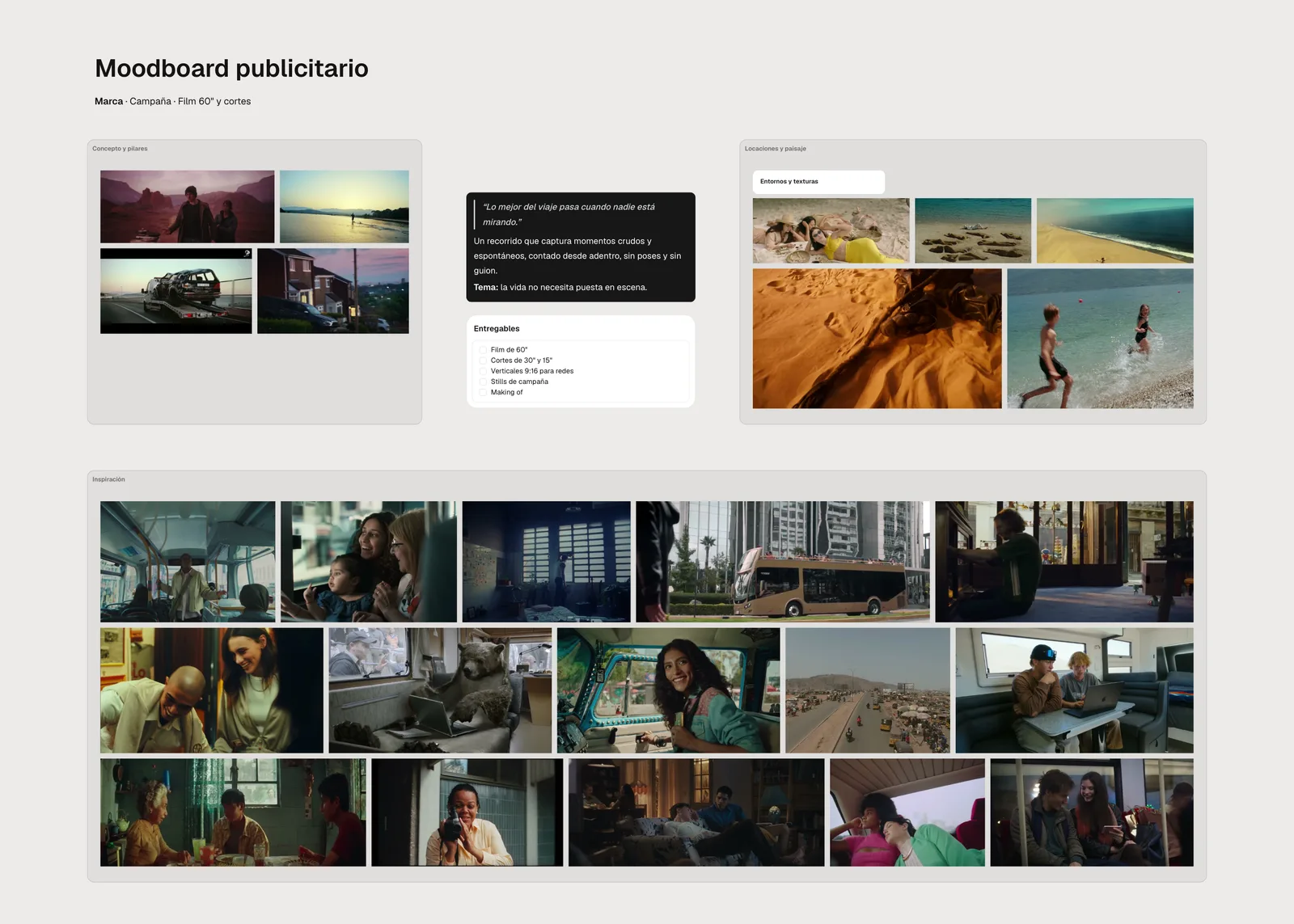
A commercial's moodboard laid out the way a production company presents it: the concept in the middle, the story's pillars, the locations and a wall of inspiration, connected.