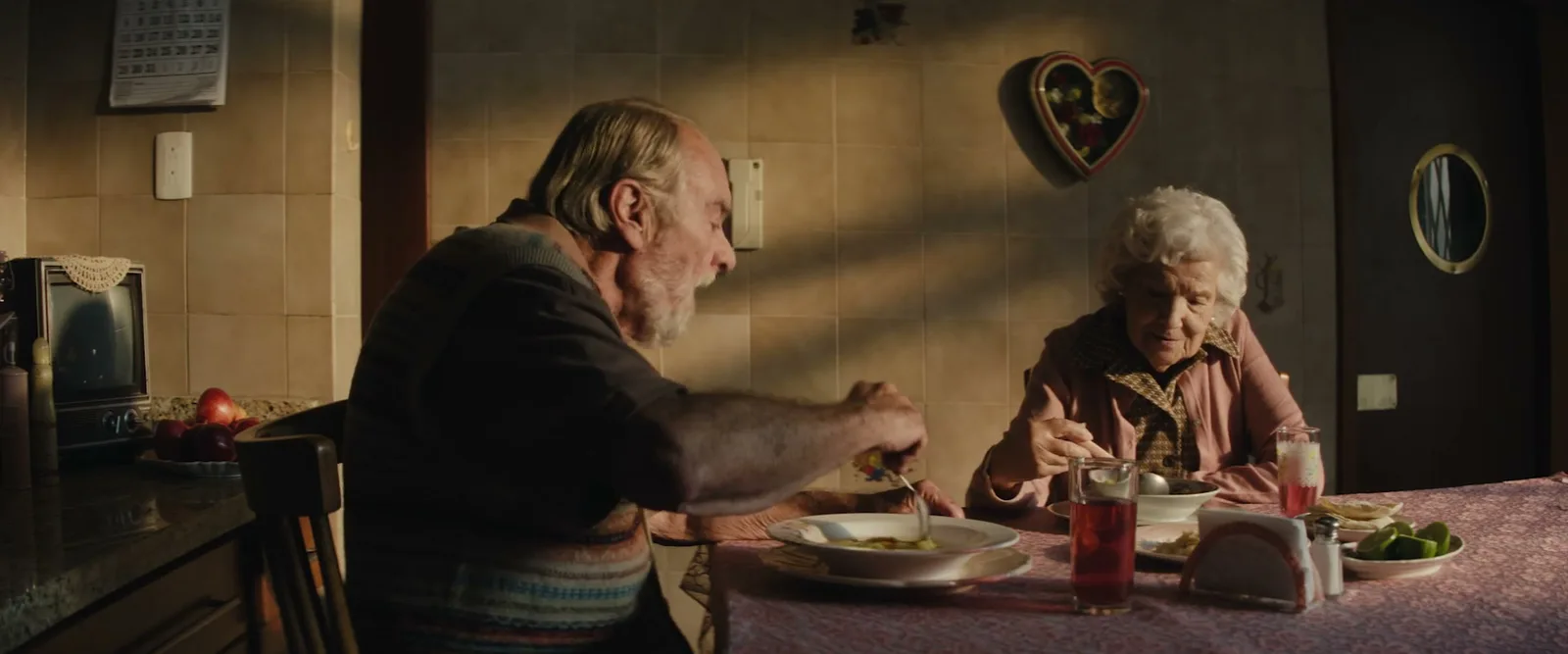
Music video treatment template
DrafttOfficial template · Free
A music video's treatment: the idea in one sentence, the narrative and the performance with their references, the styling, the palette and the song's structure with what happens in each part. For sending a proposal to an artist, a label or a manager.
About this template
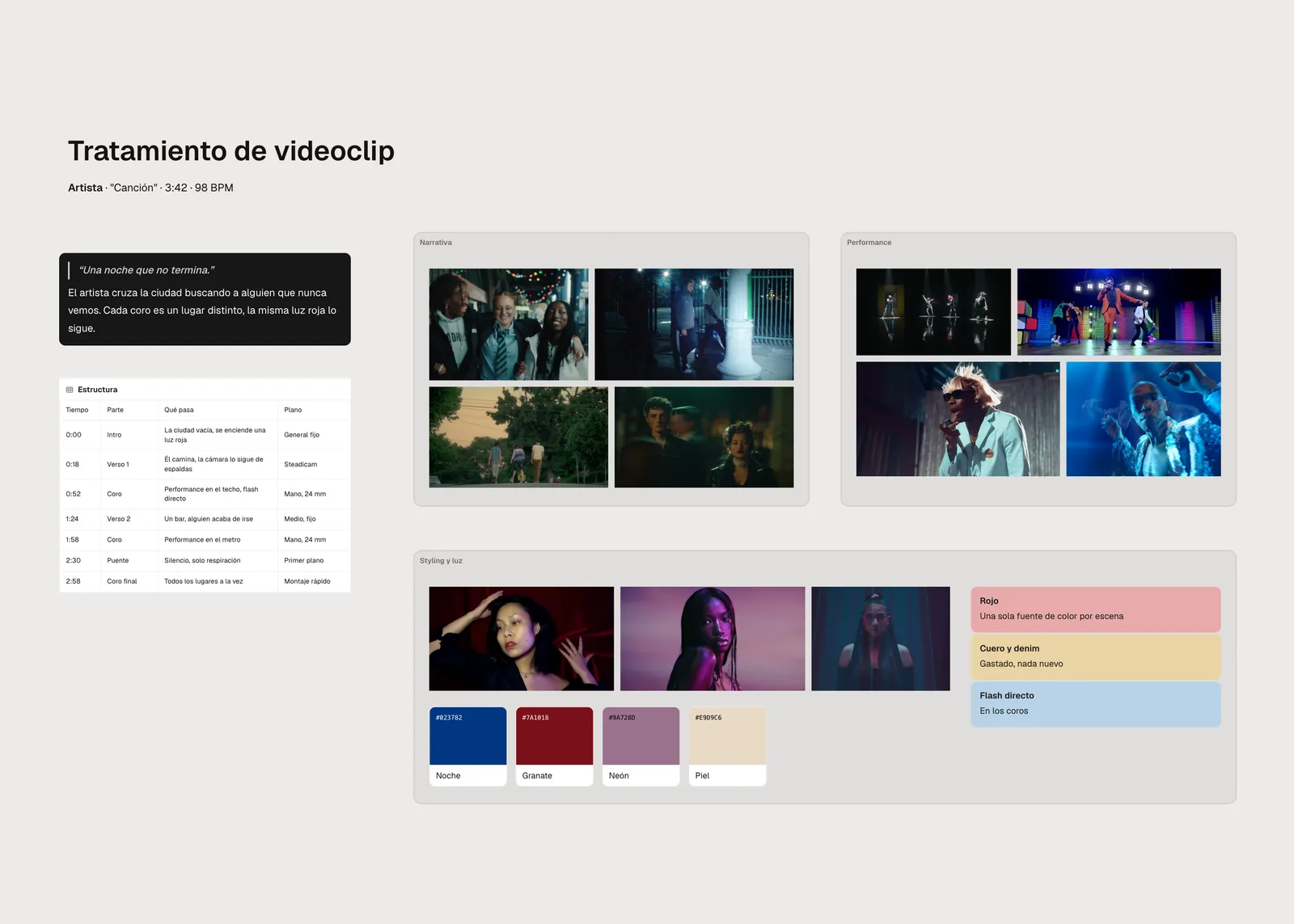
A music video treatment is the pitch a director sends to an artist, their label or their manager before the video exists. This template lays it out on one page: at the top, the artist, the song, the running time and the BPM. Next to that, the idea in one line and a paragraph that tells what happens.
The images are the core. Narrative and Performance have four frames each, because almost every music video cuts between a story and the artist singing. Styling and light adds three frames, a palette of four named colors and three notes: one source of color per scene, worn leather and denim, direct flash on the choruses.
The Structure table breaks the song into seven sections, from the intro to the final chorus, with the time each one starts, what happens and the shot. The artist sees the whole video before saying yes, and production knows how many locations and what camera each section calls for.
How to write a music video treatment
01
Listen to the song with a stopwatch
Structure comes before the idea: write down the second each section starts, where the drums come in, where there's a break. The video gets cut to that. The structure table is the first thing you fill in, not the last.
02
Say the idea in one sentence
The artist gets several treatments, and the one they remember fits on one line: “the whole video is a single take on a bus that never stops.” If you need a paragraph to explain it, it's still a theme, not an idea.
03
Separate the story from the performance
Decide how much of the video is the artist singing and how much is something else, and give each part its own references. The artist cares about how they'll look: show them frames for light, framing and styling, not just for the story.
04
Spread the idea across the song
What happens in each verse, what changes in each chorus and what you hold back for the end. A video that shows everything in the first minute won't make it to the last chorus. With the table filled in, production can count locations and shoot days, and the label can see whether it fits the budget.
More templates for music videos and pitches
Music video moodboard
Draftt
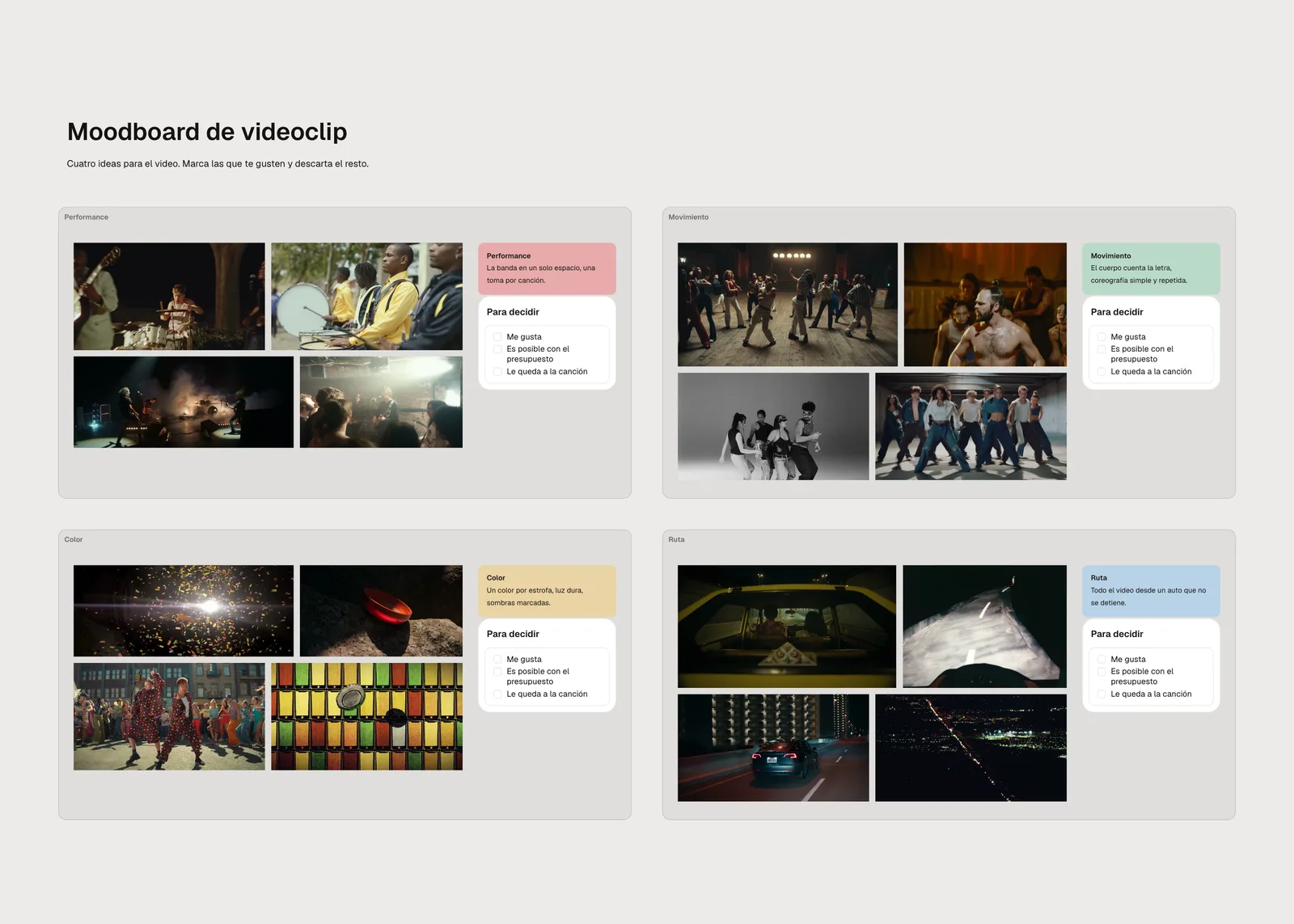
A wall of references for a music video, grouped into four possible ideas (the performance, the movement, the color, the road), each with its note and a checklist to decide.
Director's treatment
Draftt
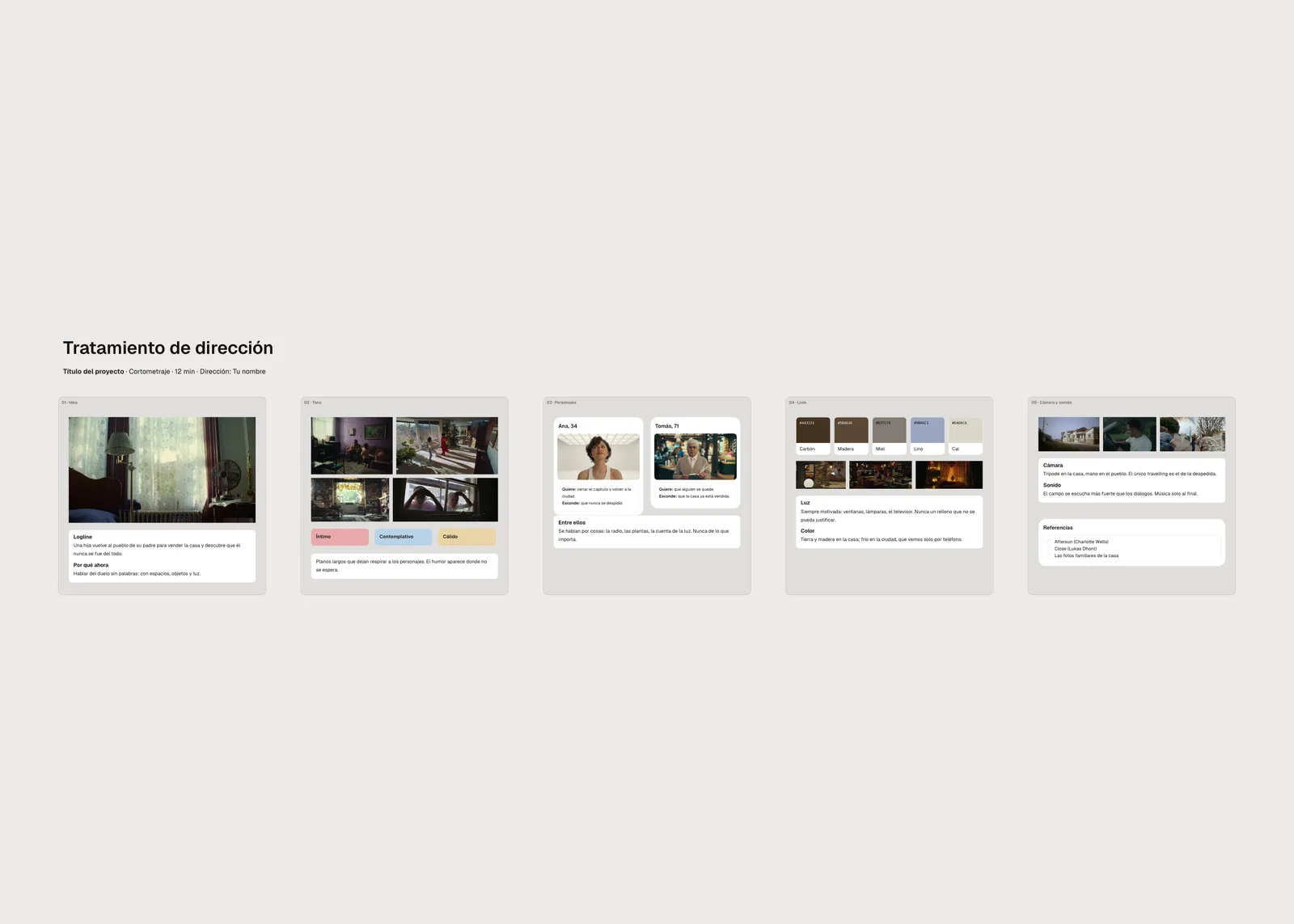
The treatment that goes with a pitch, left to right: the idea, the tone, the characters, the look and how it is shot and sounds. Each section comes with real frames and notes to fill in.
Storyboard
Draftt
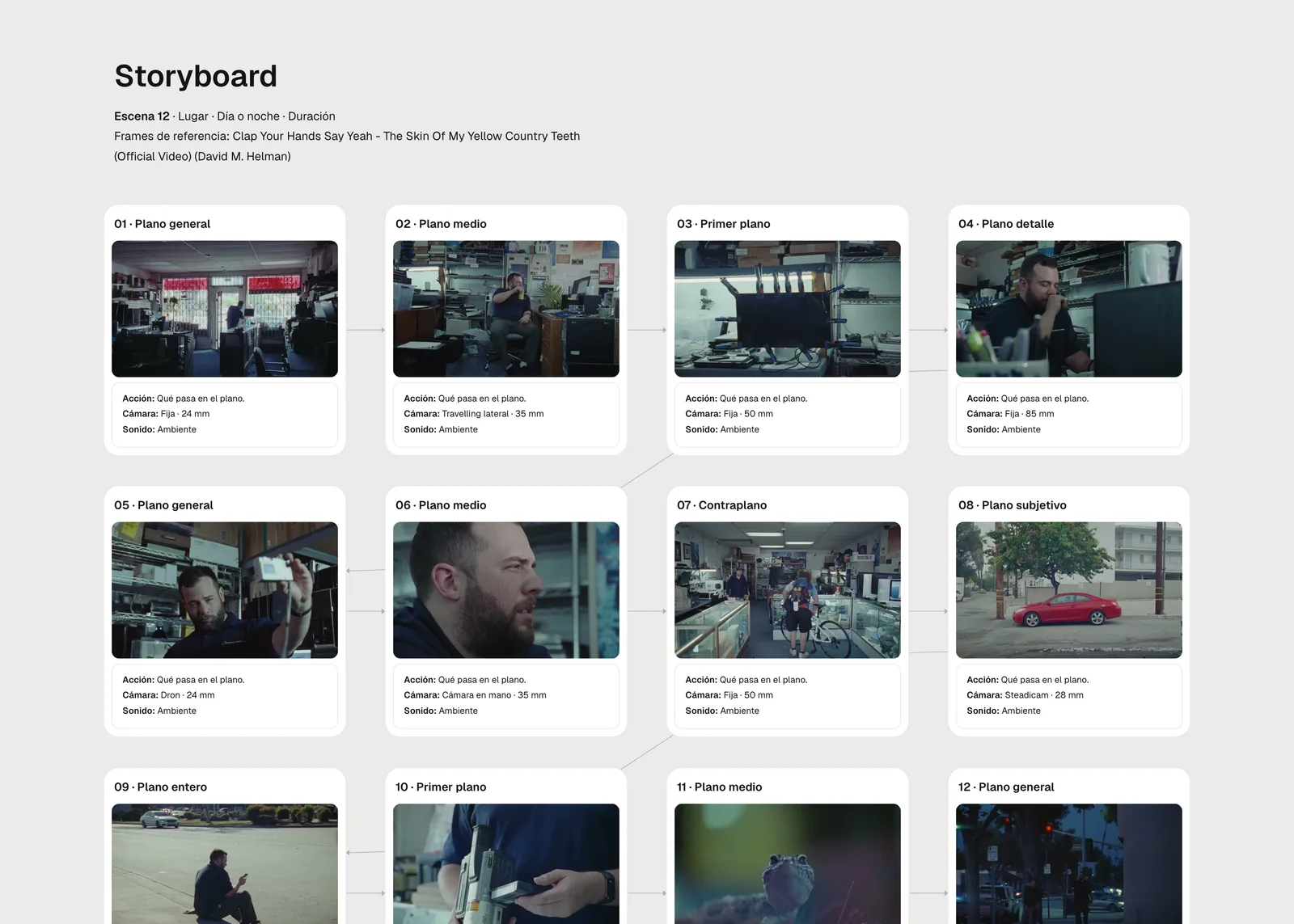
A scene shot by shot: each card holds its frame, the action, the camera and the sound, in the order it will be filmed, joined by arrows.
Streetwear moodboard
Draftt
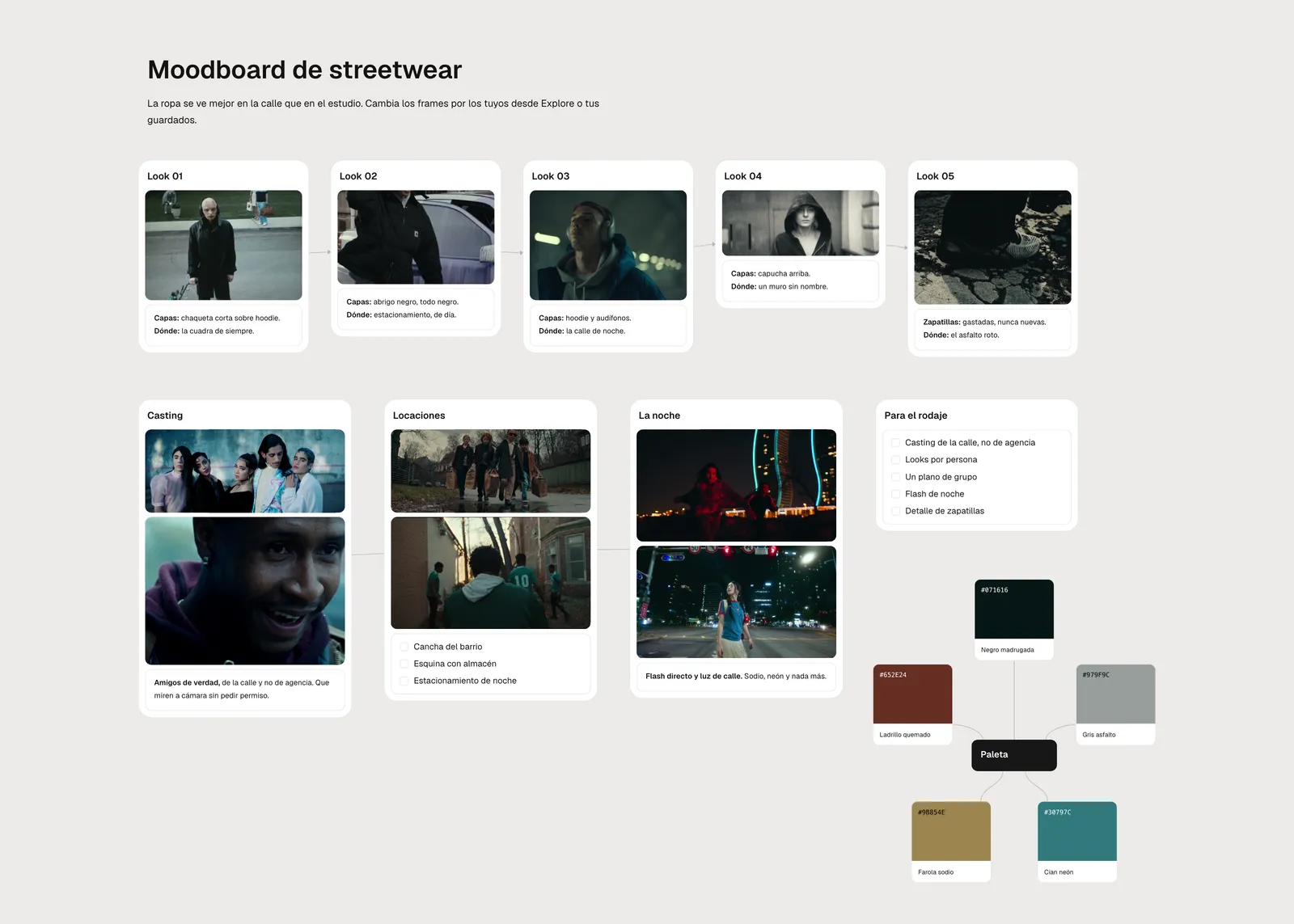
A moodboard for a streetwear brand or a fashion film: a lookbook of five looks and, below, the casting, the locations and the night.
Location scouting
Draftt
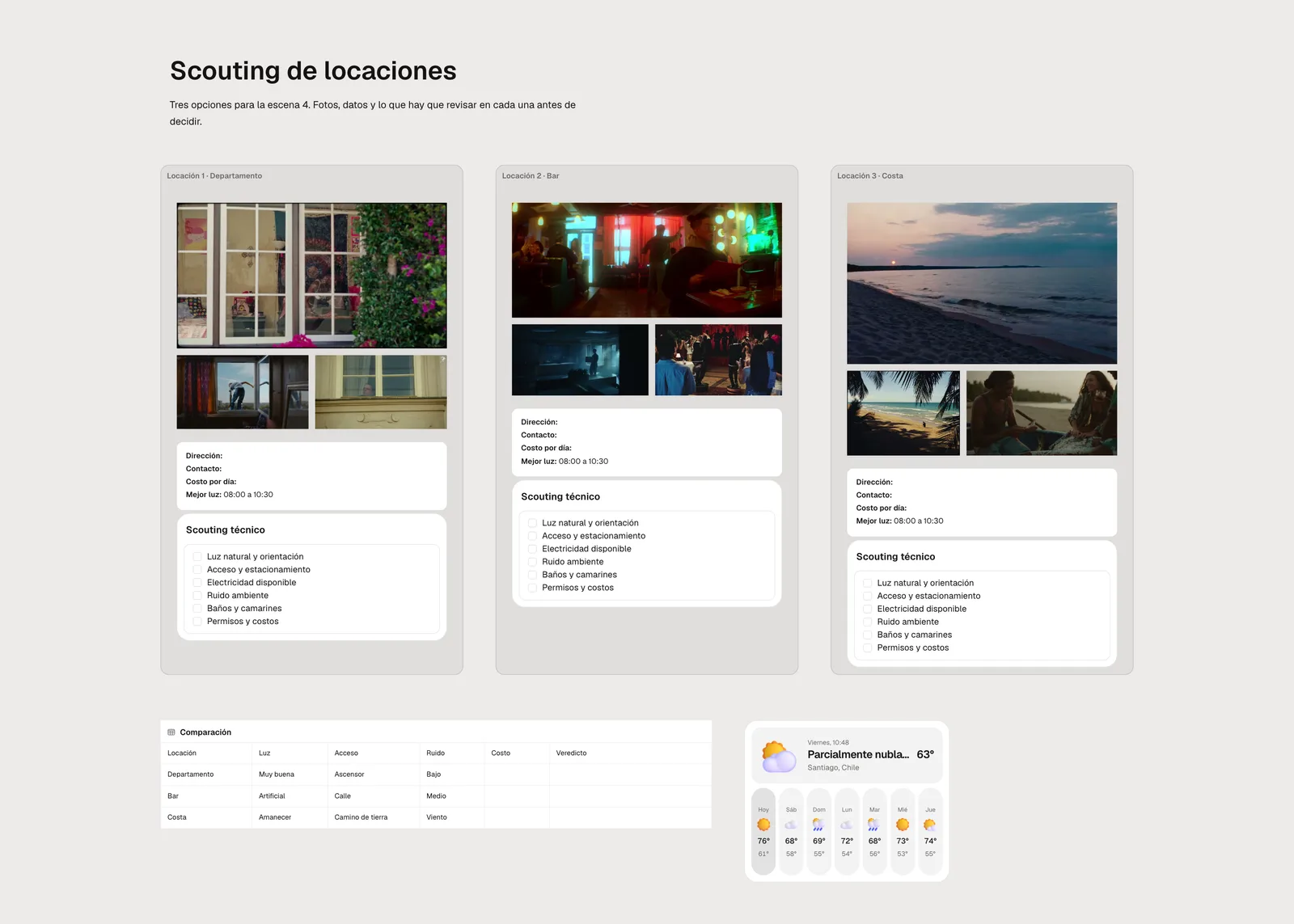
Compare locations side by side: photos of each one, its details (address, contact, cost, best hour of light), a tech scout checklist, the weather forecast and a table to decide.
Frequently asked questions
- What is a music video treatment?
- It's the document a director uses to pitch a video to an artist or their label. It gives the idea in one sentence, what happens in the video, how it looks (references, styling, light and color) and how it plays out across the song, section by section. It's there to win the job and, once approved, to guide production.
- What should a music video treatment include?
- An idea you can say in one sentence, references that show the narrative and the performance separately, the styling and the palette, and the structure of the song with its times. This template comes with eleven frames, four colors and a table of seven sections, from the intro to the final chorus. It should read in a couple of minutes.
- What's the difference between a music video treatment and a moodboard?
- The music video moodboard opens the conversation: it shows four possible ideas so the artist can choose. The treatment comes after, with one idea developed: its story, its look and what happens in each section of the song. If you don't know yet what video to make, start with the moodboard.
- Can I use it for a performance video with no story?
- Yes. Delete the Narrative section or use it for another idea, and let the table say what changes in each section: the place, the light or the shot. Plenty of performance videos work this way, with the song as the only structure and a clear change on every chorus.
- Is the music video treatment template free?
- Yes. Draftt's free plan includes 2 boards, and using the template takes one. The frames come from Explore, Draftt's catalog, with the credits of each work, and you can swap them for your own at any time, before or after you share it.