Director's treatment template
DrafttOfficial template · Free
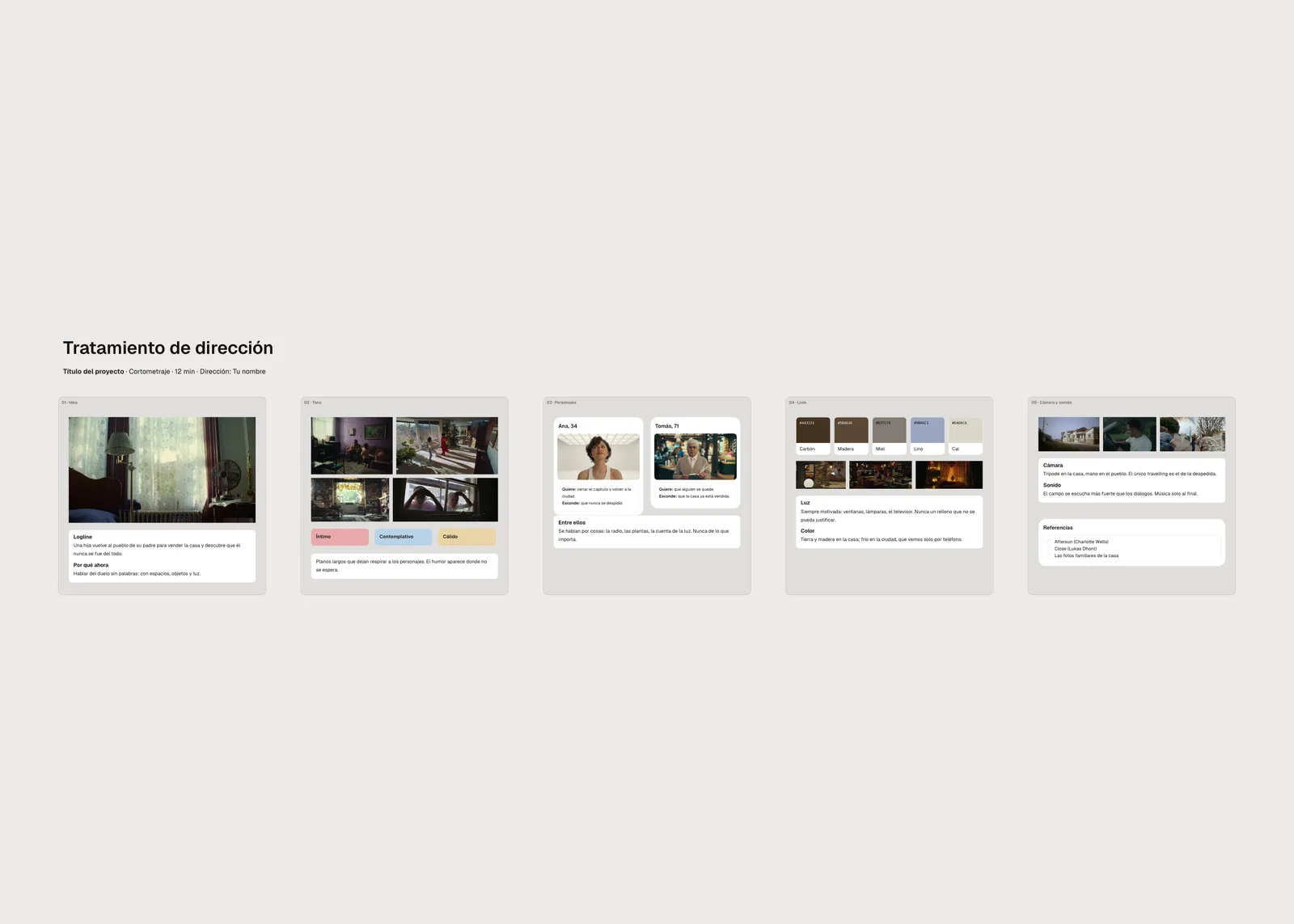
The treatment that goes with a pitch, left to right: the idea, the tone, the characters, the look and how it is shot and sounds. Each section comes with real frames and notes to fill in. For presenting a film, a short or a branded piece to a production company, a client or a fund.
About this template
A director's treatment is the document a director uses to say how they will make a film before it exists. This template builds it on a board, left to right, to pitch a short, a feature or a branded piece to a production company, a client or a fund.
It comes with five numbered sections. 01 · Idea has a frame, the logline and a why now. 02 · Tone adds four frames, three words (intimate, contemplative, warm) and a note on the pacing. 03 · Characters introduces Ana, 34, and Tomas, 71, each with a photo, what they want and what they hide, plus a card on what goes on between them.
04 · Look gathers a palette of five named colors, three frames and the notes on light and color. 05 · Camera and sound has three frames, how the camera moves, how the film sounds and a list of references. At the top go the title, the format, the running time and who directs. The example is a made-up 12-minute short, written to show how each part gets filled in.
How to write a director's treatment
01
Start with the logline and the why
One sentence with who, what they want and what stands in the way, and another with why this story and why you. Whoever reads a treatment decides in the first section whether to keep reading: don't spend it on background, use it for the promise.
02
Write how it will feel, not what will happen
The script already tells the plot. The treatment says what the script can't: the pacing, how close the camera is, how much silence there is. Write in the first person and in the present tense (“the camera waits with her”), in sentences someone can picture without having read anything else.
03
Pick a few images and say what each one proves
Three or four frames per section are enough if each one shows a decision. Find them in Explore by what you see, by color or by likeness to one you already picked, and don't use only famous films: the reader ends up seeing that film and not yours.
04
Close with how it gets made and take it to a deck
Camera, sound and references tell the production company the idea can be shot. When the board is locked, copy its images and text and paste them into a Draftt presentation: there are treatment templates to start from, and the deck downloads as a PDF to send.
More templates to pitch a project
Music video treatment
Draftt
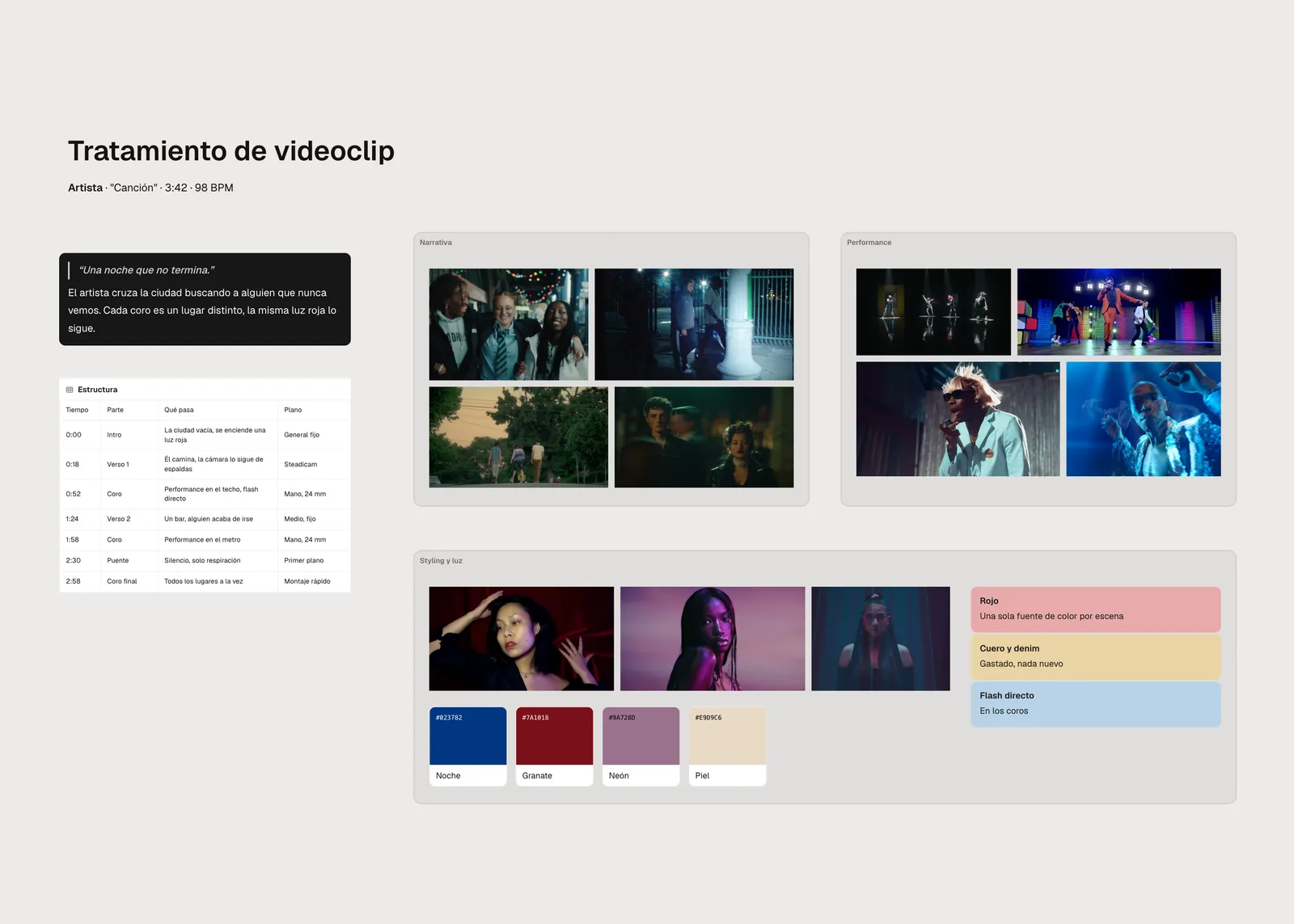
A music video's treatment: the idea in one sentence, the narrative and the performance with their references, the styling, the palette and the song's structure with what happens in each part.
Film moodboard
Draftt
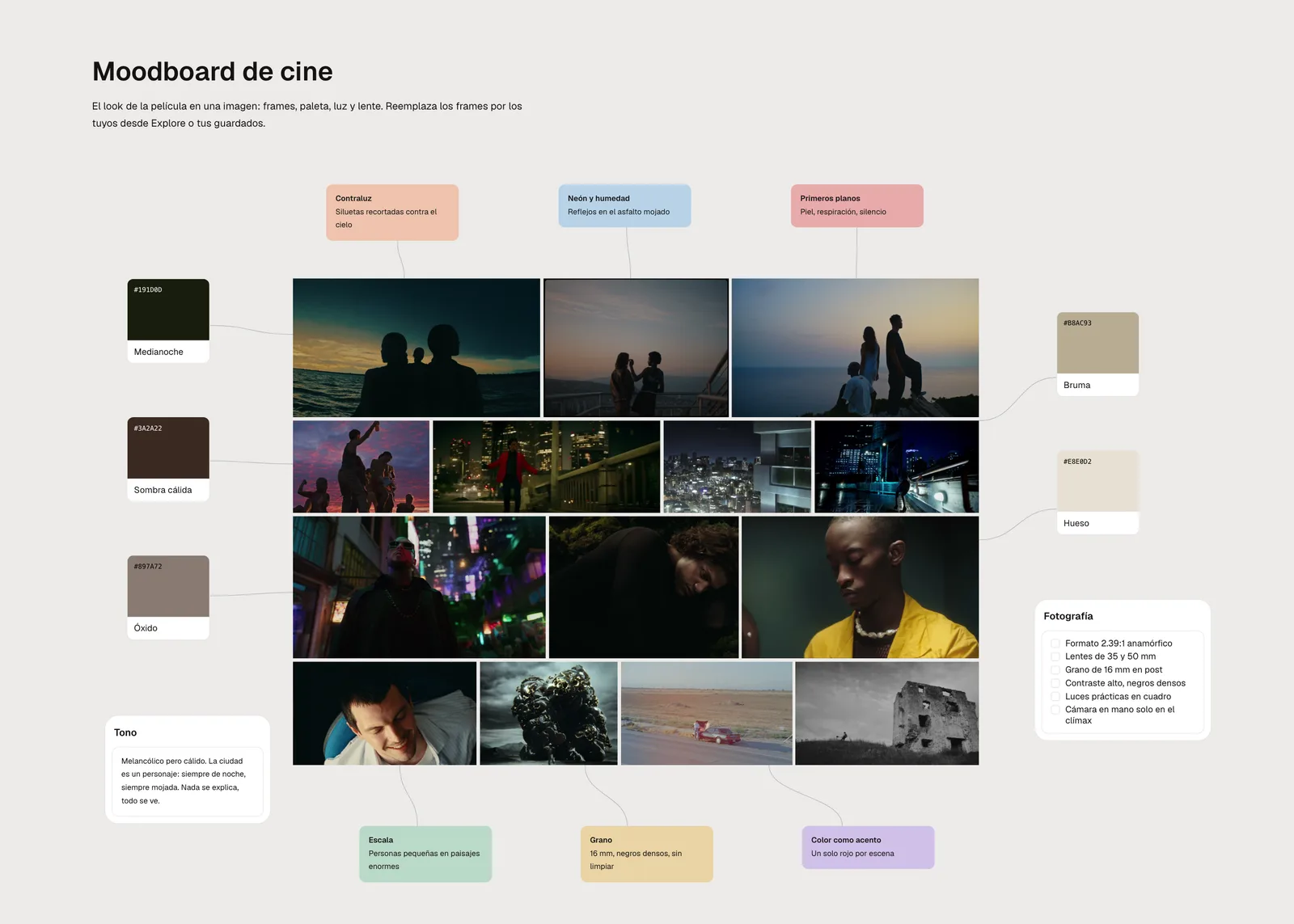
A moodboard to find a film's look before shooting it: a collage of reference frames in the middle, the palette with its names, the light and lens ideas connected to the images that show them, and the cinematography decisions on one card.
Character profile
Draftt
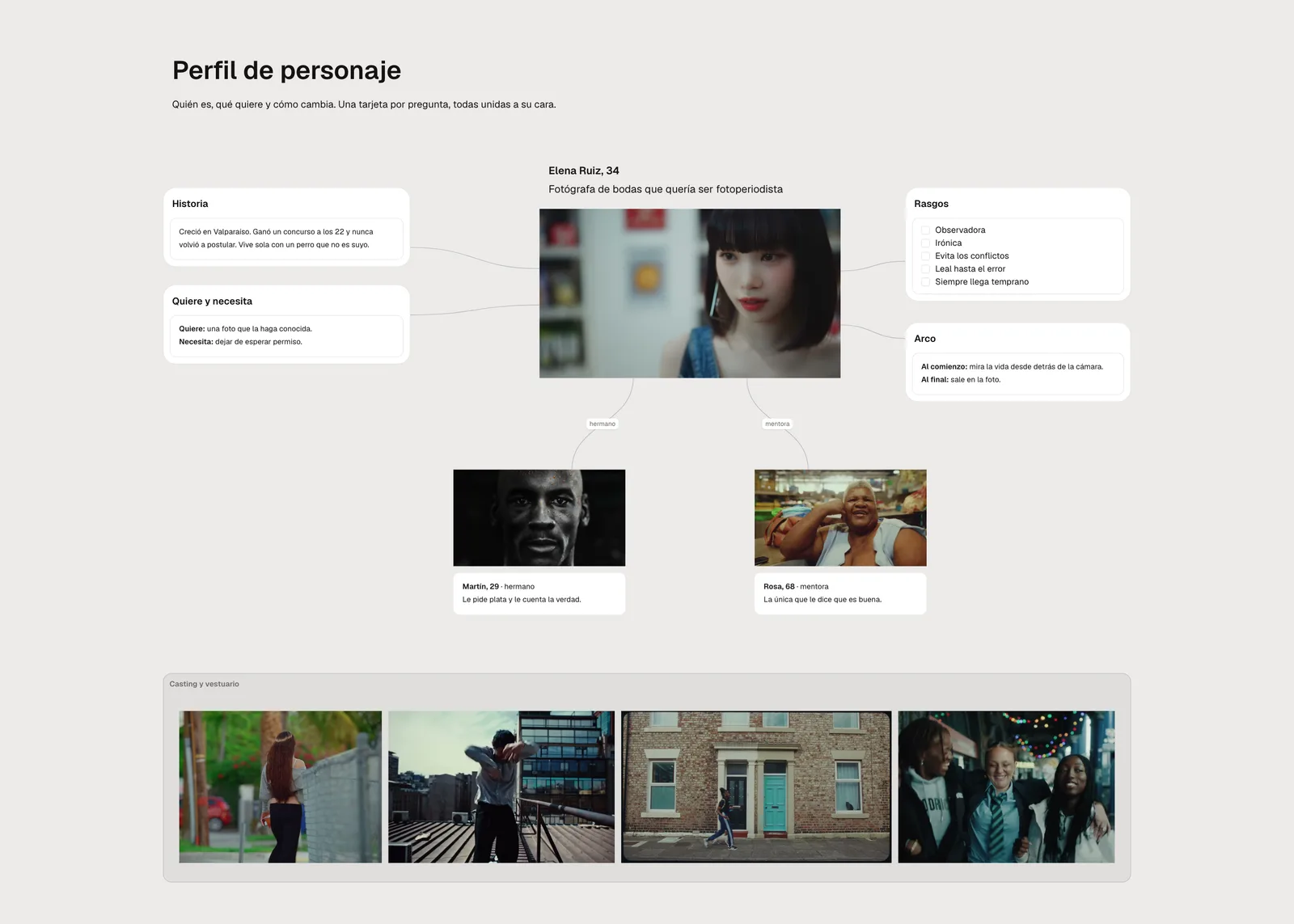
A whole character on one map: their story, what they want and what they need, their traits, their relationships with the other characters, their arc and the casting and wardrobe references.
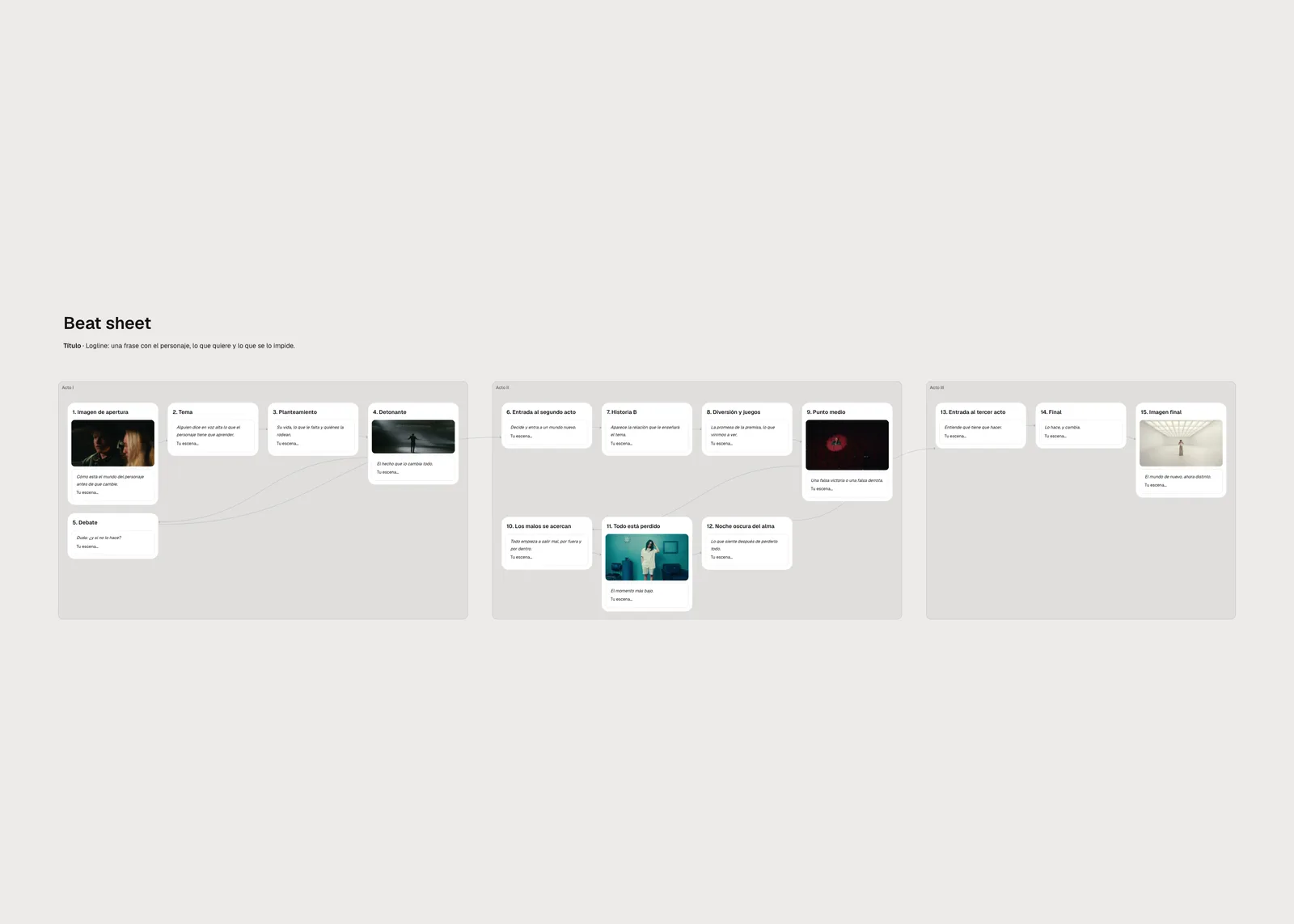
Beat sheet
Draftt
A story's structure in fifteen beats, laid out in three acts and joined by arrows, each with a guide to what has to happen and room for your scene. Based on the Save the Cat method.
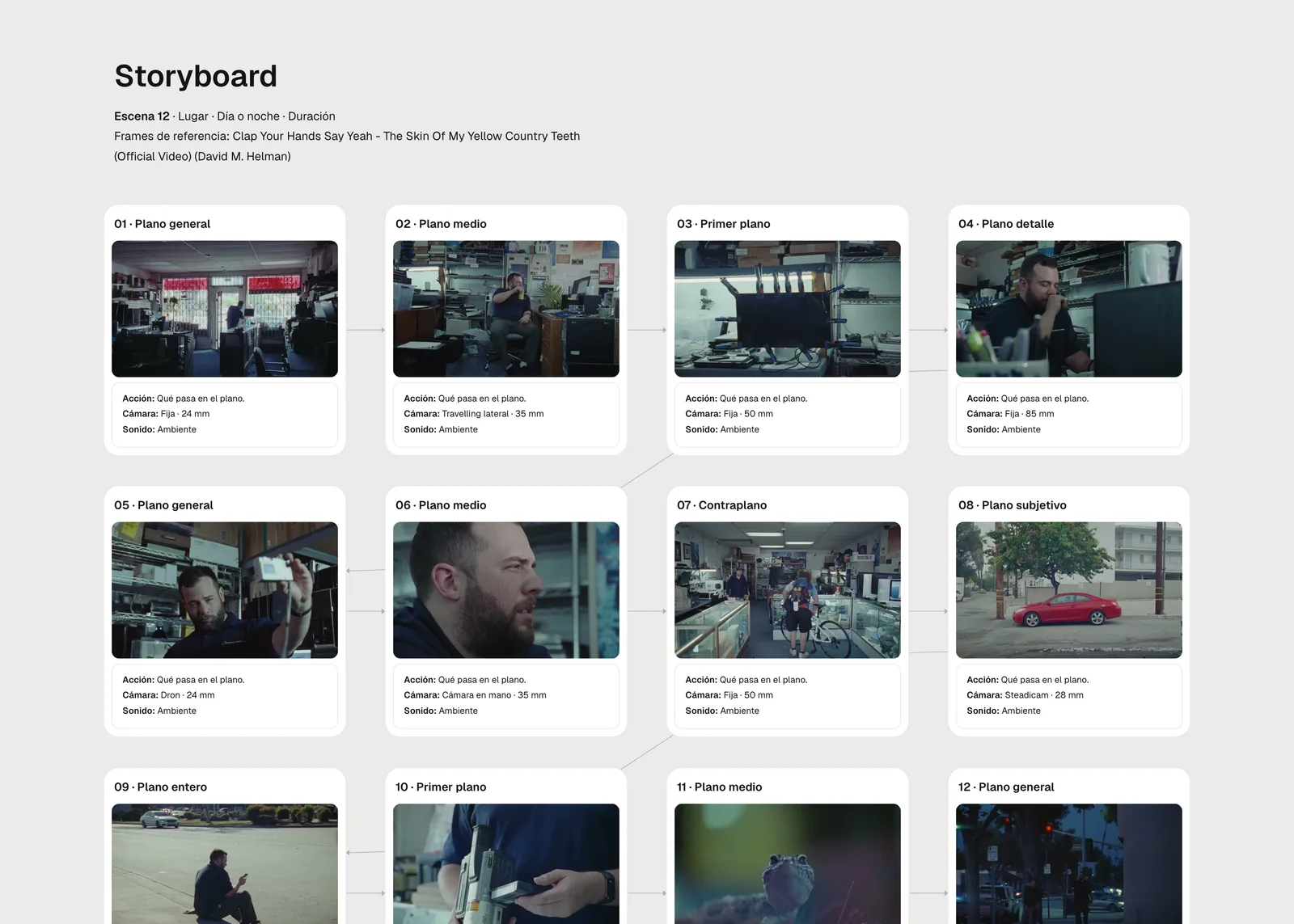
Storyboard
Draftt
A scene shot by shot: each card holds its frame, the action, the camera and the sound, in the order it will be filmed, joined by arrows.
Frequently asked questions
- What is a director's treatment?
- It is the proposal a director uses to explain how they will make a film, a short or a commercial: the idea, the tone, the characters, how it looks and how it is shot. It goes to production companies, clients, agencies or funds to win the job or get the financing, and afterward it guides the crew.
- What sections does a director's treatment have?
- This template uses five: the idea, with a logline and why tell it now; the tone; the characters, with what they want and what they hide; the look, with palette, light and color; and camera and sound, with references. You can add sections like casting, locations or music, depending on what the reader asks for.
- What is the difference between a director's treatment and a moodboard?
- The moodboard decides how the film looks in a single image. The treatment also says what the story is, who the characters are, what the tone is and how it will be shot and sound. A moodboard can live inside the treatment, in the look section, as it does in this template.
- How long should a director's treatment be?
- Just long enough to read in a few minutes. One idea per section, short sentences and a few carefully chosen images work better than a long document. This template comes with thirteen frames spread over five sections, and each note fits in two or three lines.
- Is the director's treatment template free?
- Yes. Draftt's free plan includes 2 boards, and using the template takes one. The frames come from Explore, Draftt's catalog, with each work's credits, and you can swap them for your own references. The sections and the sample notes are there for you to rewrite.
Related templates
See more mood board examples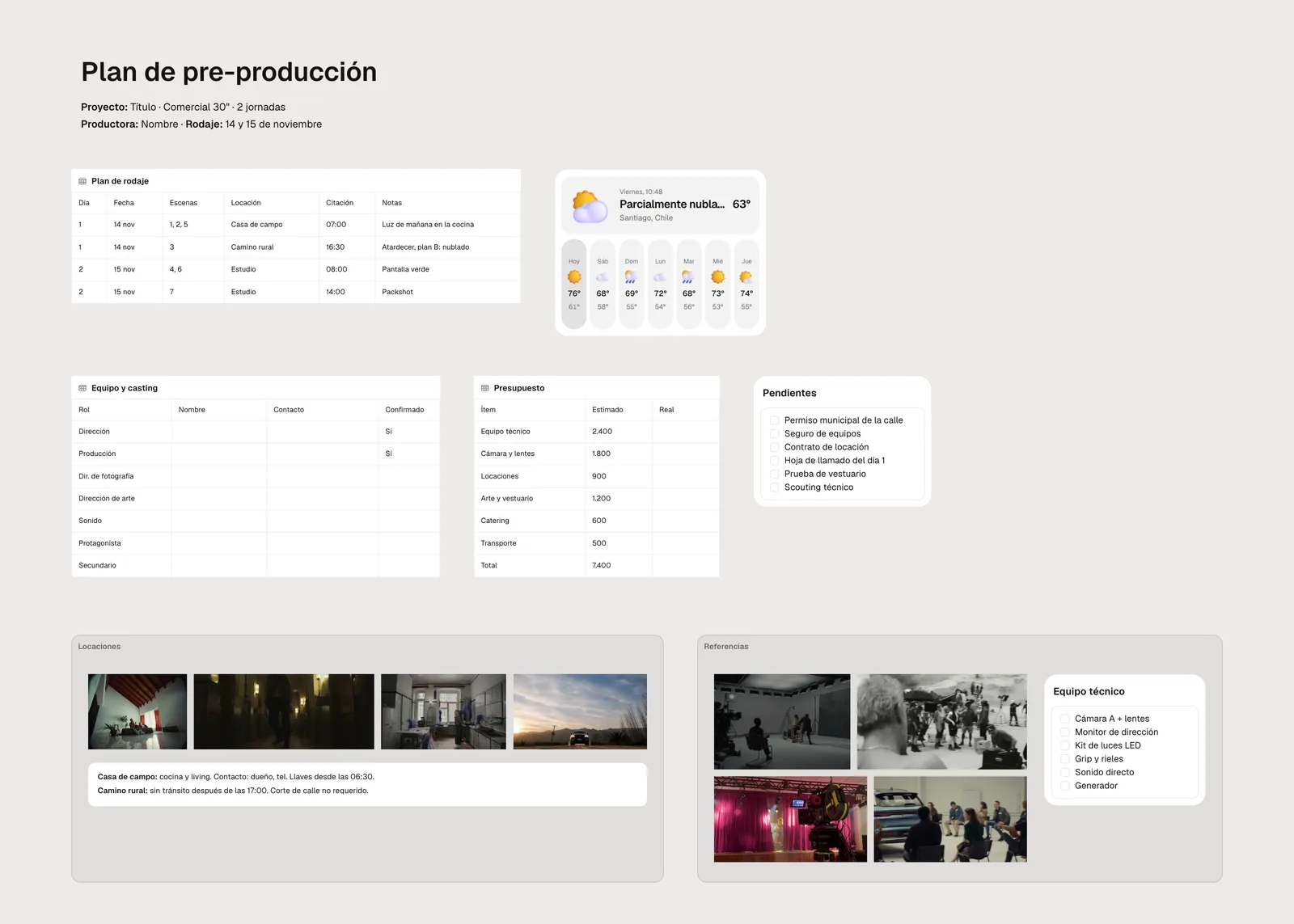
Pre-production plan
Draftt
Everything that has to be solved before the first shoot day on one board: the shooting schedule, the crew and the casting, the budget, the locations, the weather forecast, the gear and the to-dos.
Location scouting
Draftt
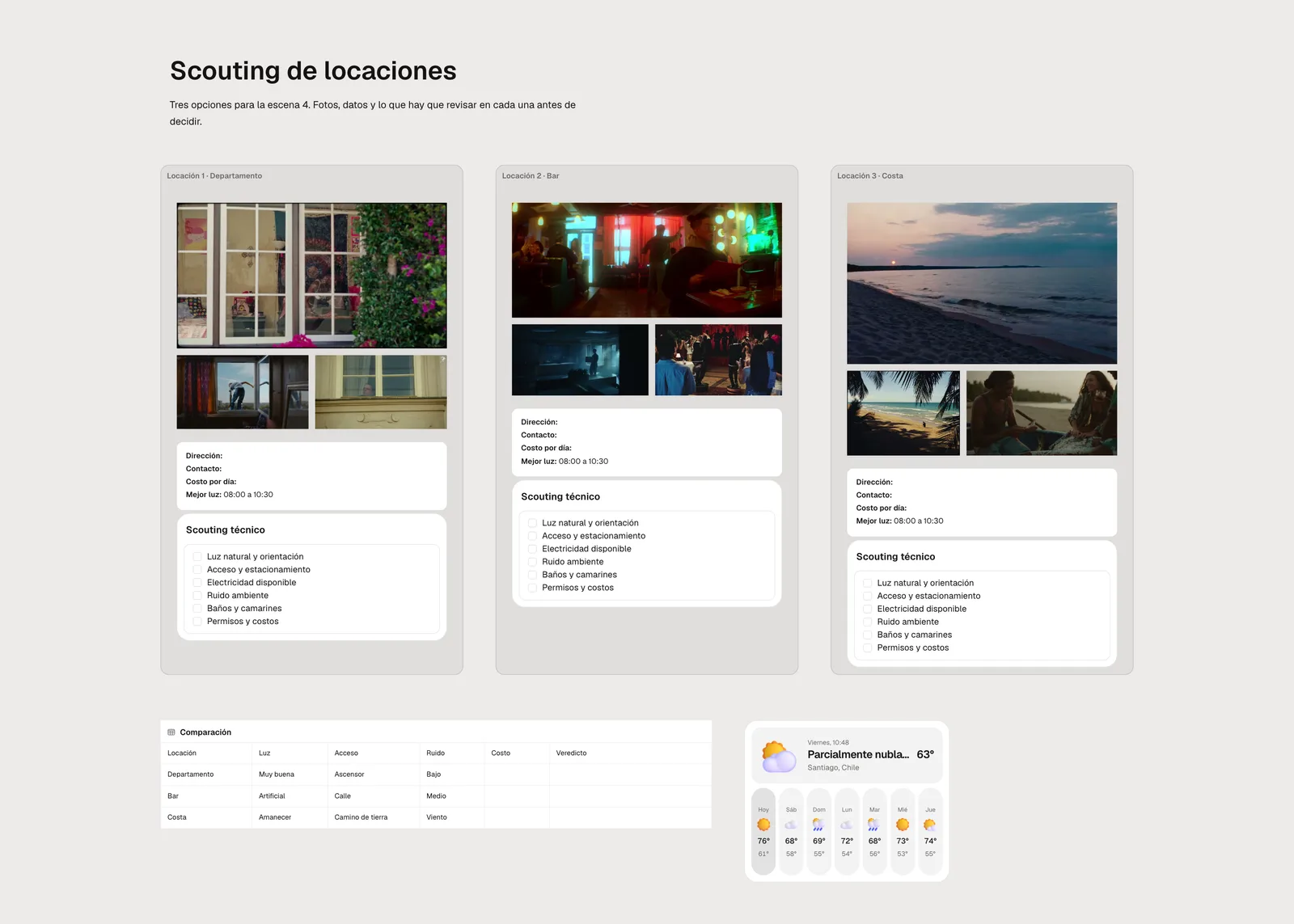
Compare locations side by side: photos of each one, its details (address, contact, cost, best hour of light), a tech scout checklist, the weather forecast and a table to decide.
Horror moodboard
Draftt
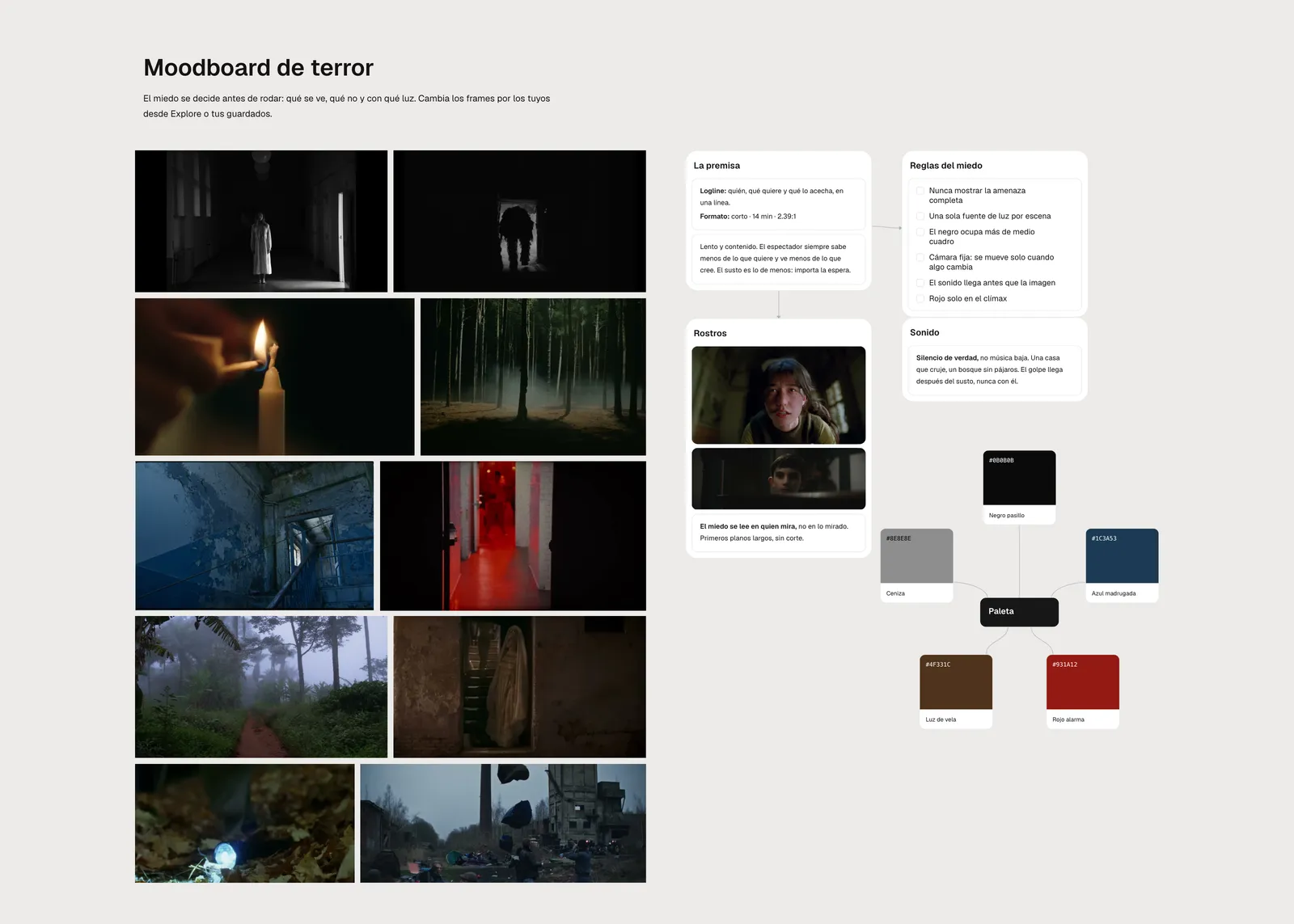
A moodboard to decide a horror film's fear: what stays in the dark, where the light comes from, the faces and the place.