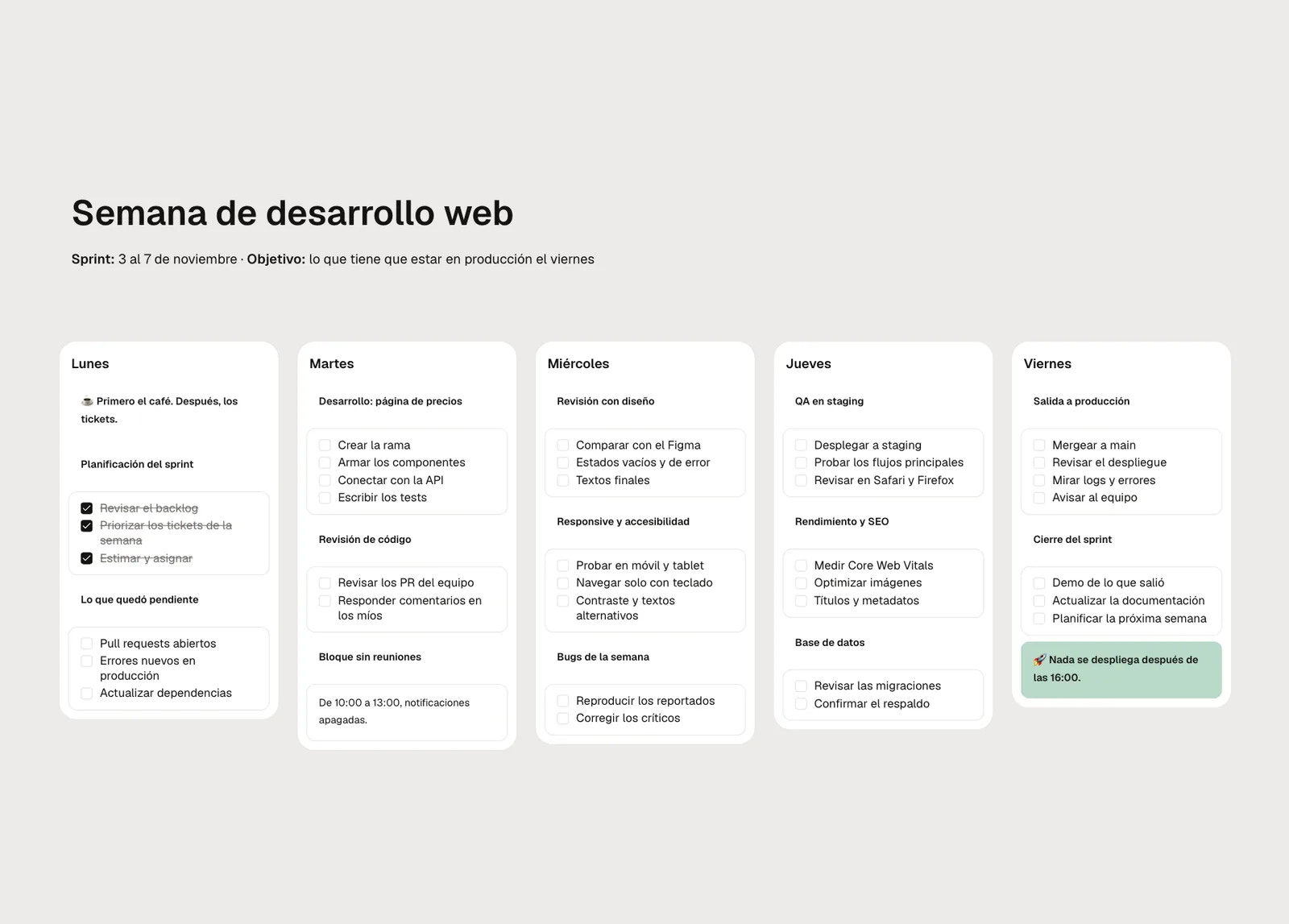
Meeting notes template
DrafttOfficial template · Free
The agenda, what was said, what was decided and who does what by when. So a meeting ends with more than good intentions.
About this template
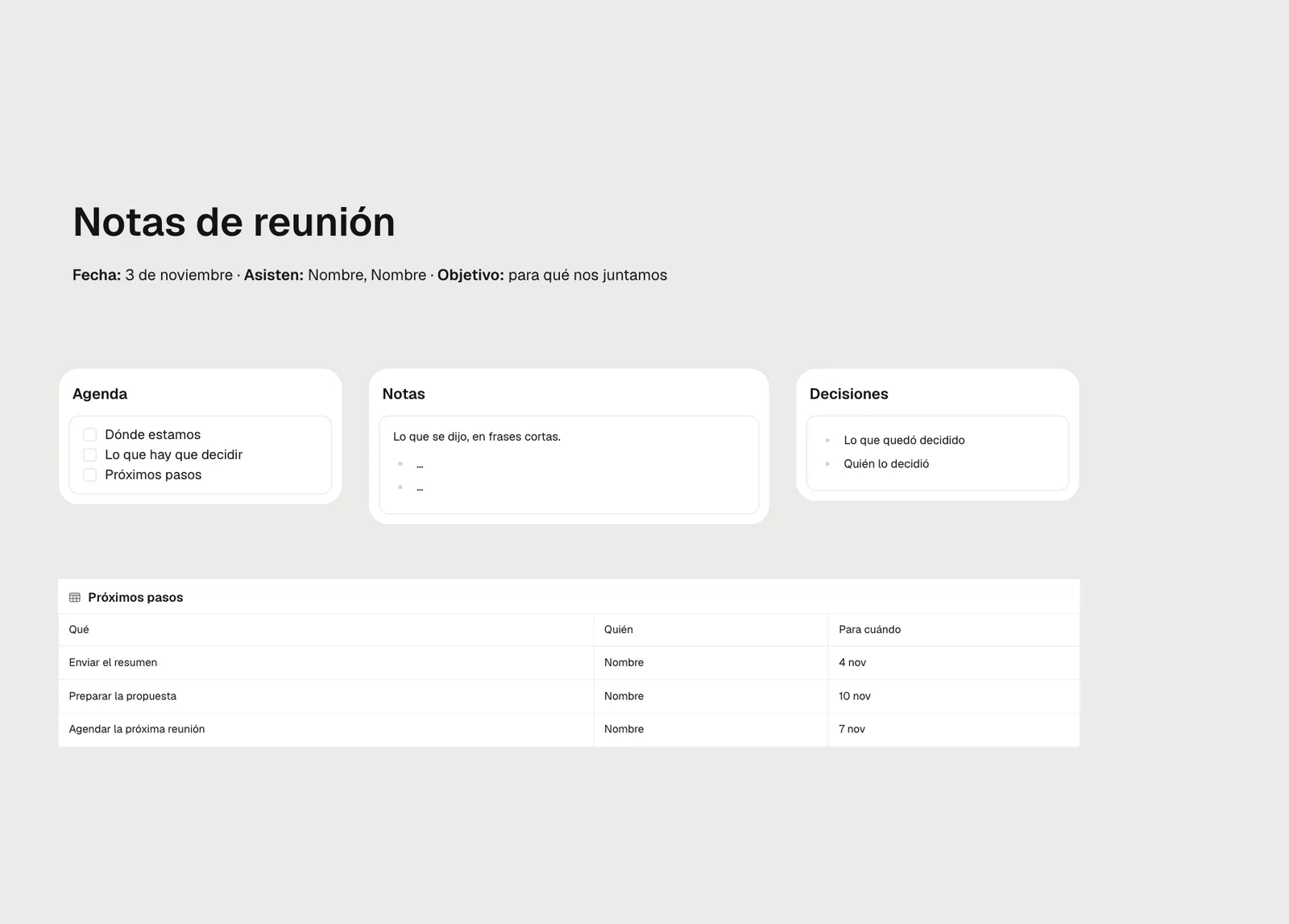
Meeting notes exist so that what was discussed turns into work. This template opens with a header that sets the date, the attendees and the goal, why you're meeting, and it follows the order of a meeting.
The Agenda is a three-item checklist: where we stand, what we need to decide and next steps. Notes holds what was said, in short sentences. Decisions keeps what was decided and who decided it apart, so it doesn't get lost in the notes. At the end, a Next steps table with three columns (what, who and by when) comes with three sample rows: send the recap, prepare the proposal and schedule the next meeting.
It's for team meetings, status meetings with a client, pre-production meetings or campaign reviews: any meeting that has to end with someone in charge of something and a date to do it by.
How to take meeting notes
01
Write the goal before you walk in
What has to be decided by the time you leave. If you can't write it in one line, the meeting isn't ready yet, or it's an email. Send the board with the agenda beforehand, so everyone arrives having read their part.
02
Write down decisions, not the conversation
Nobody rereads a transcript. Write in short sentences what changes something, and move each decision to its card, with who made it. If you're not sure something was actually decided, ask out loud right then.
03
Every task gets a person and a date
“We'll look into it” isn't a task. Before you wrap up, fill in what, who and by when, and read it out loud. A task with no name belongs to everyone, which means no one.
04
Send them within the hour
The same day, while everyone still remembers. Share the link with those who attended and open the next meeting with this table: going over what's pending is the first item on the agenda.
More planning templates
Project plan
Draftt
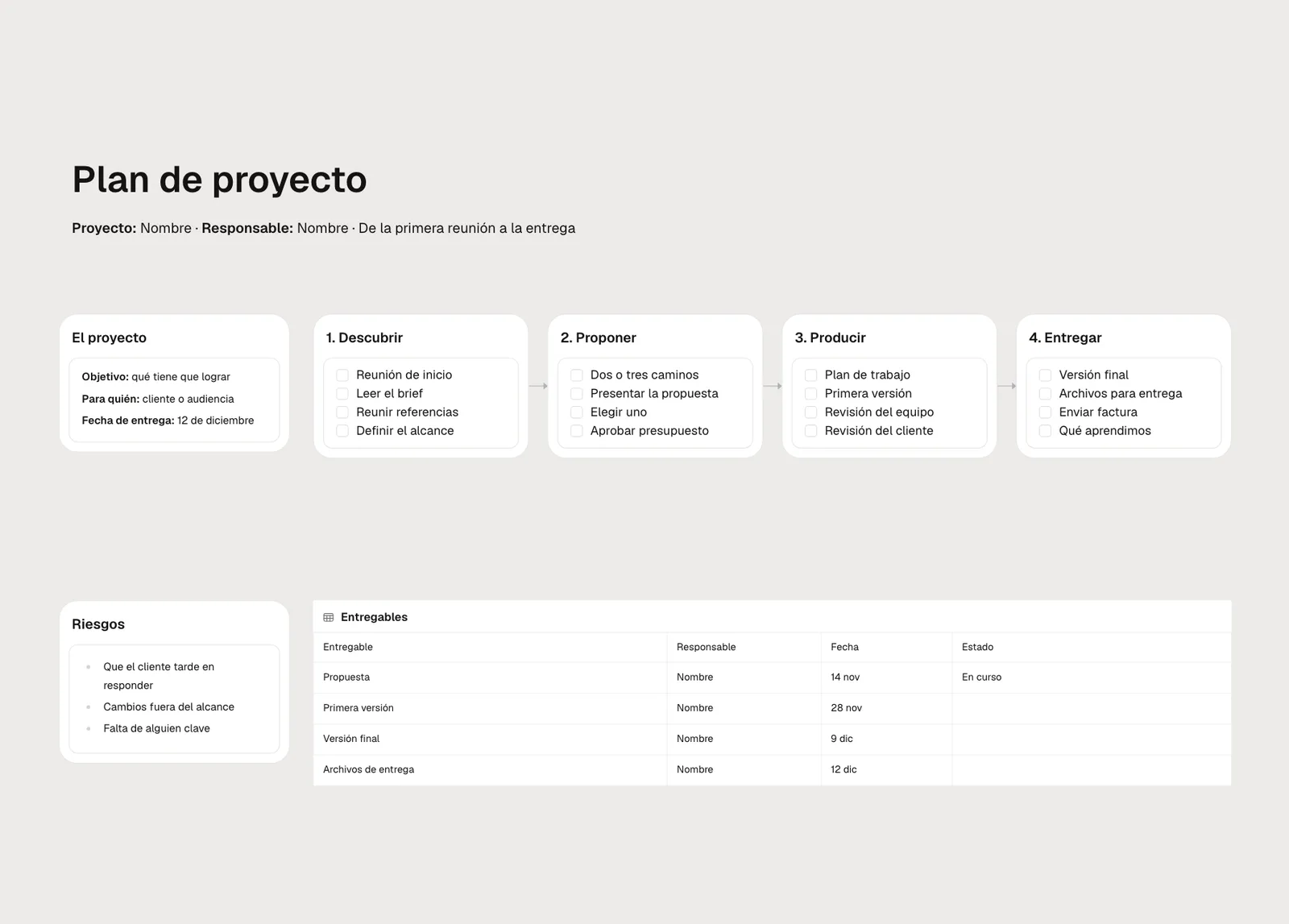
A project from the first meeting to delivery: four connected phases, the deliverables with an owner and a date, and the risks in sight.
Brainstorm
Draftt
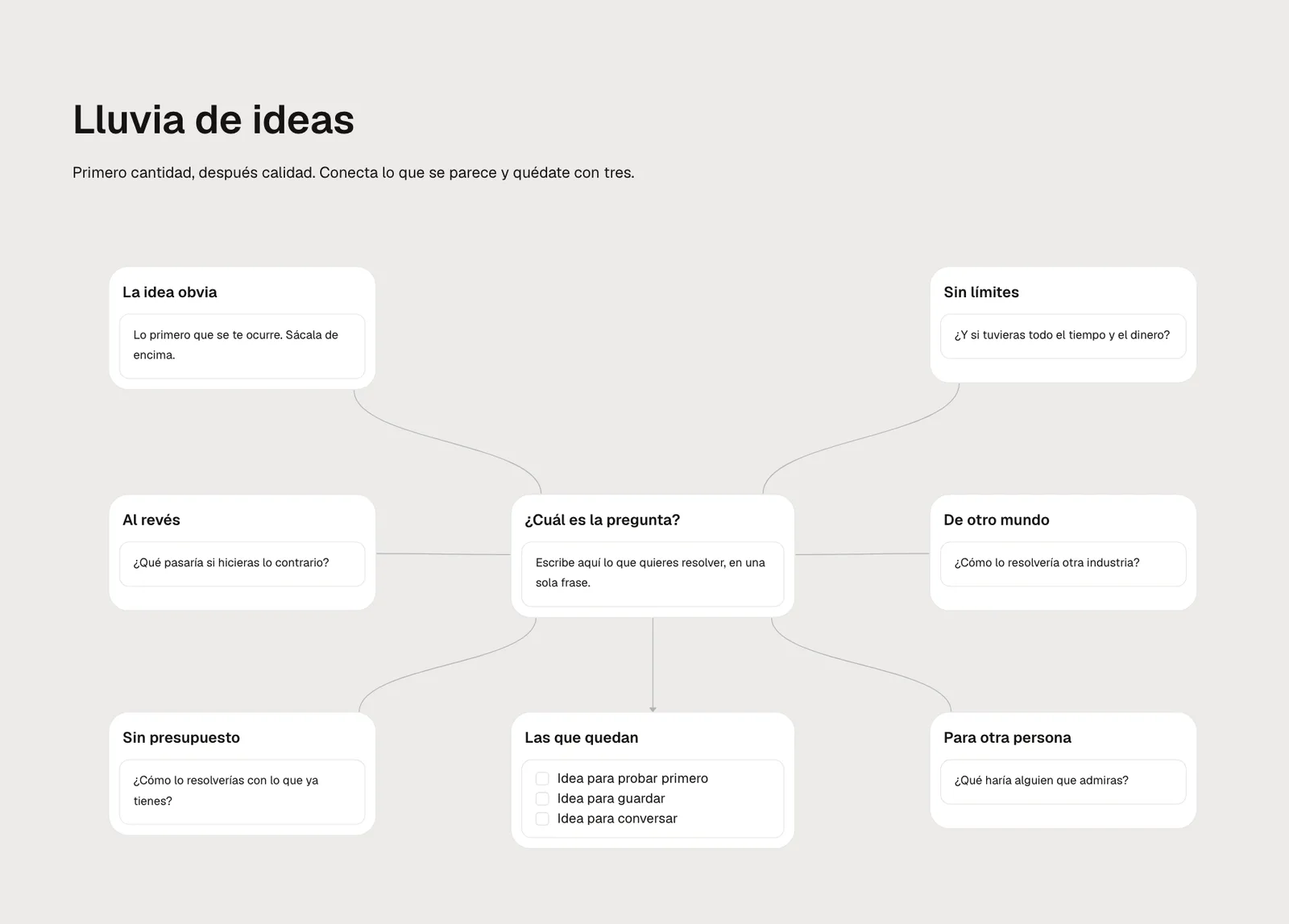
A question in the middle and six ways to look at it, to get past the first idea and end with three worth trying.
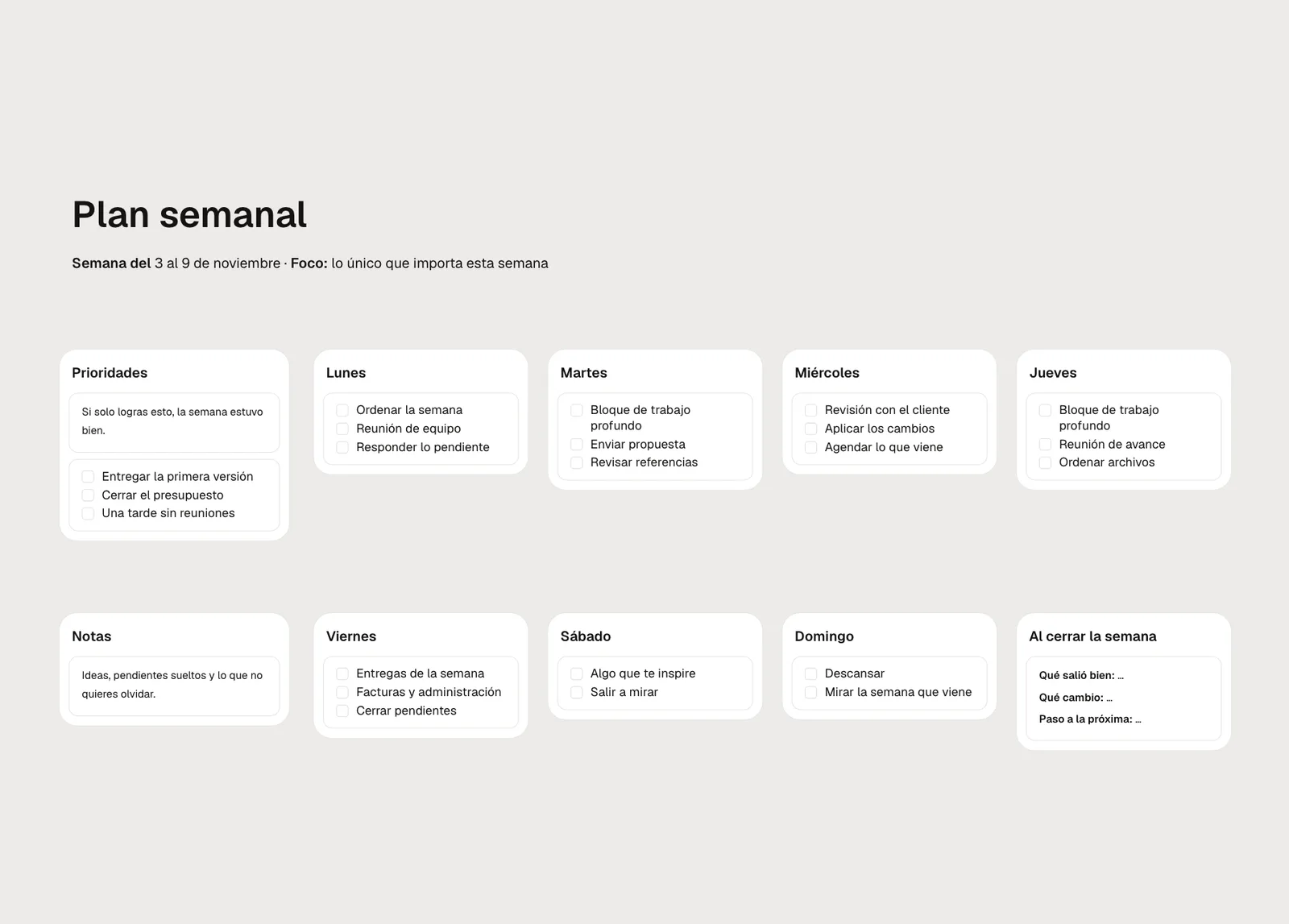
Weekly plan
Draftt
Your week on one board: the priorities in sight, each day with its to-dos and a moment to close it and move on to the next.
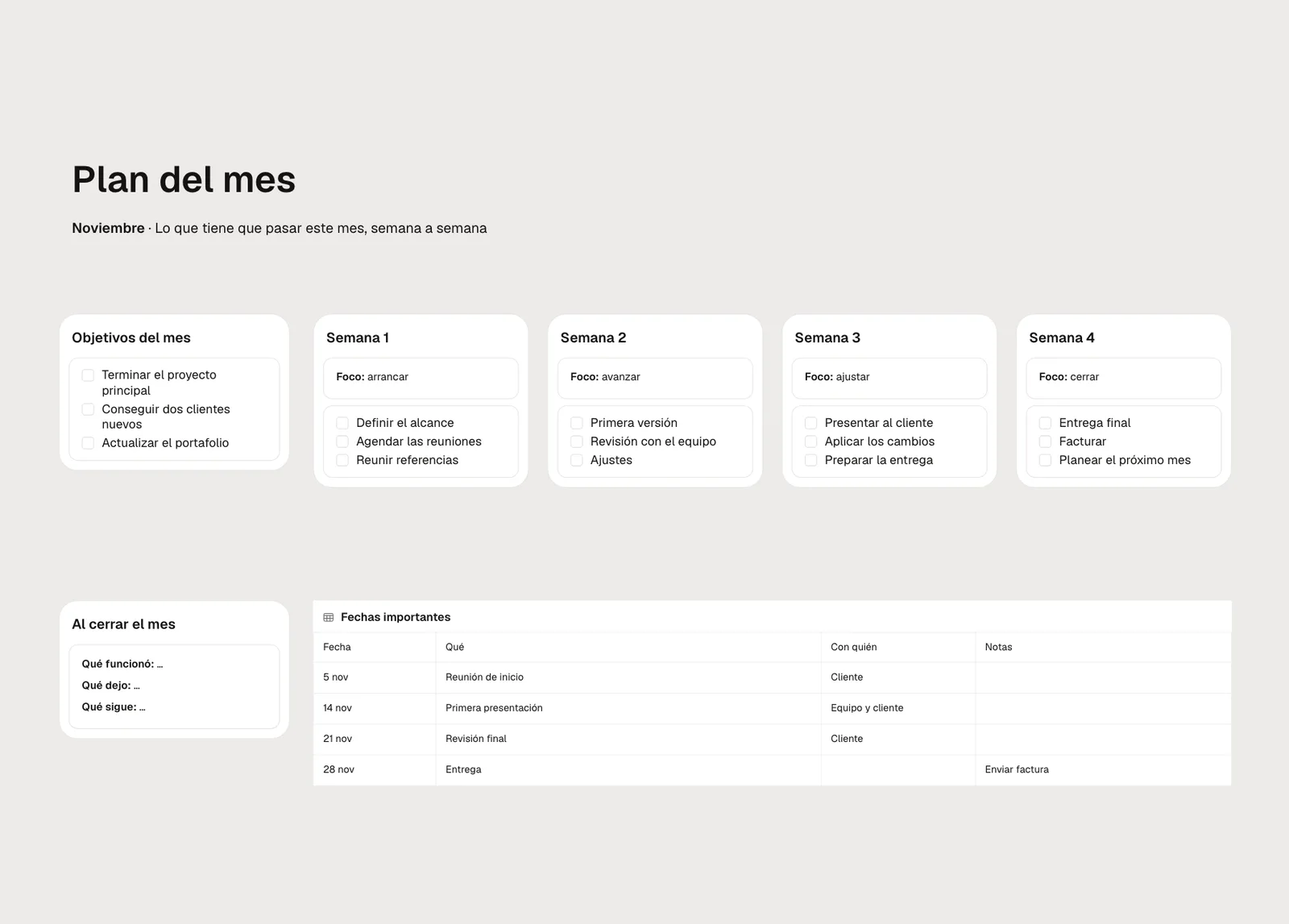
Monthly plan
Draftt
The month's goals broken down into four weeks, with the dates that matter and what you learned when it closed.
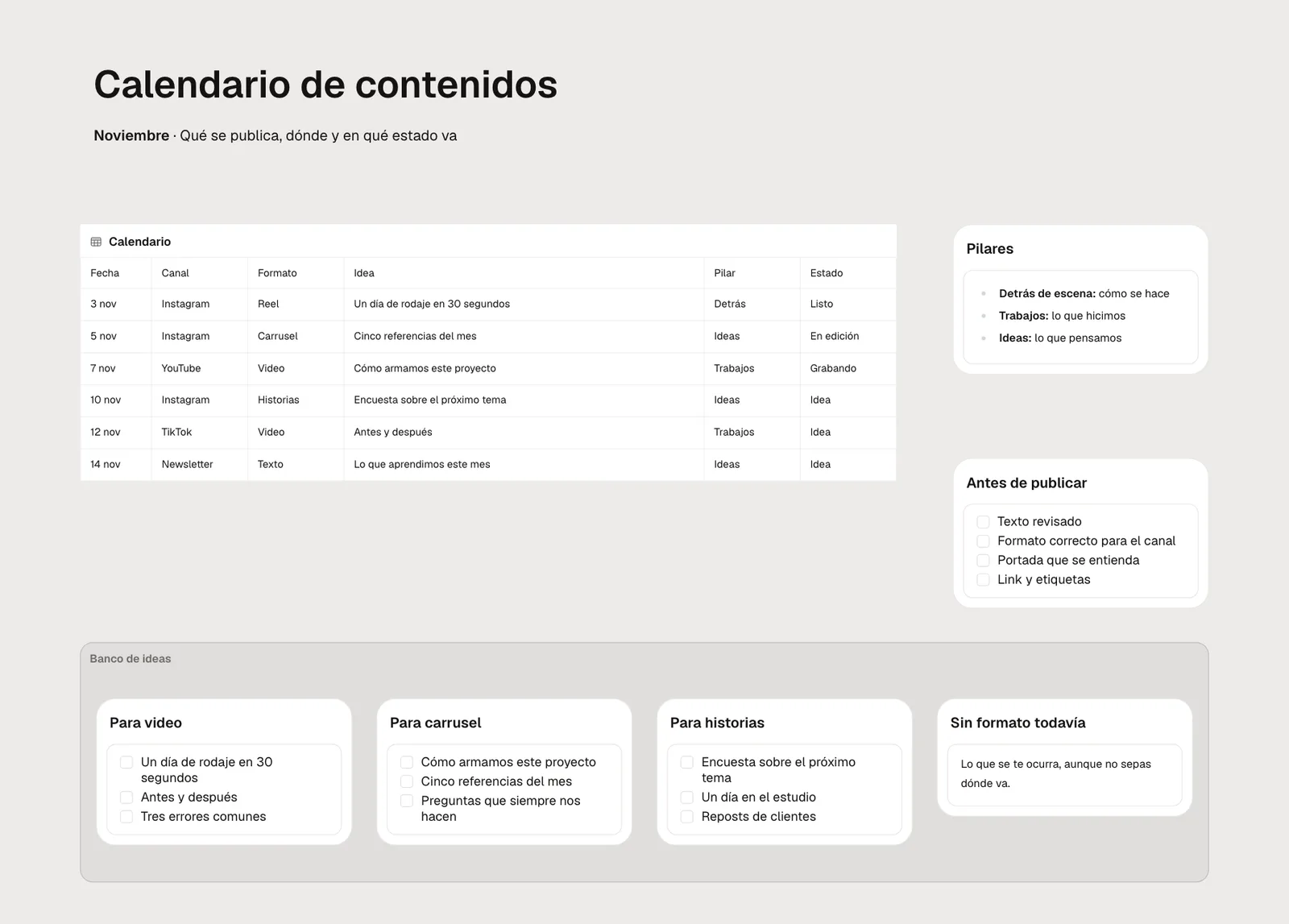
Content calendar
Draftt
What gets published, when and on which channel, with your pillars, a checklist before posting and a bank of ideas by format.
Frequently asked questions
- What should meeting notes include?
- The date, who attended and the goal; the agenda; what was said, summarized; the decisions and who made them; and the next steps with an owner and a date. If a meeting ends without that last part, you'll most likely have to repeat it. This template has each part in its own card or table.
- Are meeting notes the same as meeting minutes?
- Minutes are a formal record, sometimes signed, of what was agreed. Meeting notes are lighter: they let the team know what was decided and who does what. If you need minutes, this template already has what they contain, and you can copy the text of each card into your document.
- Why keep decisions separate from meeting notes?
- Because the notes hold everything that was discussed, and there a decision gets lost among opinions. In its own card, with the name of whoever made it, anyone can see in seconds what was settled. It also helps weeks later, when someone asks why something was done a certain way.
- When should I use meeting notes vs. a project plan?
- Meeting notes record one conversation: what was said, what was decided and what's next. A project plan follows a whole job, with its phases, deliverables and risks. Usually the next steps from each meeting end up in the project plan, as steps in a phase or rows in its deliverables table.
- Is the meeting notes template free?
- Yes. Draftt's free plan includes 2 boards, and using the template takes one. To avoid using up a board per meeting, duplicate the cards and the table for each new meeting and leave the earlier ones next to them, each with its date.