Project plan template
DrafttOfficial template · Free
A project from the first meeting to delivery: four connected phases, the deliverables with an owner and a date, and the risks in sight. For studios, production companies and freelancers.
About this template
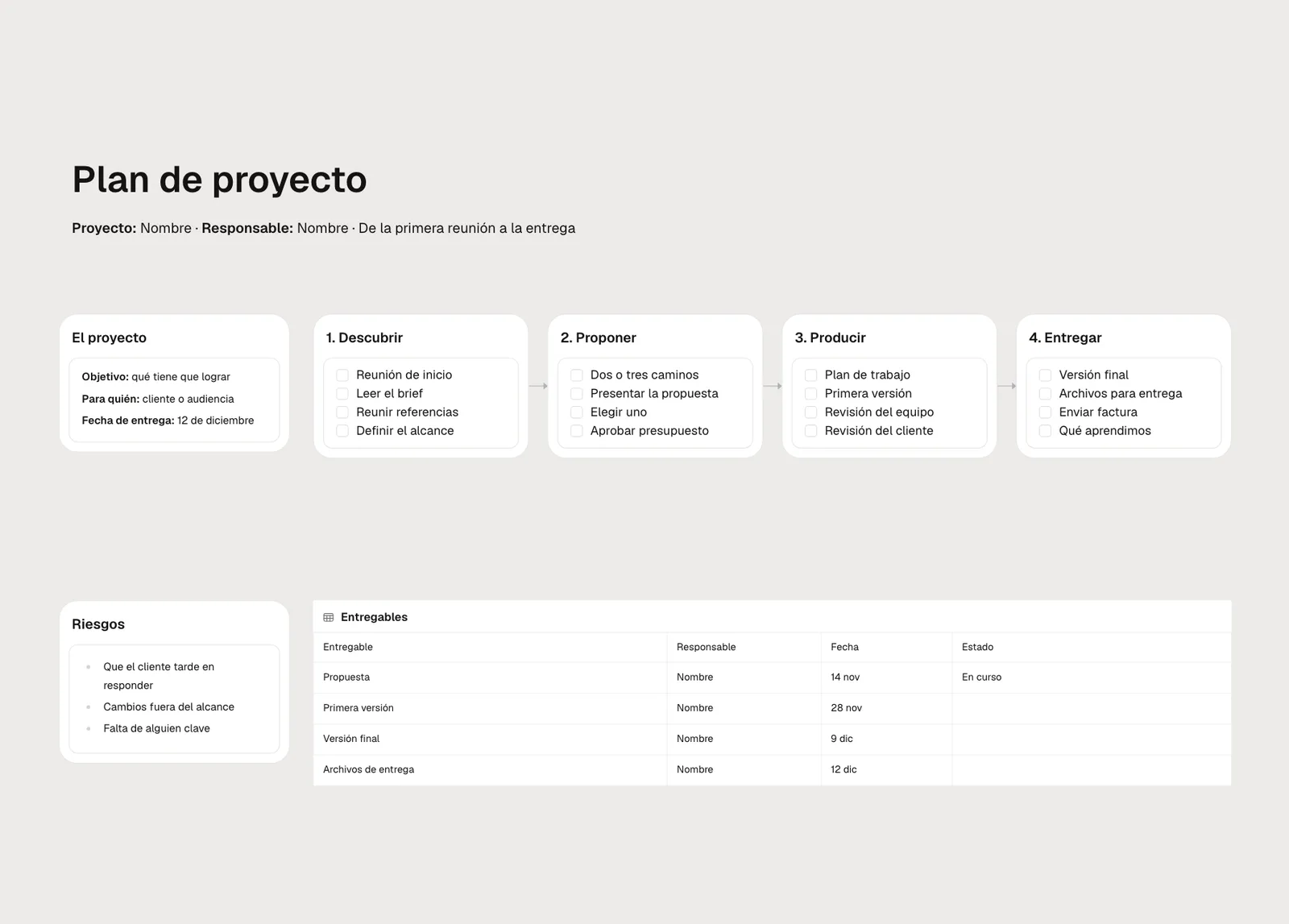
A project plan lays out the path from the first meeting to delivery, and makes clear who delivers what and when. This template opens with a header for the project's name and its owner, and a card that sets the goal, who it's for and the delivery date.
The work goes in four phases joined by arrows: Discover, Propose, Produce and Deliver, each with four steps in a checklist, from reading the brief and presenting two or three directions to the client review, the invoice and what you learned. A Deliverables table comes with four rows with owner, date and status, and the Risks card names three common ones: the client is slow to respond, out-of-scope changes and a key person is unavailable.
It works for studios, production companies, agencies and freelancers who run one project per client, whether it's a campaign, a brand identity or a video, and want the team and the client to know where it stands.
How to write a project plan
01
Write the goal and what's left out
Who it's for, what gets delivered and when. Below that, what it doesn't include. Projects fall behind less because of bad planning than because of what nobody said wasn't included.
02
Work backward from the delivery date
Set the final delivery and go back: client review, changes, production, proposal. Give the client their own deadlines to respond. It's the most common delay and the only one that doesn't depend on you.
03
One owner and one date per deliverable
A deliverable with two owners has none. Assign each step by typing @ in its row: it shows up on that person's Home and they get a reminder the day it's due.
04
Name the risks and what you'd do
Three risks, each with its response: if the client is slow, the delivery moves by the same number of days. If they ask for something out of scope, it gets quoted separately. Written down and shared from the start, it stops being an argument when it happens.
More planning templates
Monthly plan
Draftt
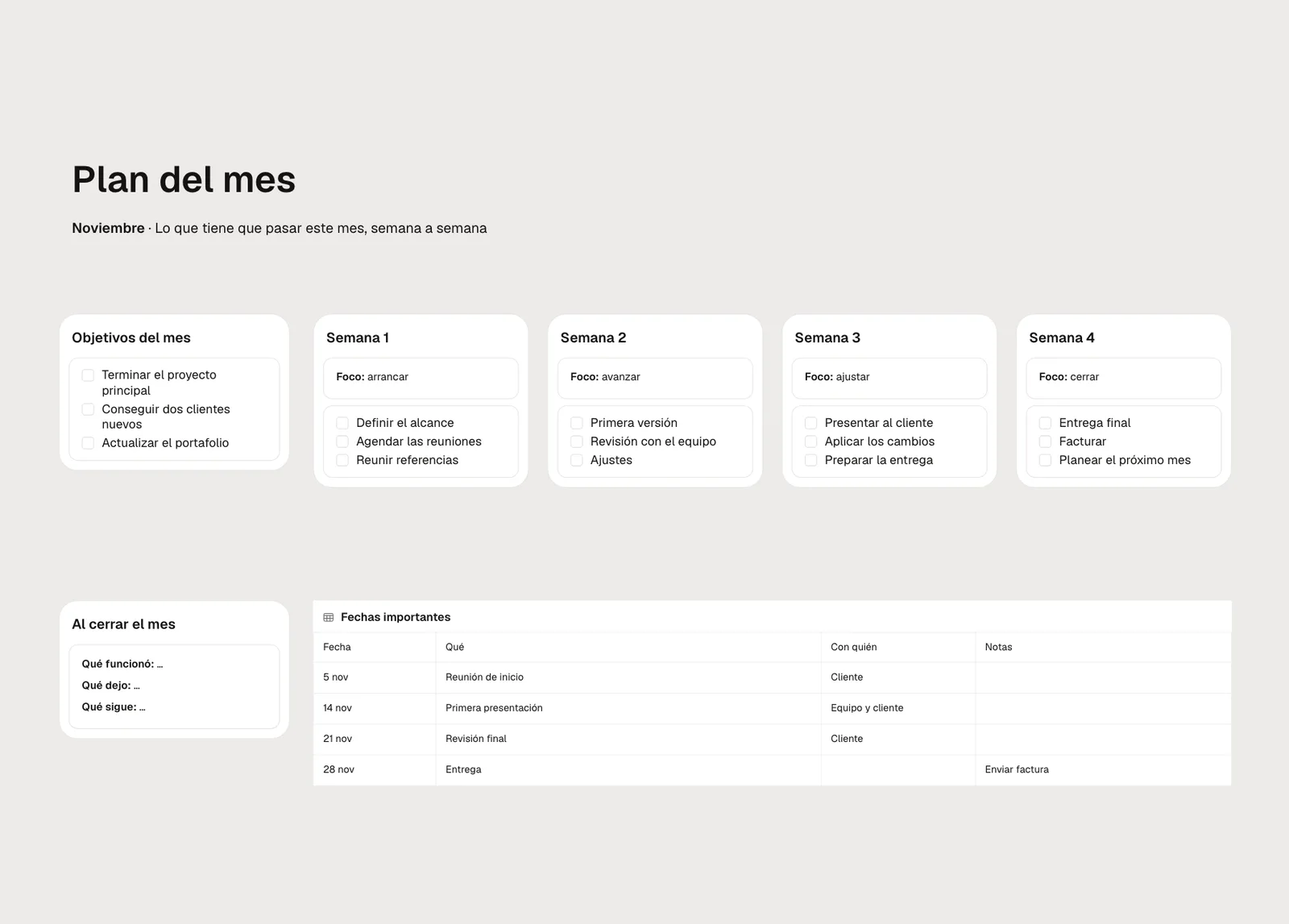
The month's goals broken down into four weeks, with the dates that matter and what you learned when it closed.
Meeting notes
Draftt
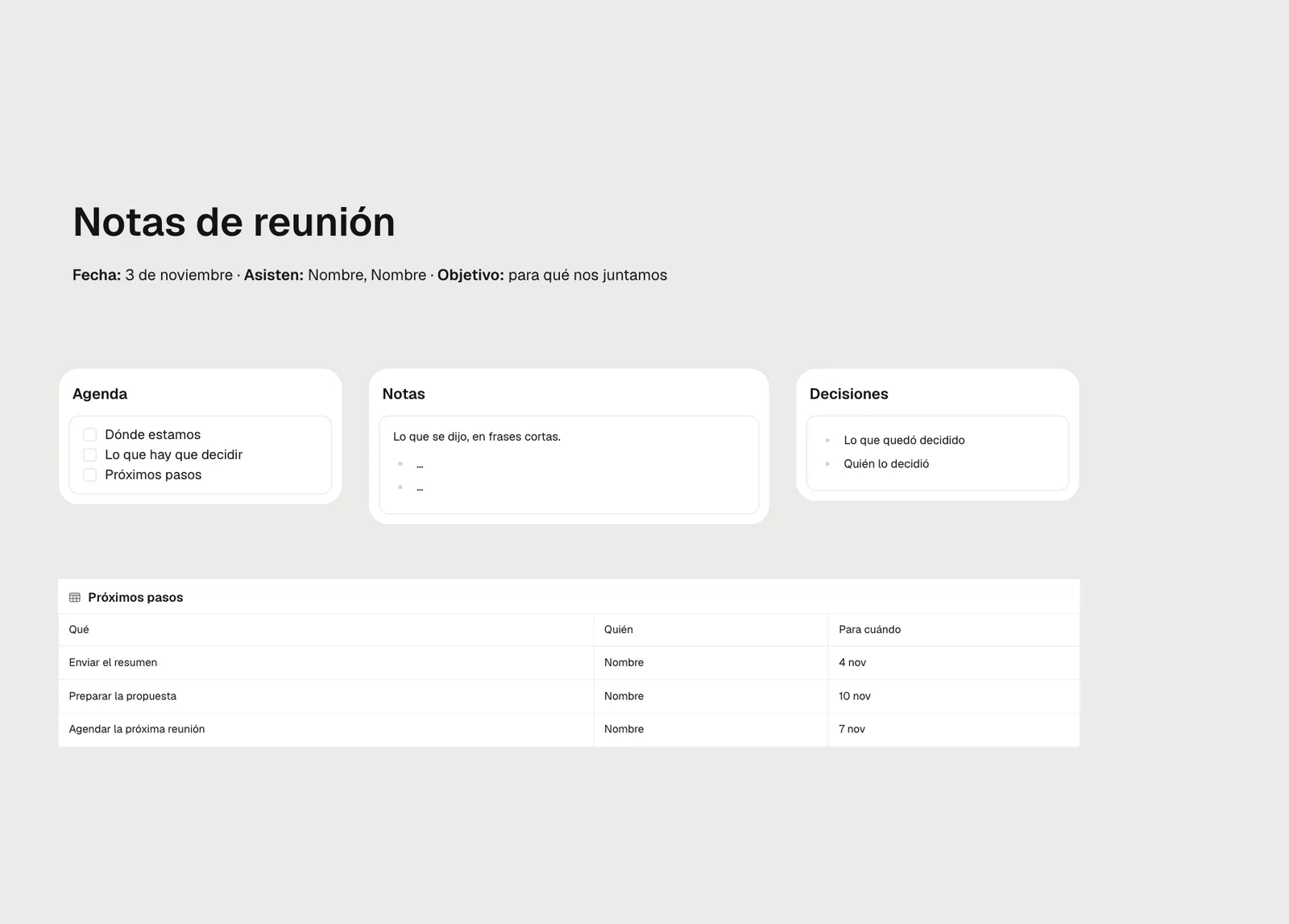
The agenda, what was said, what was decided and who does what by when.
Weekly plan
Draftt
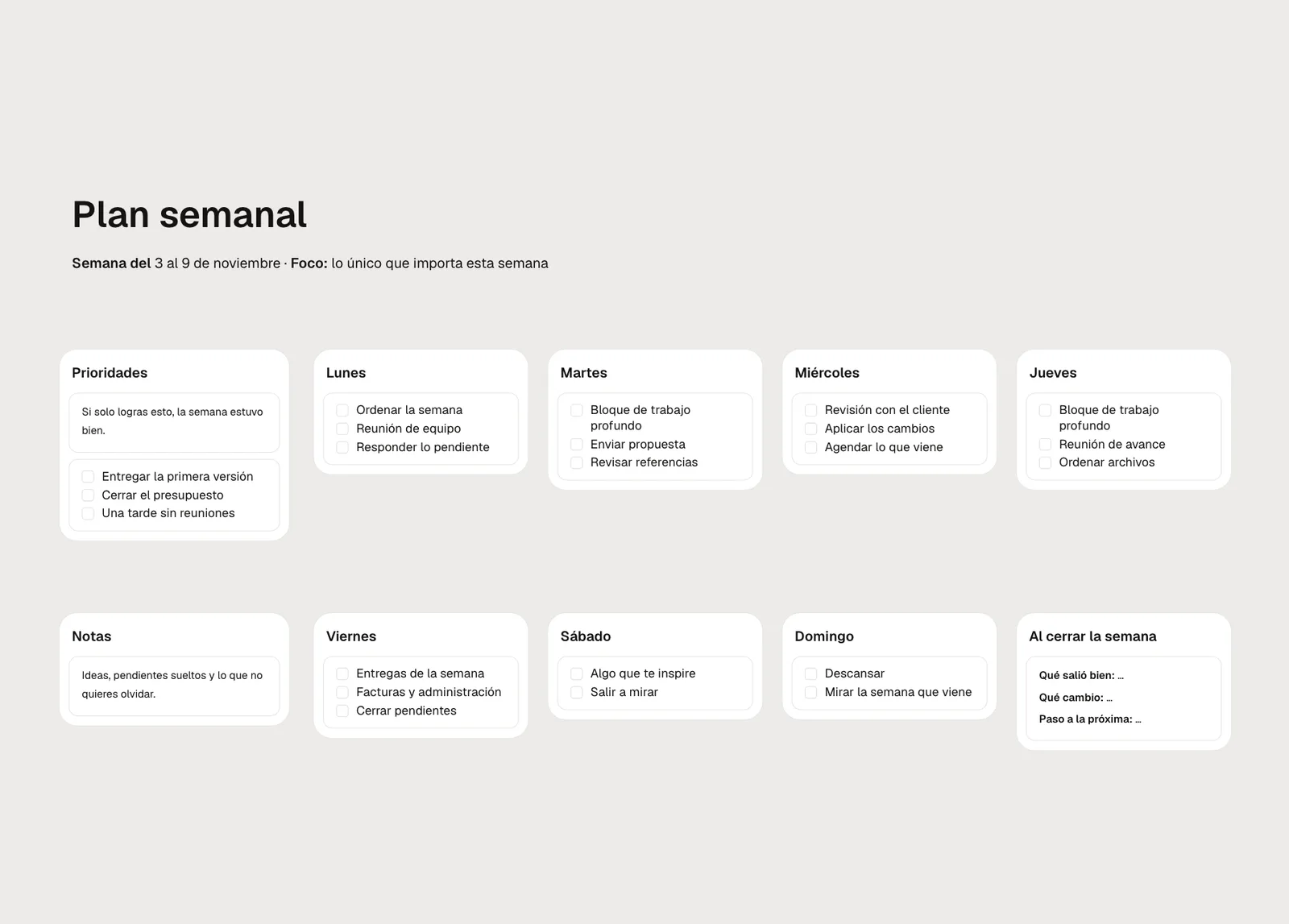
Your week on one board: the priorities in sight, each day with its to-dos and a moment to close it and move on to the next.
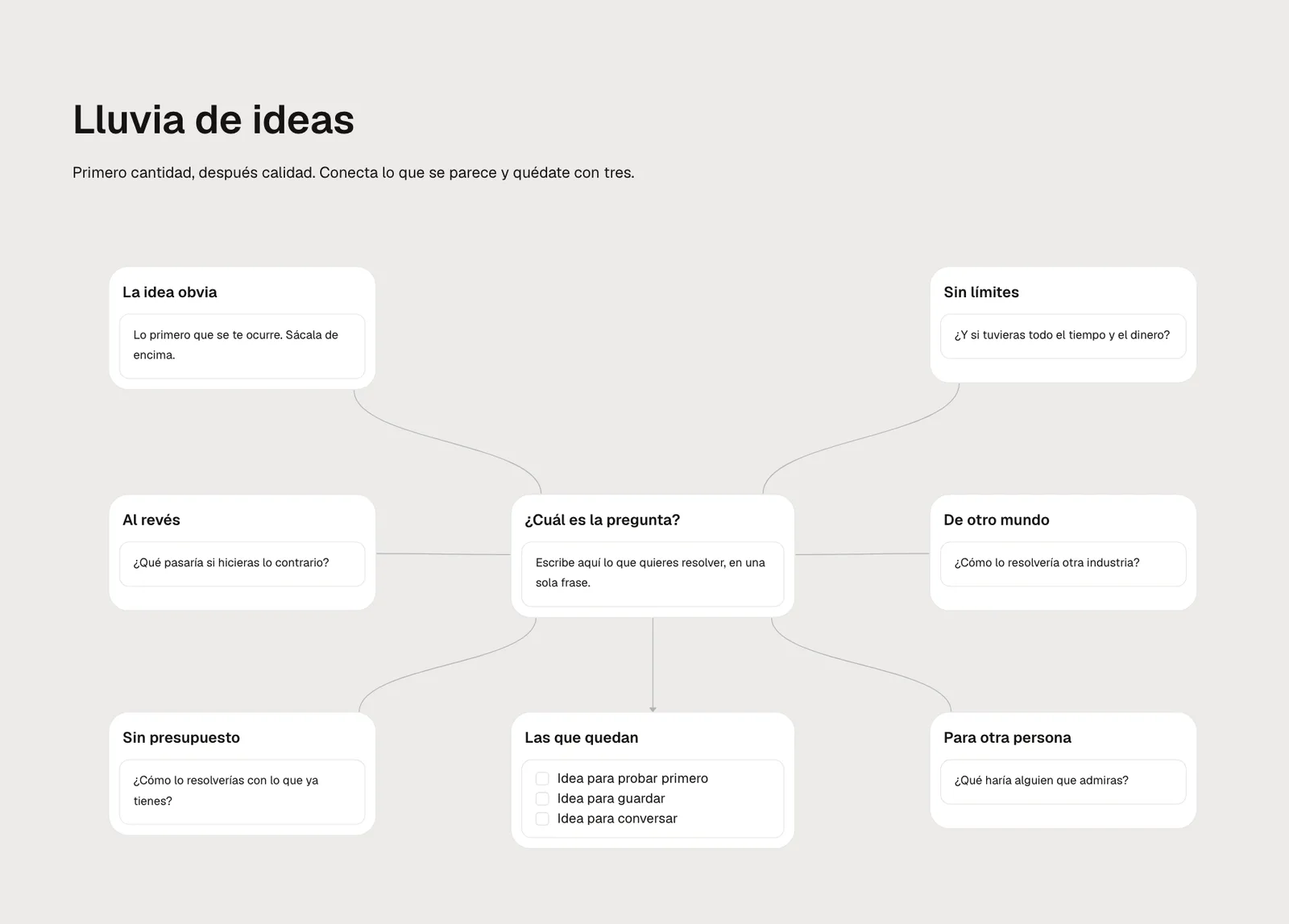
Brainstorm
Draftt
A question in the middle and six ways to look at it, to get past the first idea and end with three worth trying.
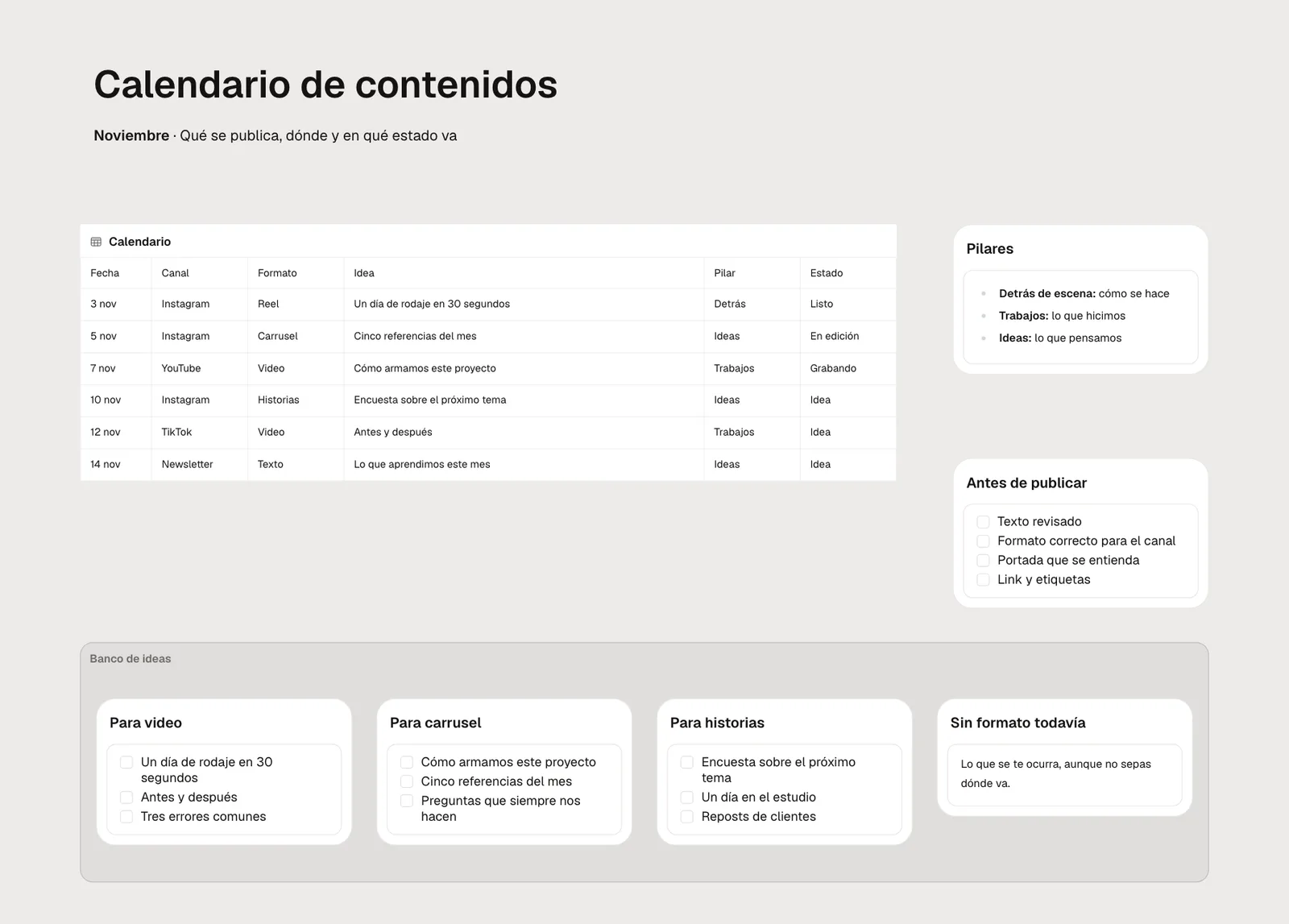
Content calendar
Draftt
What gets published, when and on which channel, with your pillars, a checklist before posting and a bank of ideas by format.
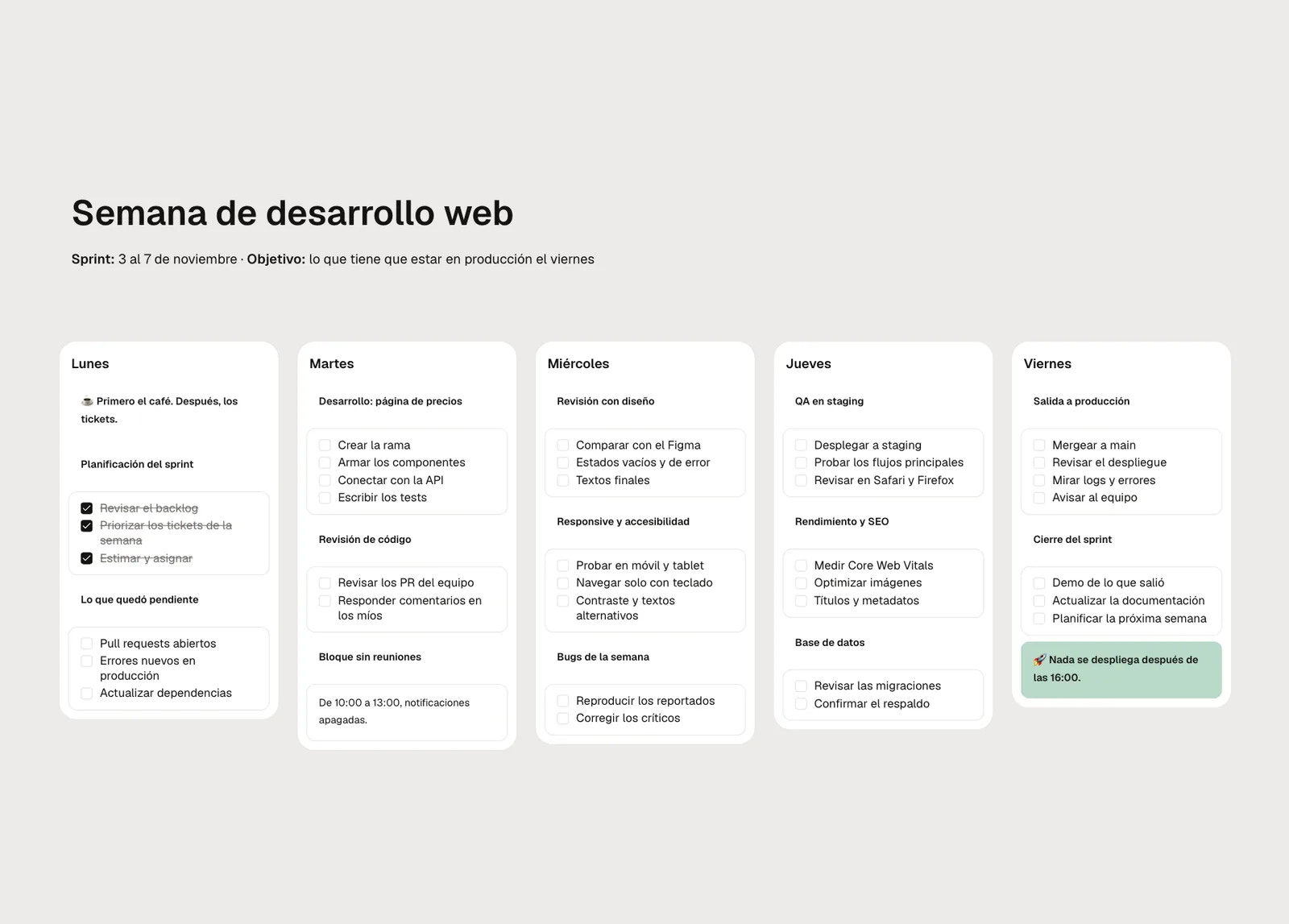
Web development week
Draftt
A week of development, Monday to Friday: plan the sprint, build, review with design, test on staging and ship to production.
Frequently asked questions
- What should a project plan include?
- A goal that can be understood in one sentence, the delivery date, the phases of the work with their steps, a list of deliverables with an owner and a date, and the risks that could delay it. With that, anyone on the team, or the client, knows where the project stands without asking for a meeting. This template has each of those parts.
- Why does a project plan have four phases?
- Because almost every creative project goes through the same things: understanding the job, proposing directions, producing the chosen one and delivering it. Keeping them apart helps you avoid producing before the proposal is approved, which is where the most time gets lost. If your work has other stages, like a shoot or post-production, add a card and connect it with an arrow.
- What's the difference between a project plan and a monthly plan?
- The project plan follows a single job from start to finish, whether it lasts two weeks or three months. The monthly plan organizes everything you do in a month, which can be several projects at once. If you have several clients, use a project plan for each one and the monthly plan to see how they overlap.
- Why list the risks in a project plan?
- To name, before you start, what could delay the project and decide what you'll do if it happens. The template comes with three that are common in client work: slow responses, out-of-scope changes and a key person being unavailable. Write them down at the start and go over them at every status meeting.
- Is the project plan template free?
- Yes. Draftt's free plan includes 2 boards, and using the template takes one. On the same board you can add the references, the brief and the client's notes, so the whole project is in one place and in view of the team.