Beat sheet template
DrafttOfficial template · Free
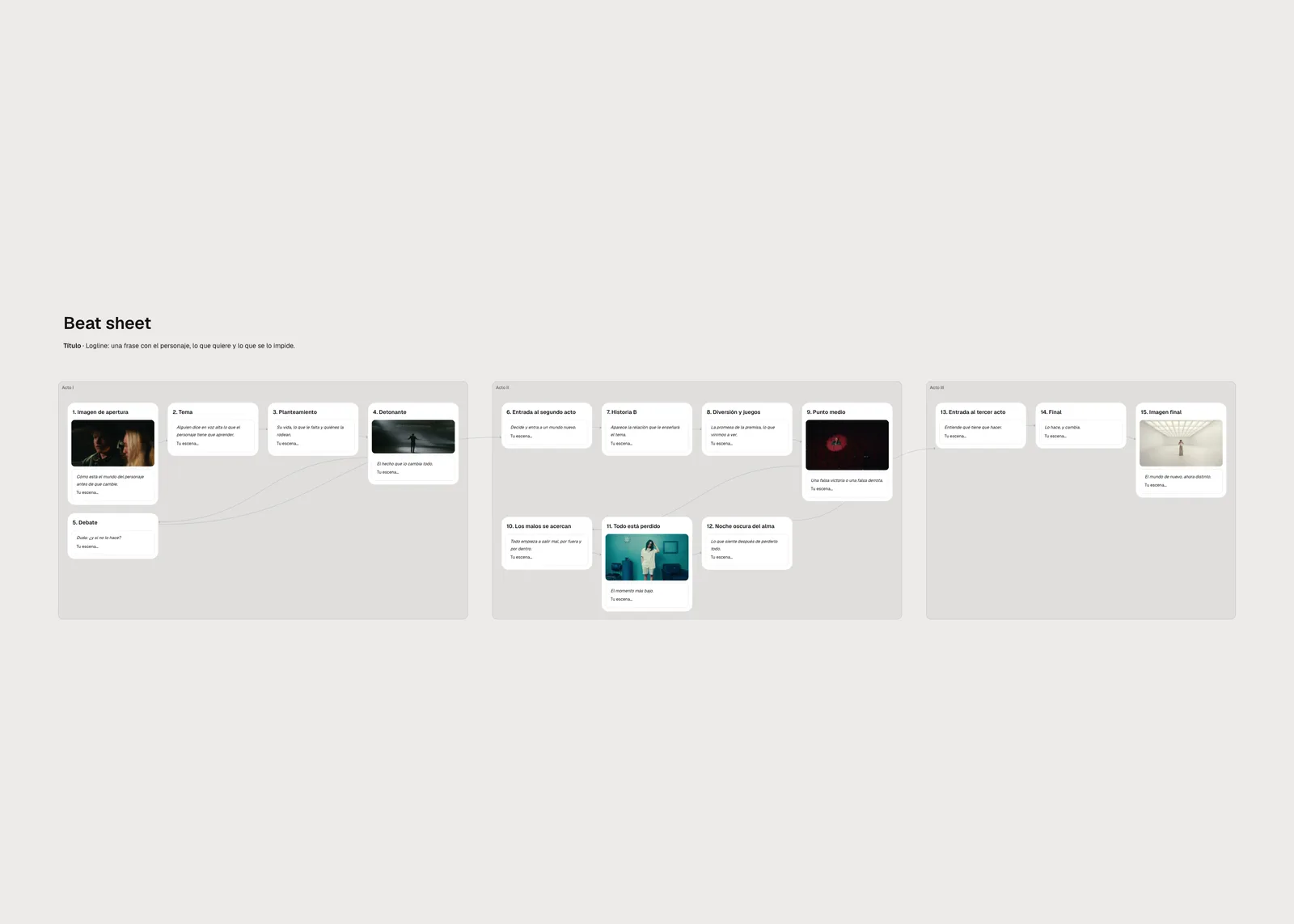
A story's structure in fifteen beats, laid out in three acts and joined by arrows, each with a guide to what has to happen and room for your scene. Based on the Save the Cat method. For writing or reviewing a feature, a series or a short before moving on to the script.
About this template
A beat sheet lays out a story in beats before the script gets written. This template follows the Save the Cat method: fifteen cards spread over three sections, Act I, Act II and Act III, joined by arrows in the order they happen. At the top there's room for the title and the logline: one sentence with the character, what they want and what's in the way.
Each card comes with a guide to what has to happen in that beat and a line for your scene. They run from the Opening Image, the character's world before it changes, through the Catalyst, the Midpoint and All Is Lost, to the Final Image, the world again but different. Five of them carry a reference frame.
It's for screenwriters writing or revising a feature, a series or a short, for directors breaking down a script before shooting it and for students learning structure. Since it's a board, you can move the cards, add scenes or leave notes beside them.
How to write a beat sheet
01
Start with the logline
Character, what they want and what's in the way, in one sentence. If it won't come, the problem is the story and not the structure, and it's better to know that before you fill in fifteen cards.
02
Write the five beats that hold everything up first
The Catalyst, Break into Two, the Midpoint, All Is Lost and the Finale. If those five work, the rest almost fills itself in. If the Midpoint changes nothing, the second act is going to sag.
03
Make the Final Image answer the Opening Image
They're the same world, before and after. Write them together: what changed between one and the other is what the movie is about. Put a frame on each to see the contrast.
04
Check the proportions
In a 110-page script, the Catalyst lands around page 12, the second act starts on page 25, the Midpoint is on page 55 and the third act starts on page 85. Note the page on each card: a forty-page first act shows up here, before you write it.
More templates for writing
Character profile
Draftt
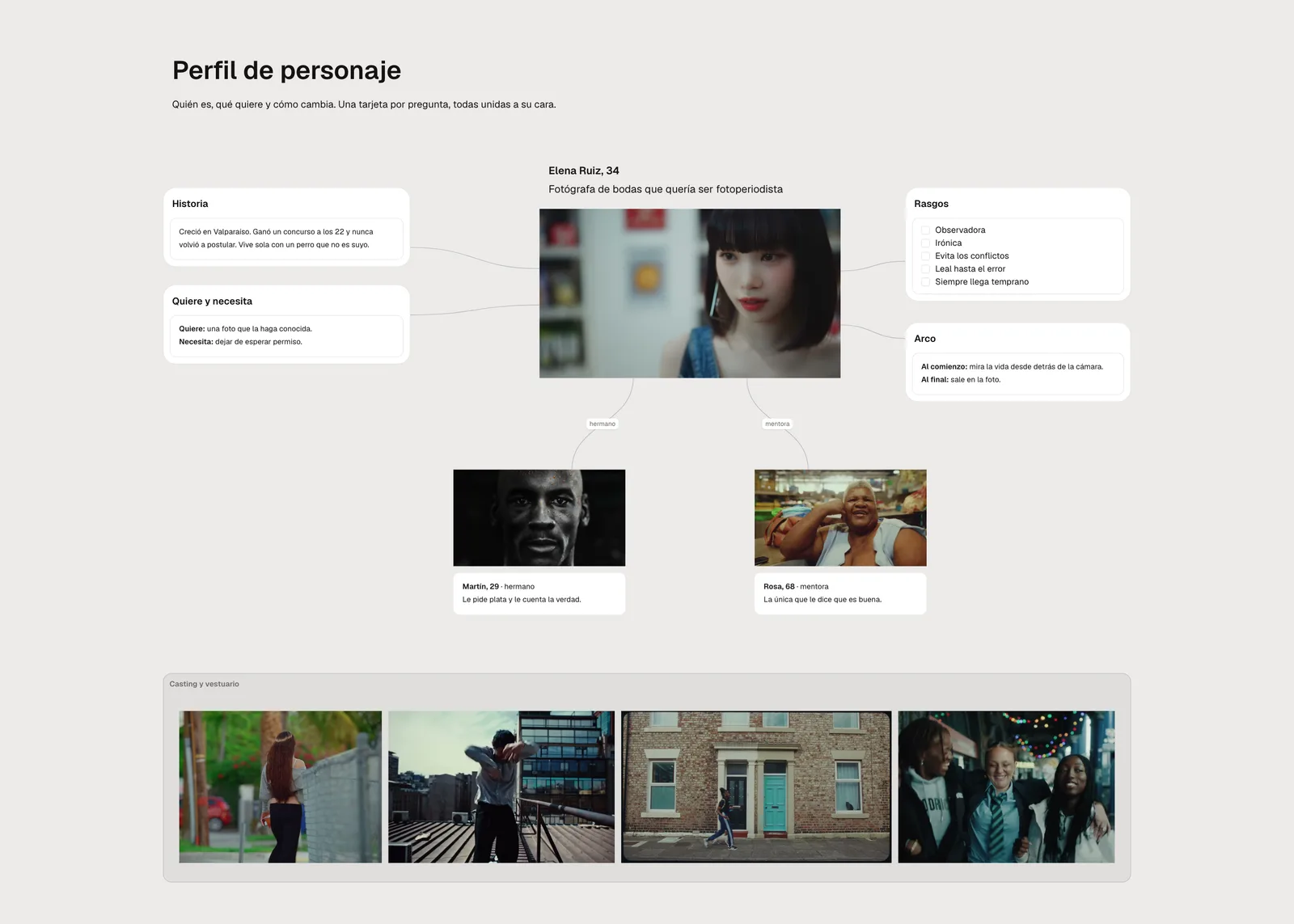
A whole character on one map: their story, what they want and what they need, their traits, their relationships with the other characters, their arc and the casting and wardrobe references.
Director's treatment
Draftt
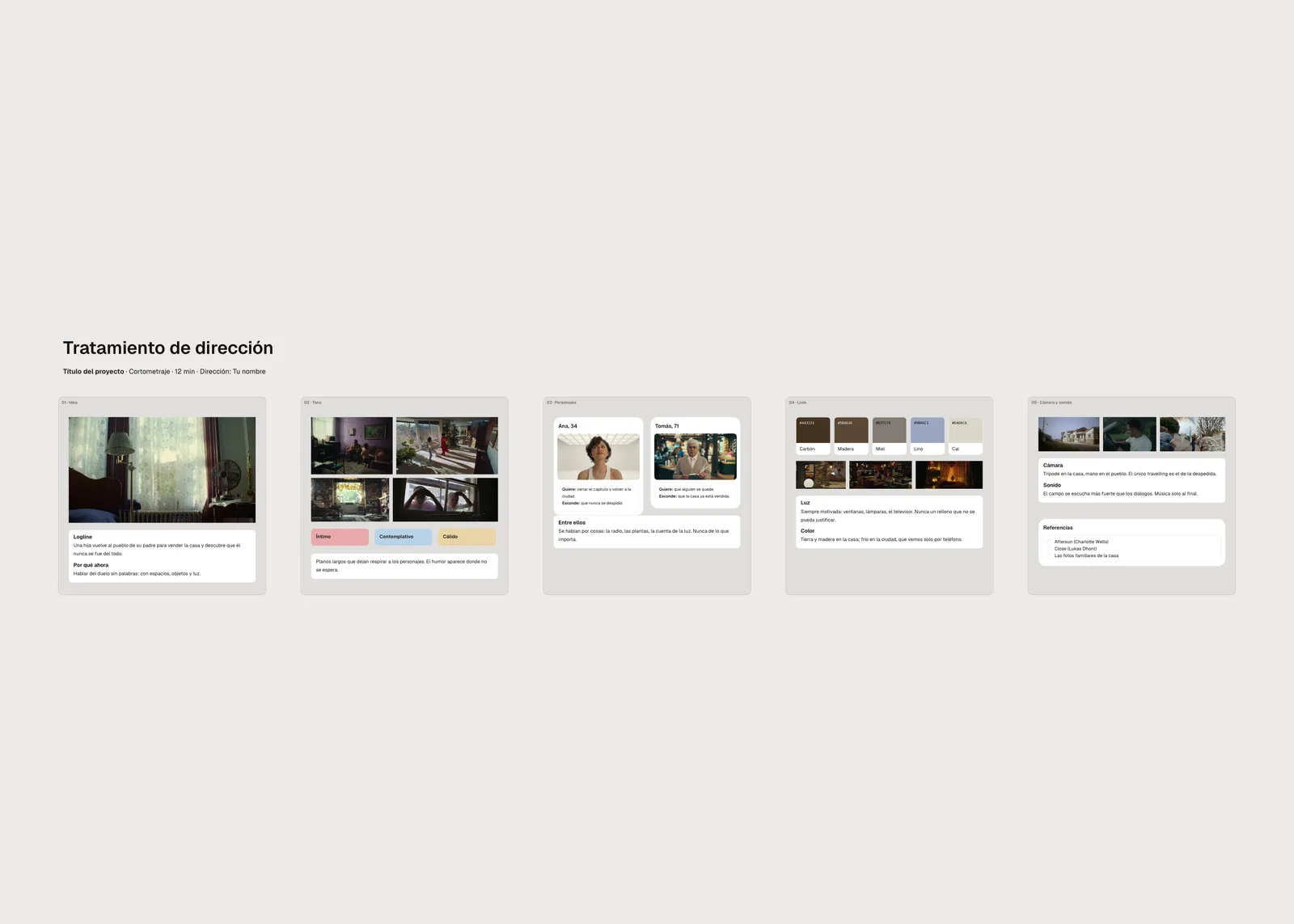
The treatment that goes with a pitch, left to right: the idea, the tone, the characters, the look and how it is shot and sounds. Each section comes with real frames and notes to fill in.
Storyboard
Draftt
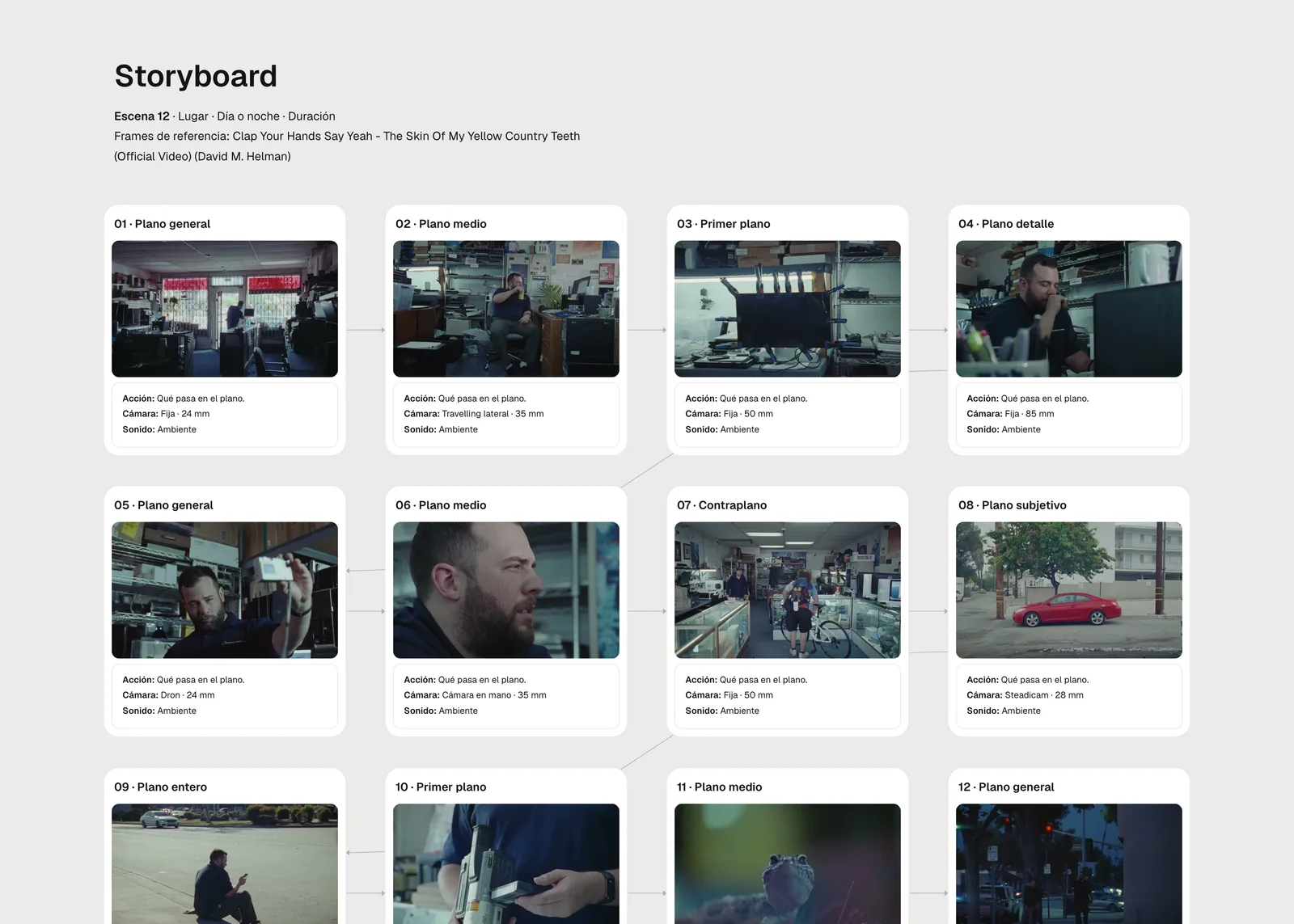
A scene shot by shot: each card holds its frame, the action, the camera and the sound, in the order it will be filmed, joined by arrows.
Film moodboard
Draftt
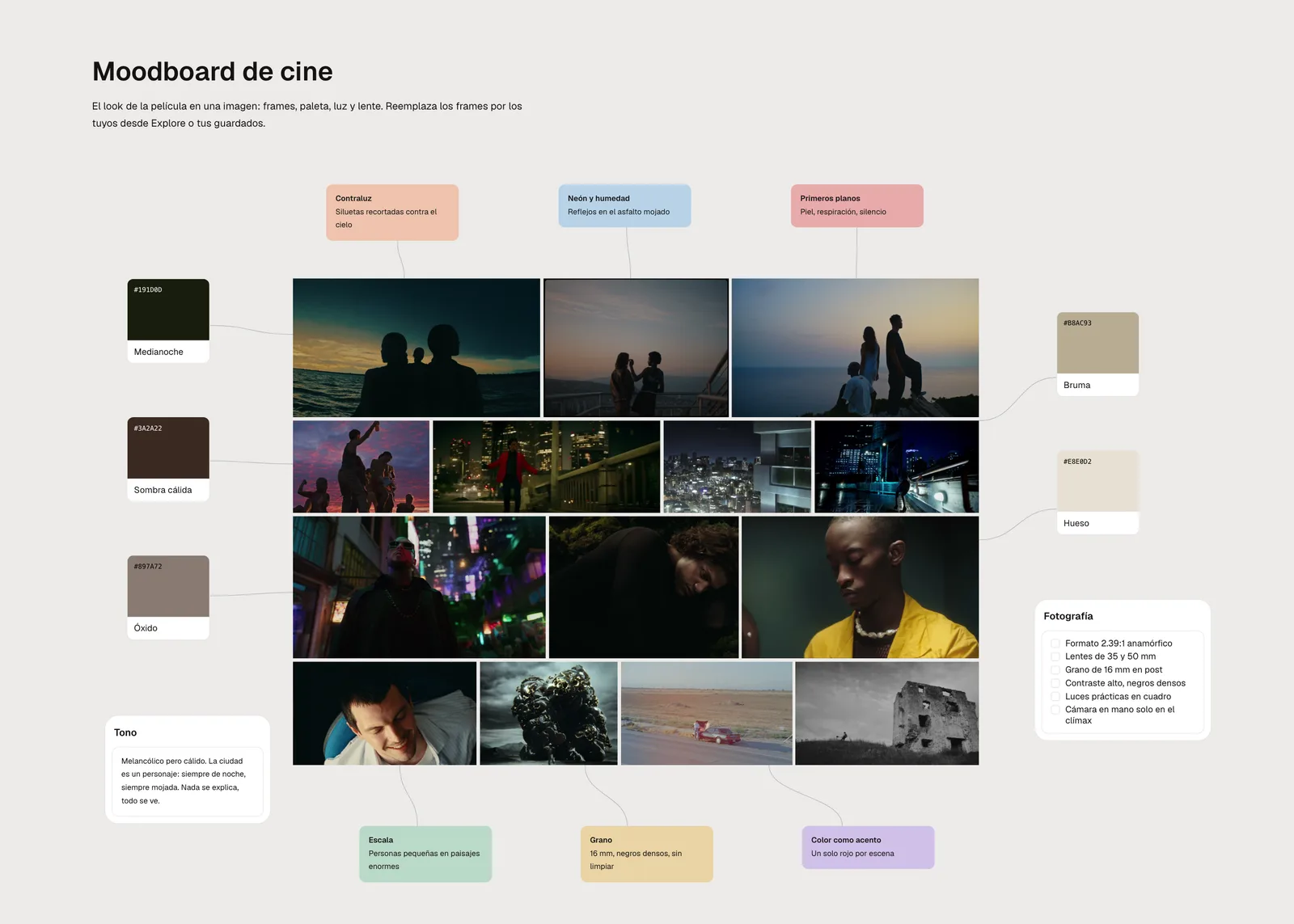
A moodboard to find a film's look before shooting it: a collage of reference frames in the middle, the palette with its names, the light and lens ideas connected to the images that show them, and the cinematography decisions on one card.
Frequently asked questions
- What is a beat sheet?
- It's a list of the key moments of a story, in order, before the scenes are written. Each moment, or beat, is a change that pushes the character forward. It lets you see whether the structure works without writing a hundred pages, and explain the story to a producer or a crew in a few minutes.
- What are the 15 beats of Save the Cat?
- In the first act: Opening Image, Theme Stated, Set-Up, Catalyst and Debate. In the second: Break into Two, B Story, Fun and Games, Midpoint, Bad Guys Close In, All Is Lost and Dark Night of the Soul. In the third: Break into Three, Finale and Final Image. The template has each one with a guide to what has to happen.
- What's the difference between a beat sheet and a character profile?
- The beat sheet lays out what happens in the story. The character profile defines who lives it: their backstory, what they want, what they need and their arc. They work together: the arc in the profile plays out in the beats, above all in the Catalyst, All Is Lost and the Finale. Draftt has a template for each.
- Can I use a beat sheet for a TV series or a short film?
- Yes, with adjustments. In a short, several beats merge into a single scene, and some, like the B Story, can disappear. For a series you can make one beat sheet per episode and another for the season. Since the cards move freely, you can delete, merge or add beats without rebuilding the board.
- Is the beat sheet template free?
- Yes. Draftt's free plan includes 2 boards, and using the template takes one. It comes with the fifteen beats and their guides, plus five frames from Explore, Draftt's catalog, which you can swap for your own or delete if you don't need them.
Related templates
See more mood board examples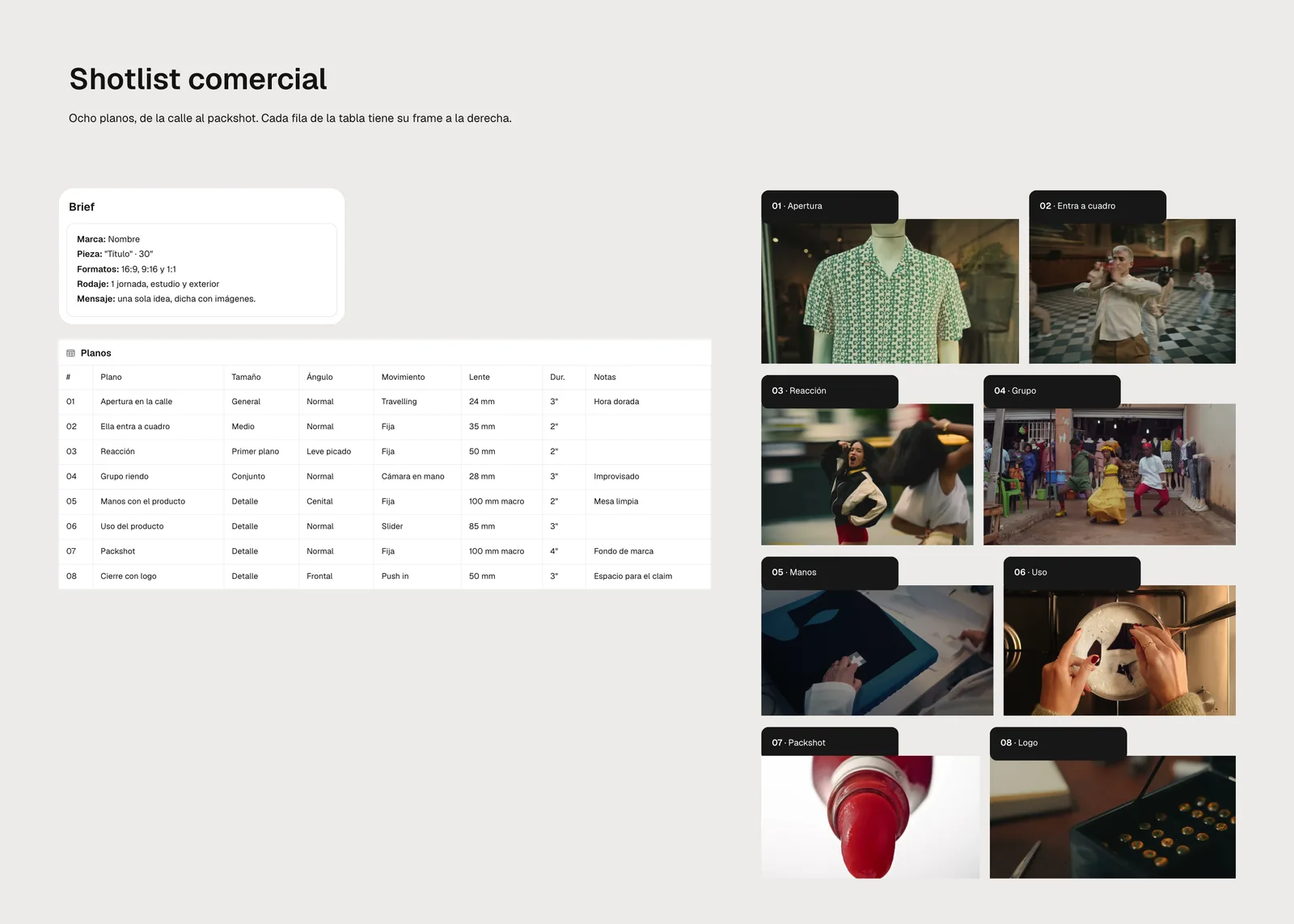
Commercial shot list
Draftt
A commercial's shot list with size, angle, movement, lens and duration, next to each shot's reference frame and the piece's brief.
Pre-production plan
Draftt
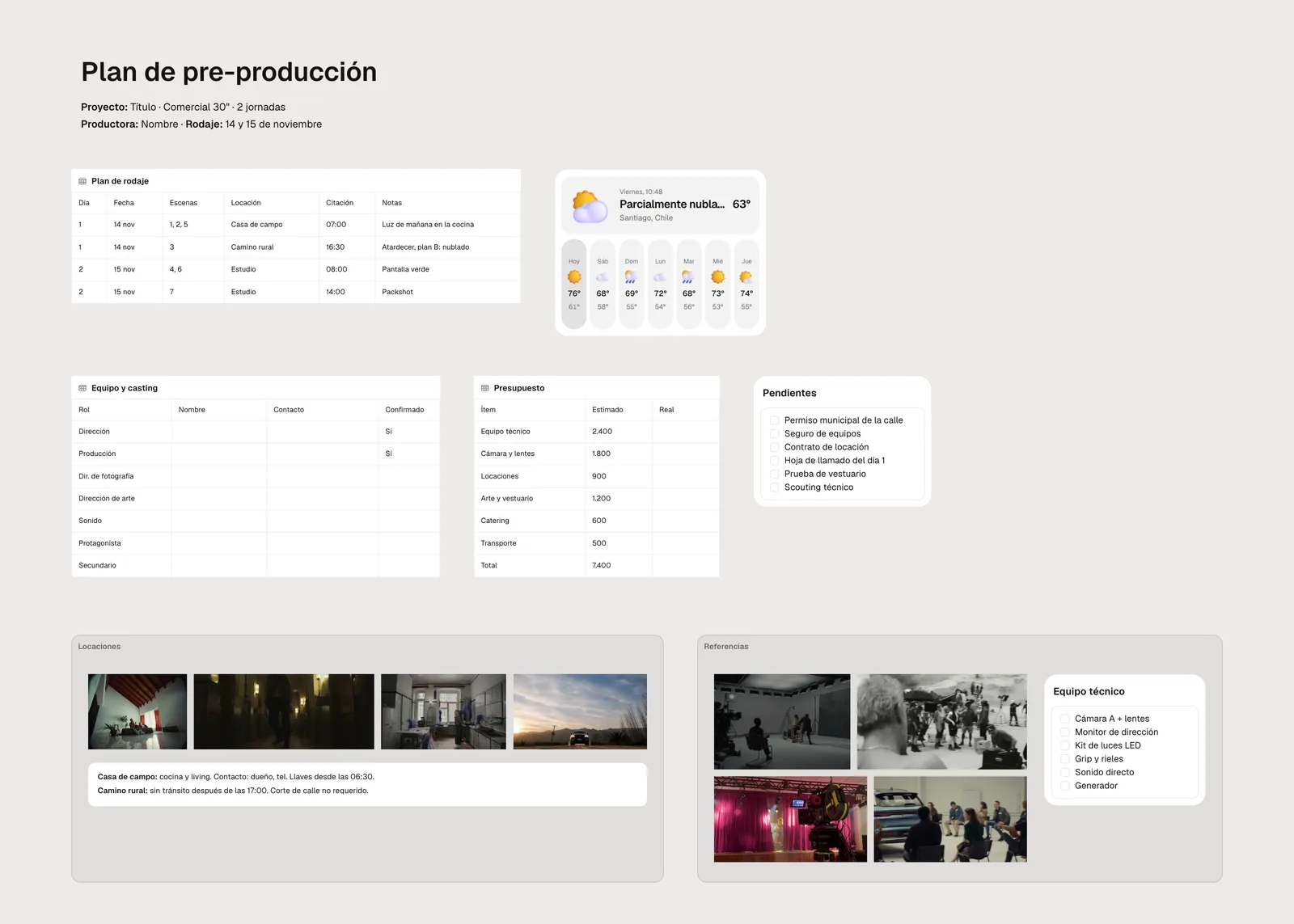
Everything that has to be solved before the first shoot day on one board: the shooting schedule, the crew and the casting, the budget, the locations, the weather forecast, the gear and the to-dos.
Location scouting
Draftt
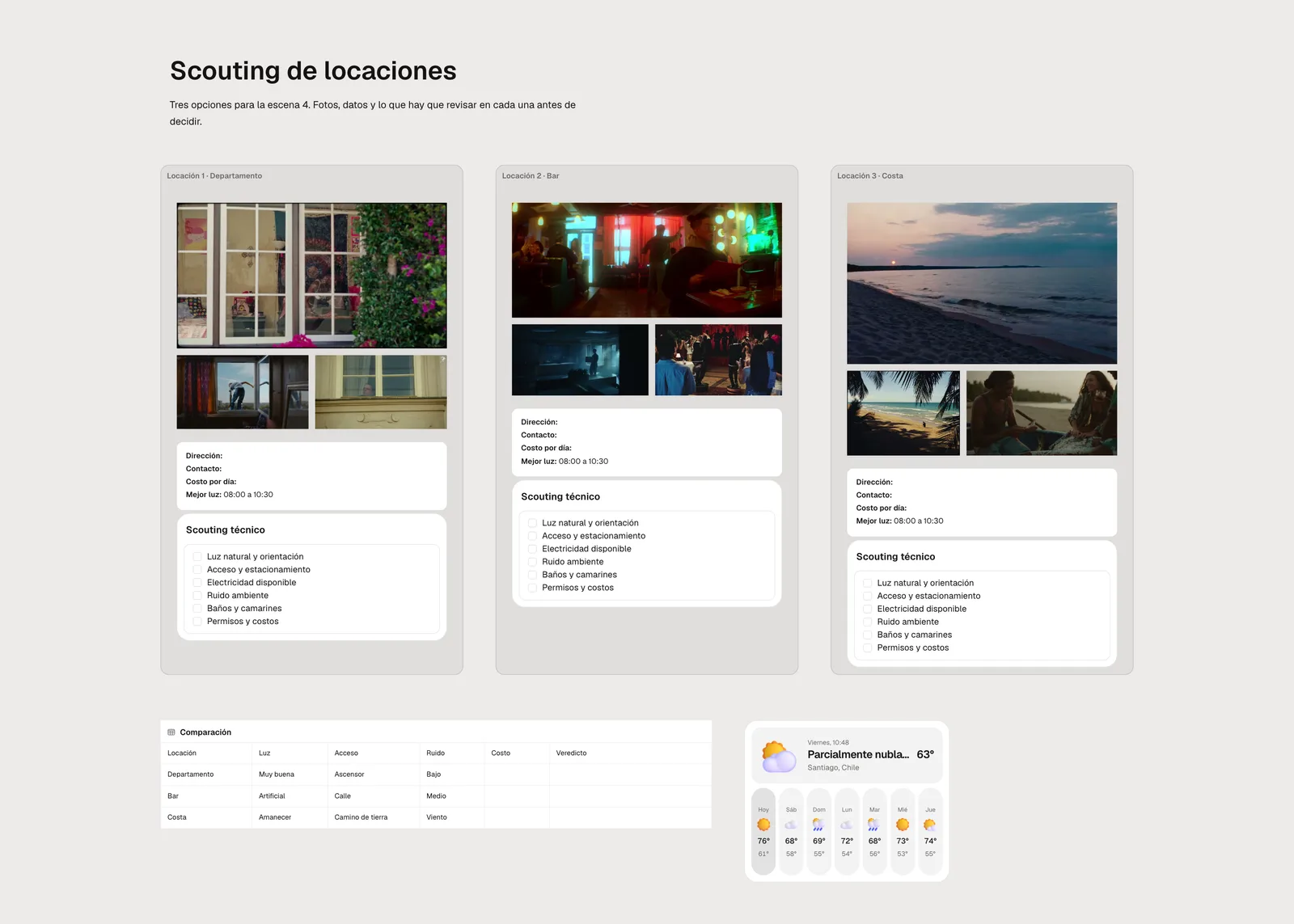
Compare locations side by side: photos of each one, its details (address, contact, cost, best hour of light), a tech scout checklist, the weather forecast and a table to decide.