Character profile template
DrafttOfficial template · Free
A whole character on one map: their story, what they want and what they need, their traits, their relationships with the other characters, their arc and the casting and wardrobe references. For screenwriters, directors and casting teams.
About this template
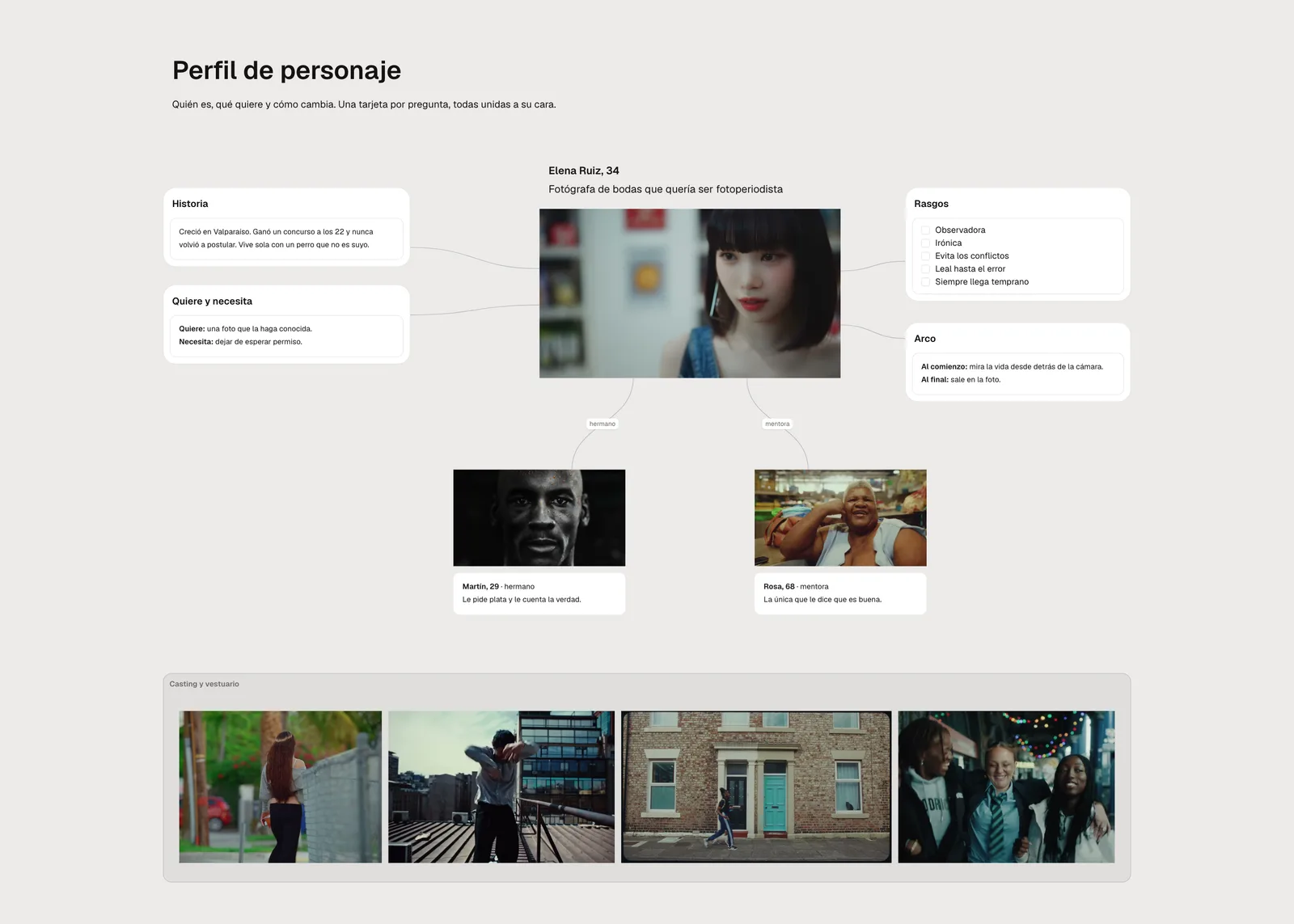
A character is easier to write once you can see them. This template builds one as a map around their face: a frame in the center with their name, their age and a line that sums them up, and four cards linked to it. It's for screenwriters developing a feature, a series or a short, for directors preparing actors and for casting teams.
Backstory tells where they come from. Want and need separates what the character is after from what they're really missing. Traits is a checklist of five traits, from Observant to Always shows up early. Arc says where they are at the start and where they end up. The example is Elena Ruiz, 34, a wedding photographer who wanted to be a photojournalist.
Below are two characters close to her, each with a frame, an arrow that names the tie (brother and mentor) and a line about what they do in her life. It closes with a Casting and wardrobe section of four frames, to start looking for who plays the part and how they dress.
How to write a character profile
01
Make what they want collide with what they need
What they want drives the plot. What they need drives the arc. Write them in two lines and check that they get in each other's way: if getting what they want also gives them what they need, there's no story.
02
Write the wound, not the biography
From their past, only what explains how they behave today matters. One specific event (the day she stopped sending her photos to the newspaper) does more than ten facts. If a fact doesn't change any scene, cut it.
03
Give them traits you can film
“Insecure” can't be seen. “Shows up early to everything and waits outside” can. Write each trait as something they do, and find a reference face and wardrobe: the character stops being abstract once they have an image.
04
Define them by their relationships
You get to know a character by how they treat other people. Put the one who pushes them and the one who holds them back next to them, and write on each arrow what they want from that person. Share the profile with casting and with whoever is going to play the part.
More templates for writing and prep
Beat sheet
Draftt
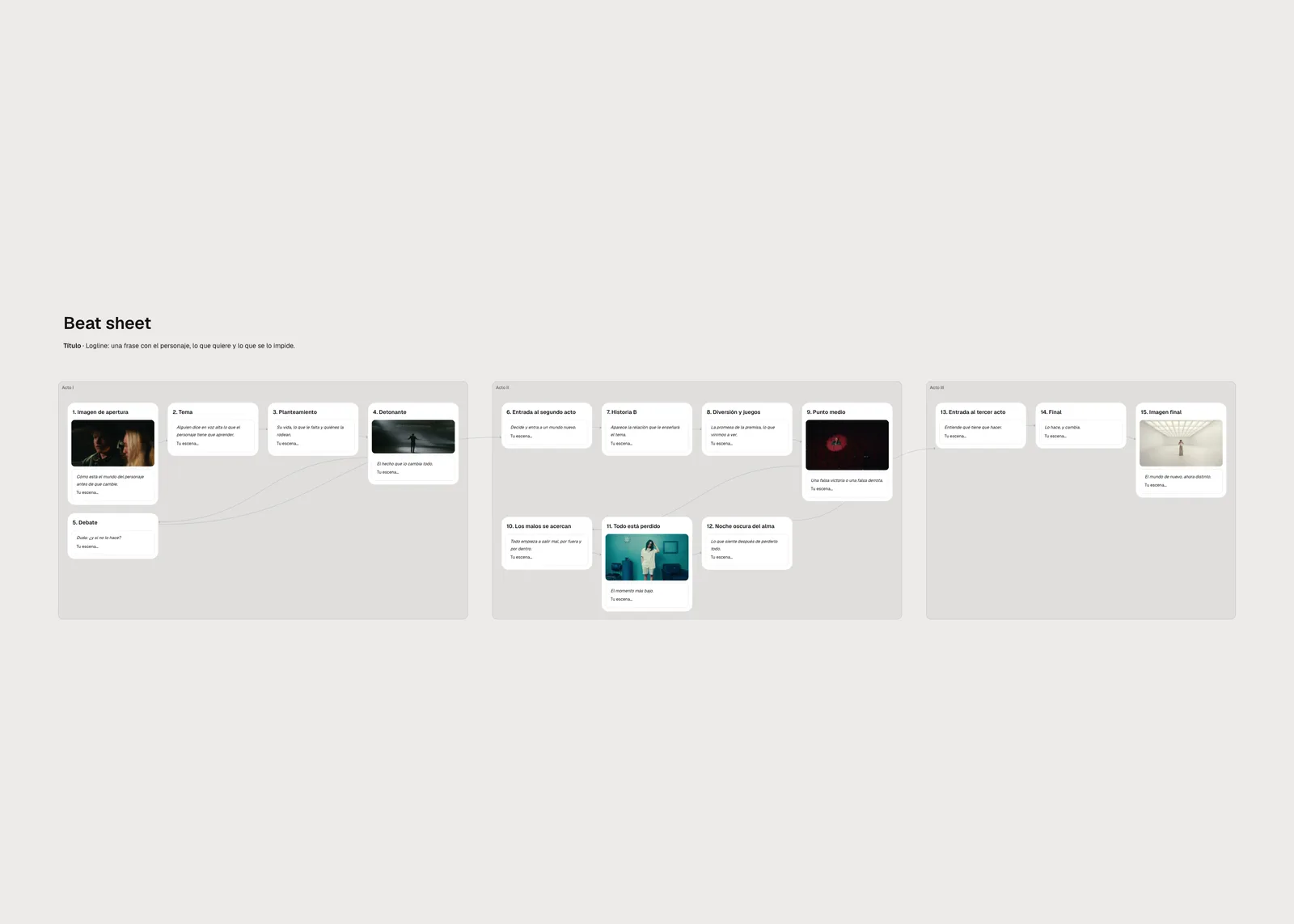
A story's structure in fifteen beats, laid out in three acts and joined by arrows, each with a guide to what has to happen and room for your scene. Based on the Save the Cat method.
Wardrobe moodboard
Draftt
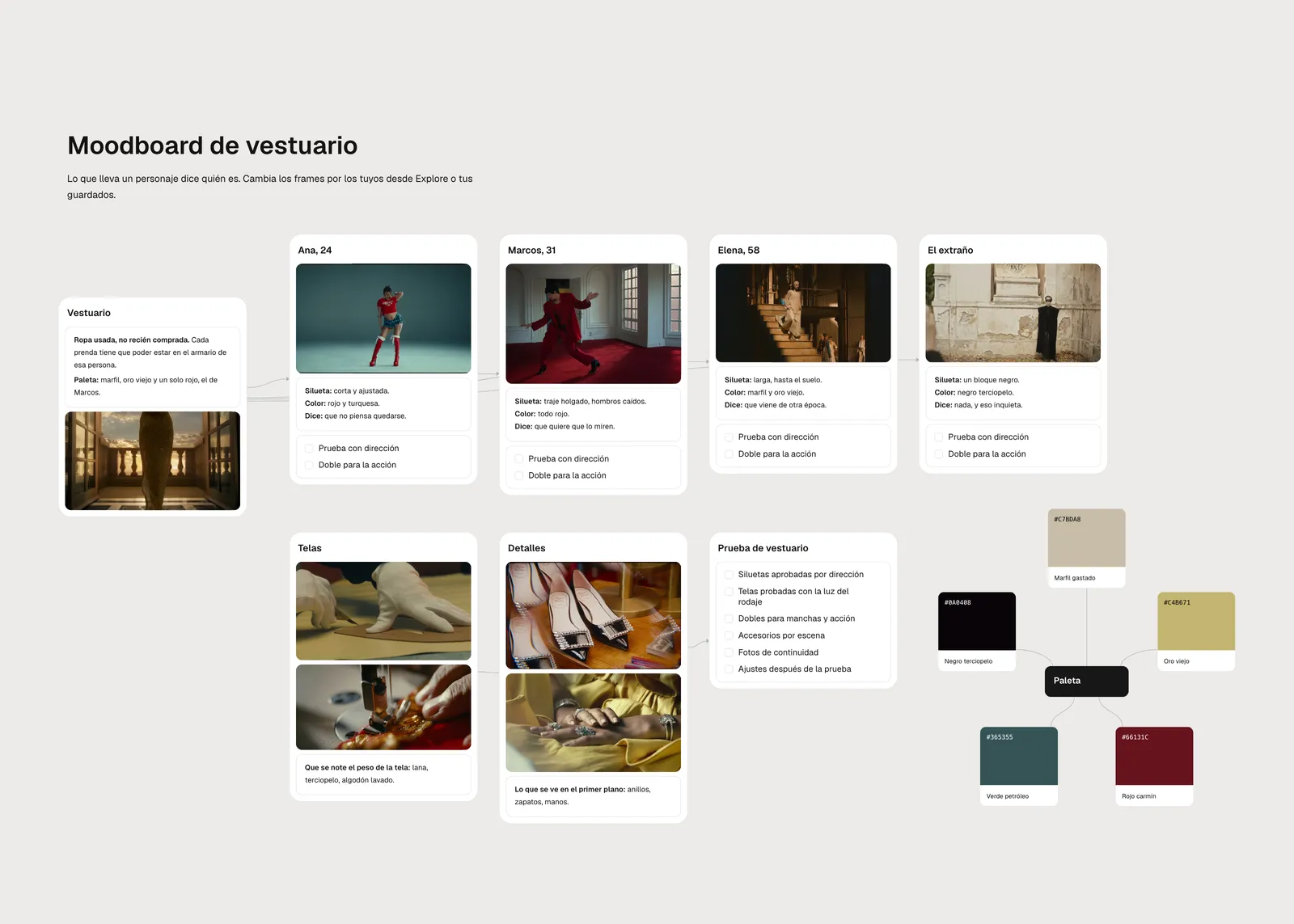
A wardrobe moodboard with a card per character: their silhouette, their color and what it says, plus the fabrics, the details and the fitting.
Director's treatment
Draftt
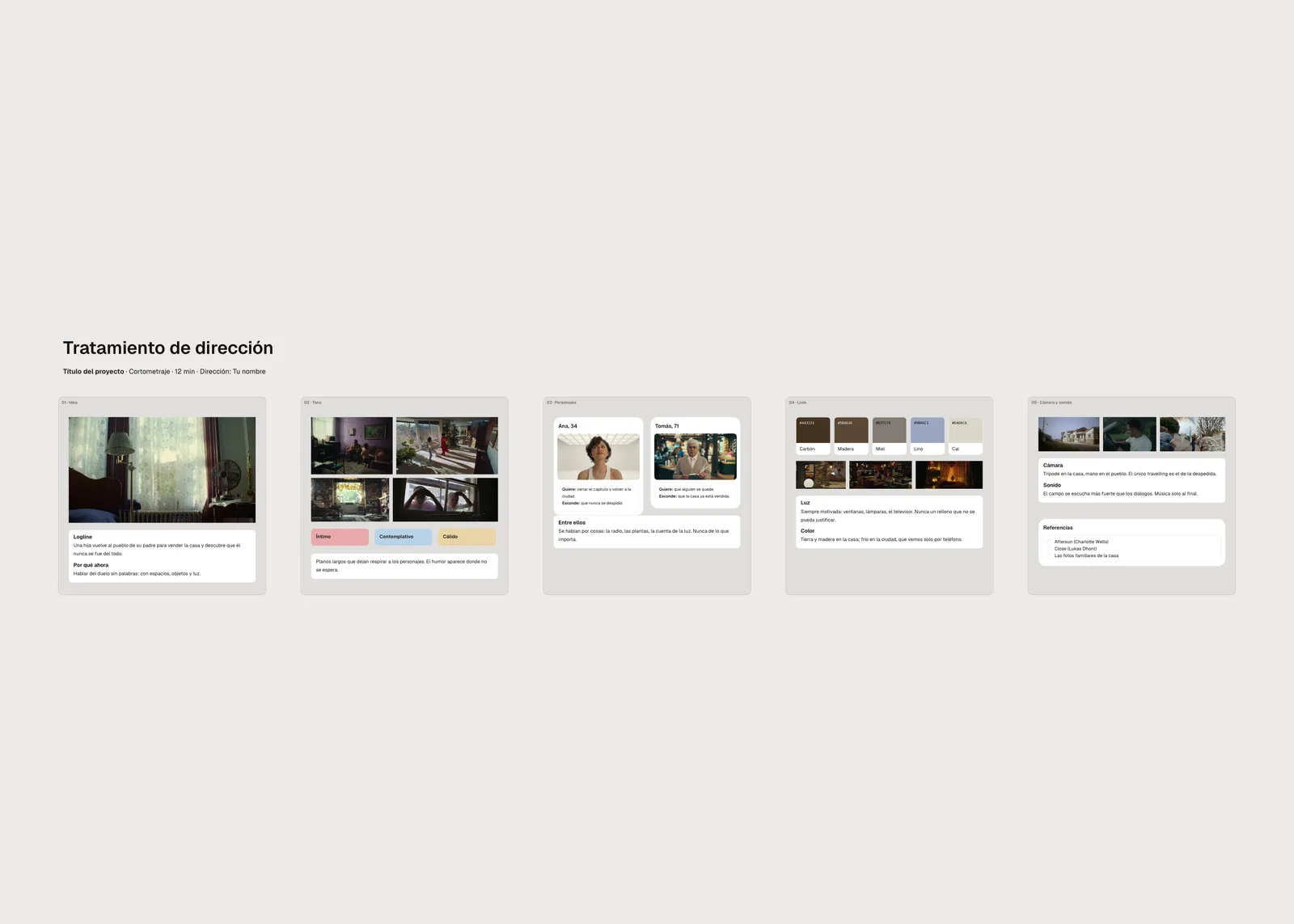
The treatment that goes with a pitch, left to right: the idea, the tone, the characters, the look and how it is shot and sounds. Each section comes with real frames and notes to fill in.
Film moodboard
Draftt
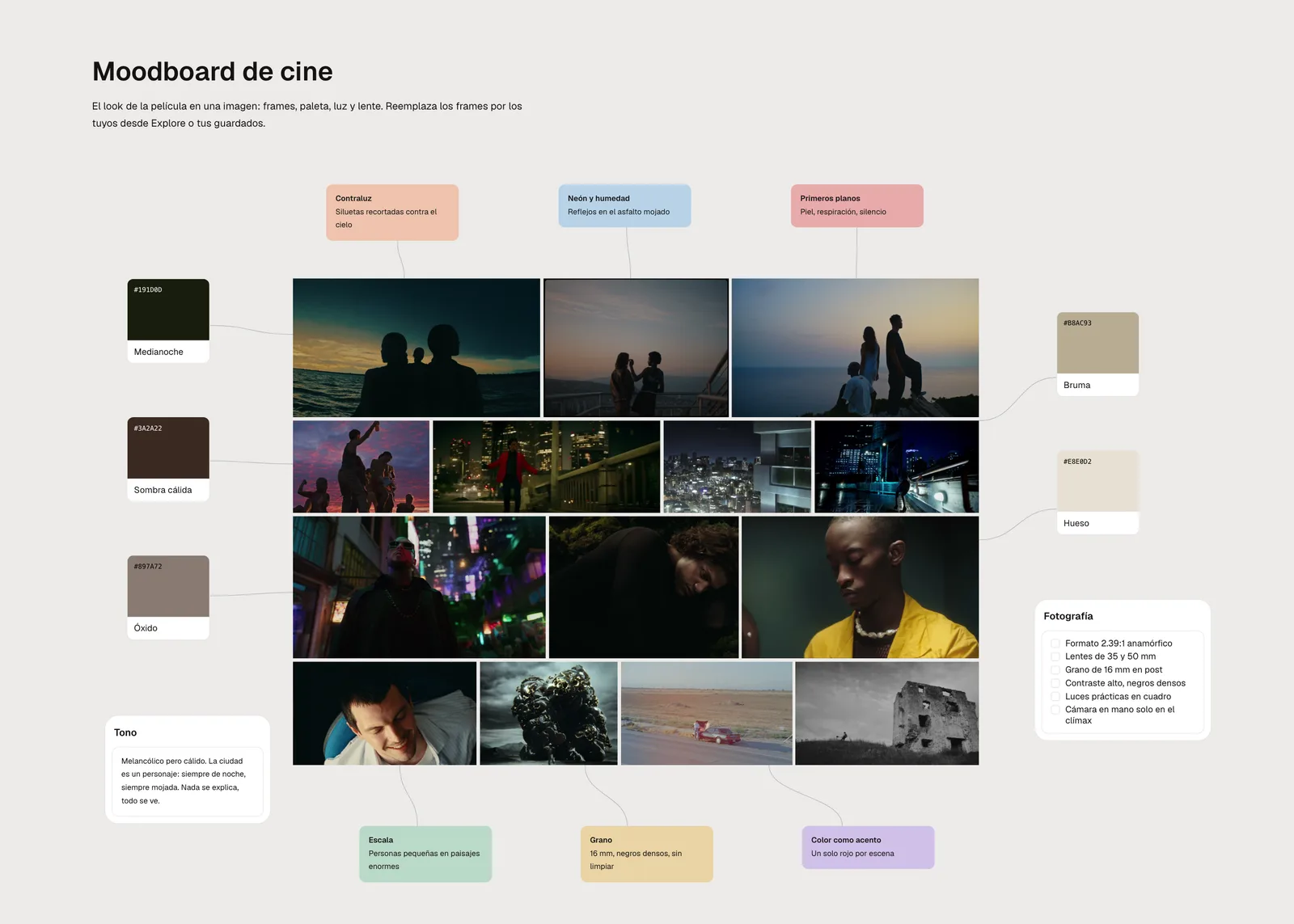
A moodboard to find a film's look before shooting it: a collage of reference frames in the middle, the palette with its names, the light and lens ideas connected to the images that show them, and the cinematography decisions on one card.
Storyboard
Draftt
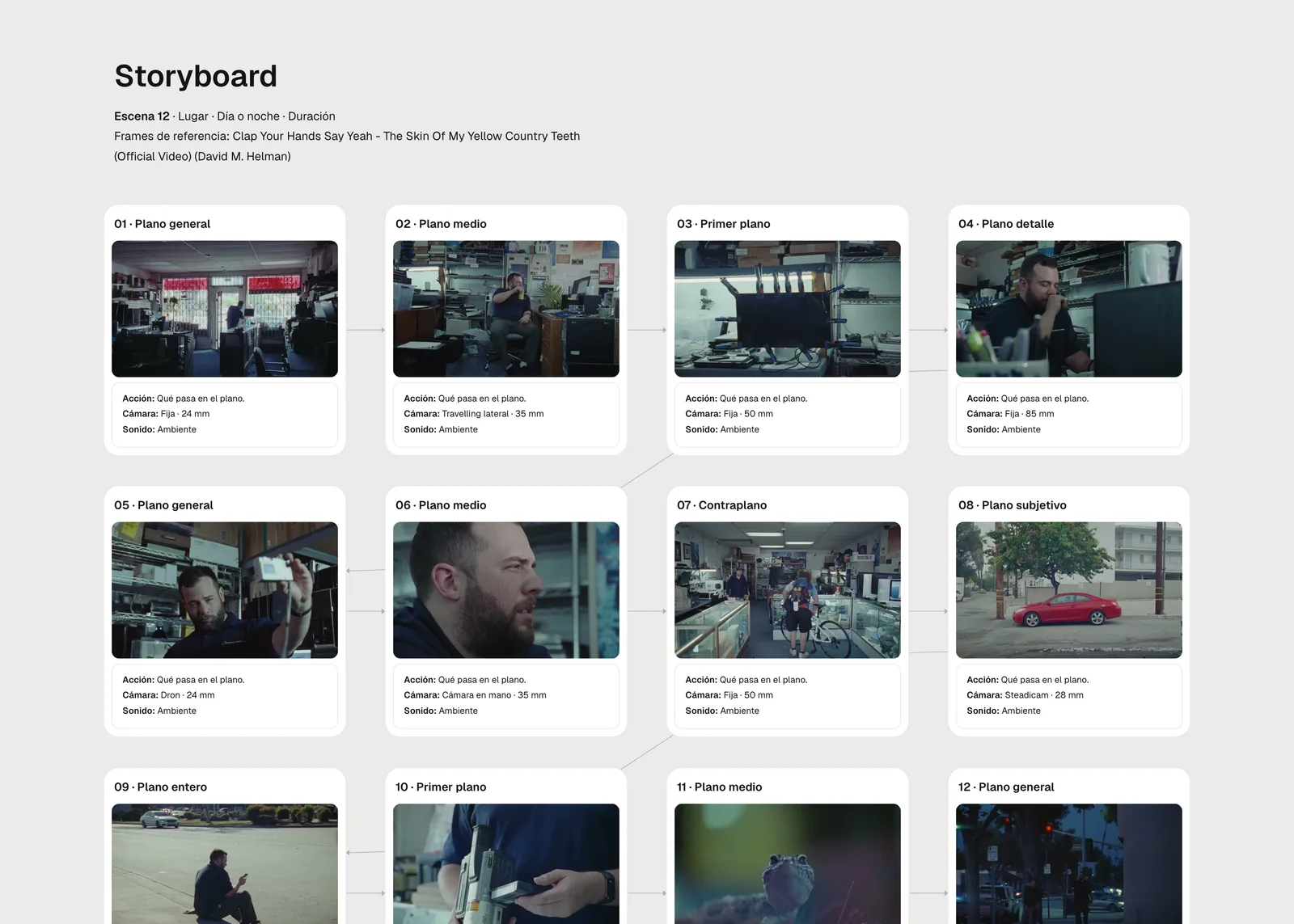
A scene shot by shot: each card holds its frame, the action, the camera and the sound, in the order it will be filmed, joined by arrows.
Frequently asked questions
- What should a character profile include?
- Their backstory, what they want and what they need, their traits, their relationships with others and their arc, meaning how they change from beginning to end. With an image in the center, all of that reads at a glance. This template comes with a card per question, two named relationships and a section of references for casting and wardrobe.
- What's the difference between a character's want and need?
- The want is the goal they chase in the story. The need is what they're truly missing, and they almost never know it. In the example, Elena wants a photo that makes her name and needs to stop waiting for permission. The character's arc is usually the road from the first to the second.
- What's the difference between a character profile and a beat sheet?
- The character profile answers who they are. The beat sheet answers what happens. The first builds a person with their backstory, their traits and their arc. The second lays out the plot in fifteen beats and three acts. They're used together: the arc in the profile has to show in the beats of the beat sheet.
- What is the casting and wardrobe section of a character profile for?
- So the image of the character stops living only in the script. That's where frames of people, gestures, places and clothes that look like what you imagine go. It's a starting point for whoever does the casting and for wardrobe, and it helps actors understand who they're playing before they read.
- Is the character profile template free?
- Yes. Draftt's free plan includes 2 boards, and using the template takes one. The seven frames come from Explore, Draftt's catalog, with the credits of each work, and you can swap them for your own references or for casting photos.
Related templates
See more mood board examples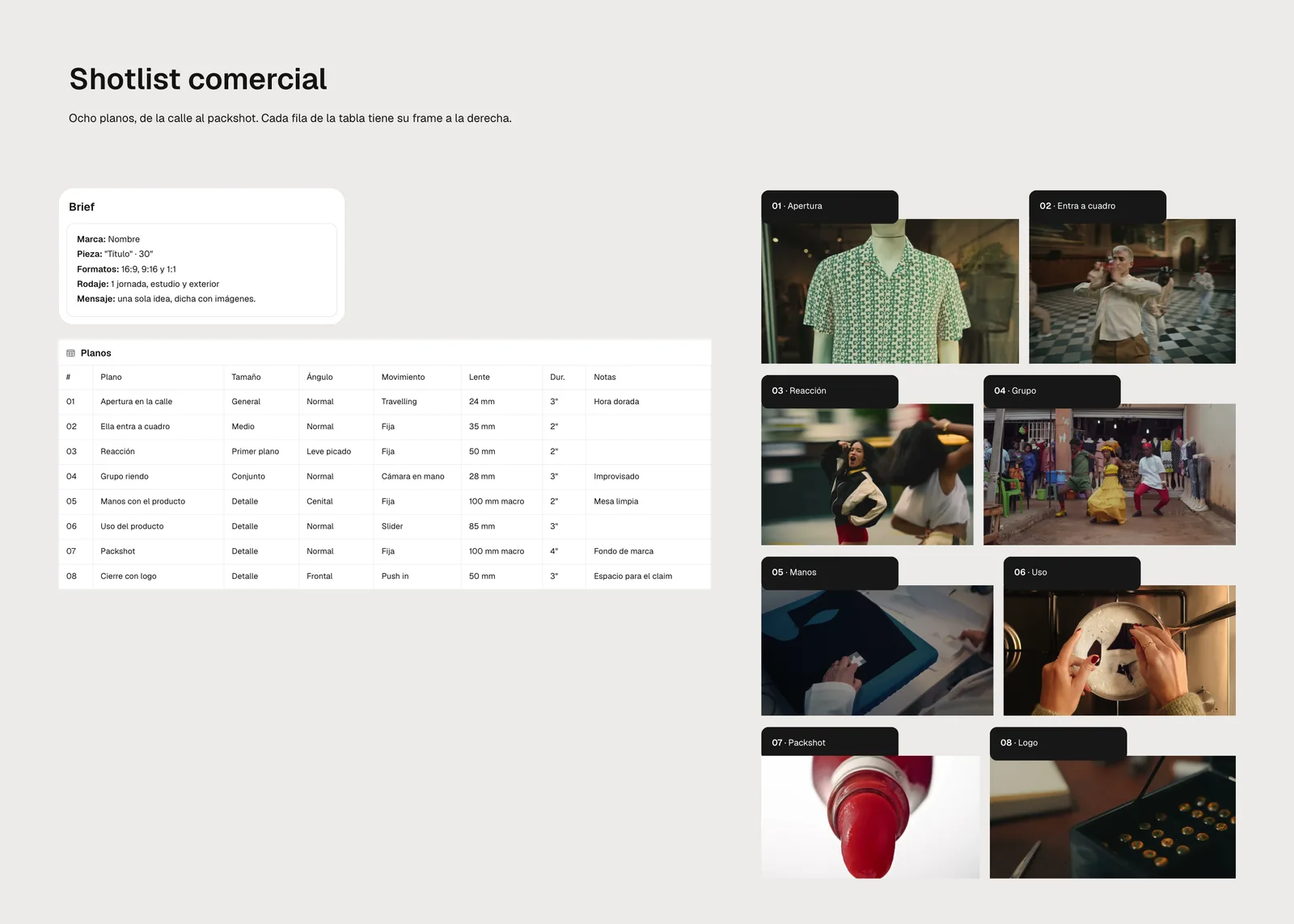
Commercial shot list
Draftt
A commercial's shot list with size, angle, movement, lens and duration, next to each shot's reference frame and the piece's brief.
Pre-production plan
Draftt
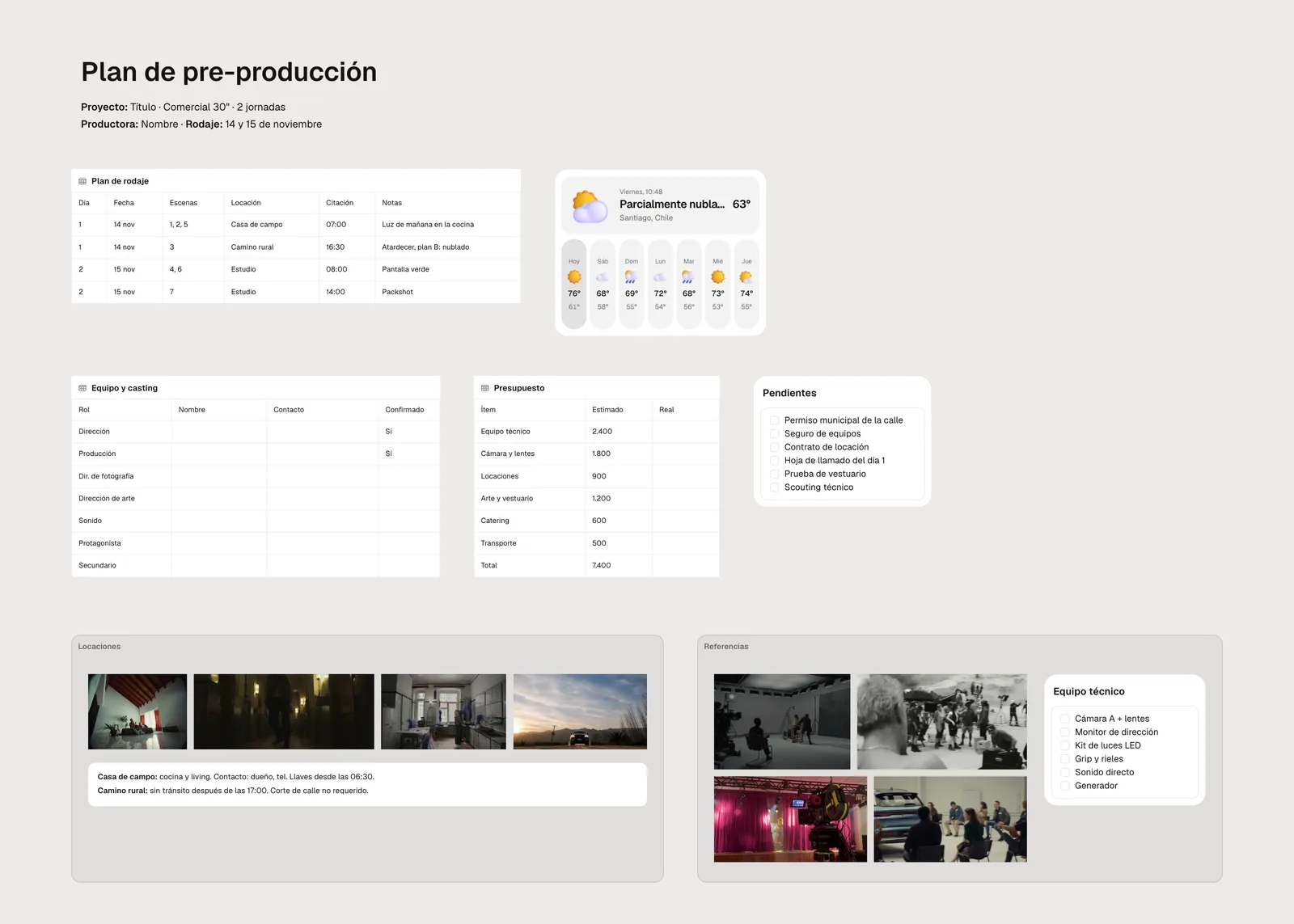
Everything that has to be solved before the first shoot day on one board: the shooting schedule, the crew and the casting, the budget, the locations, the weather forecast, the gear and the to-dos.
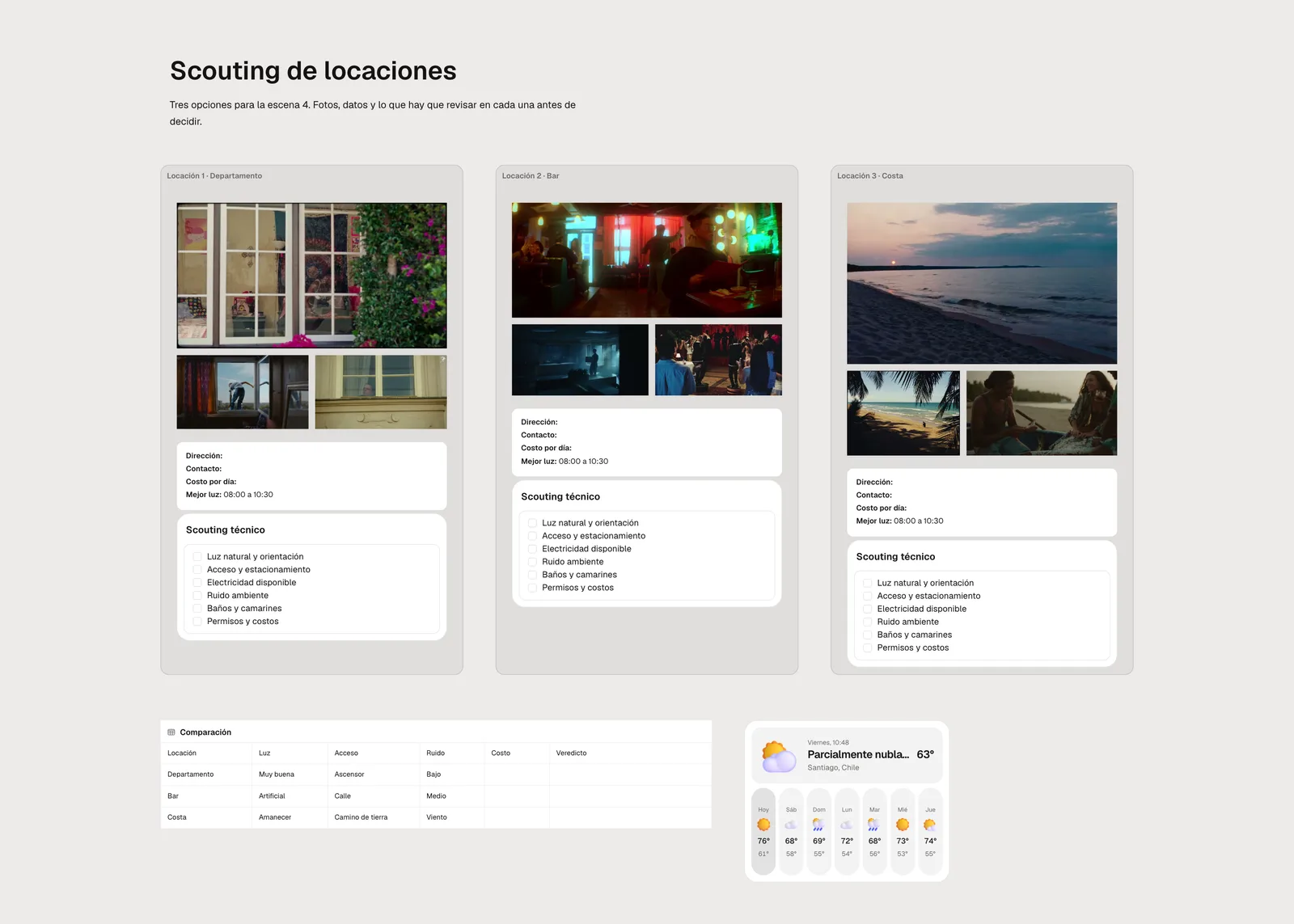
Location scouting
Draftt
Compare locations side by side: photos of each one, its details (address, contact, cost, best hour of light), a tech scout checklist, the weather forecast and a table to decide.